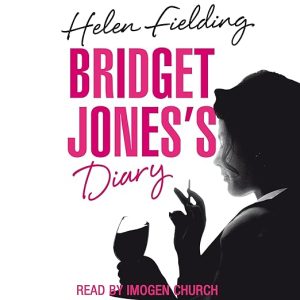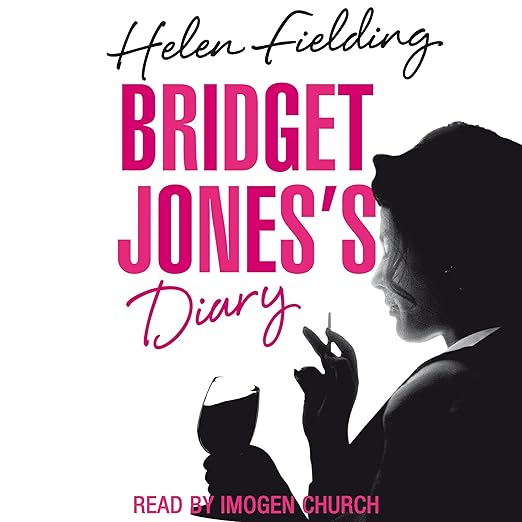
Bridget Jones on audio, read by Imogen Church, is the version of this audiobook that finally makes the diary format sing. Helen Fielding's 1996 novel invented a type: the endearing, chaotic, calorie-counting, romantically catastrophic British woman navigating her thirties with a glass of chardonnay in one hand and a catastrophically low self-estimate in the other. That type has been imitated so many times since that it is easy to forget how precise and how funny the original actually is. Church's reading restores that precision, and she brings to it a specificity of vocal characterization that printed text simply cannot supply.
The setup is deceptively simple: Bridget documents a year of her life in diary form, tracking her weight, her cigarette count, her alcohol units, and her agonizing progress toward or away from two men who represent entirely different visions of what her life might become. Daniel Cleaver, her charming and comprehensively unreliable boss, offers excitement and disappointment in equal measure. Mark Darcy, stuffy and unexpectedly decent, is a deliberate reworking of Mr. Darcy from Pride and Prejudice. Fielding makes no secret of the source material, and the novel's knowing wink at its own literary heritage is part of its considerable pleasure. She never lets the homage tip into pastiche.
The reason this audiobook works better than the print edition for many listeners is Church's comic timing. The diary format on the page relies on you supplying the voice; Church supplies one that is so exactly right that you stop wondering whether it matches the character and simply accept it as Bridget's actual voice. She handles the lists, the self-lacerating commentary on weight and willpower, and the moments of genuine hurt with equal skill. The comedy in this book depends on tonal precision, on knowing exactly when to push the joke and when to let it land quietly, and Church knows. She also knows when Bridget is performing bravado and when she is simply sad, and the distinction between those two modes is where the novel's depth lives.
Fielding's satire cuts sharper than its reputation as light romantic comedy suggests. The novel was a genuine intervention in how women's inner lives were being represented in fiction, a point worth remembering now that the Bridget Jones archetype has become so familiar as to seem natural. The original Bridget is both funnier and lonelier than the cultural image suggests, and Church's narration honors that complexity without making the book feel heavier than it is. The humor and the pathos run alongside each other without either canceling the other out, which is harder to sustain in a first-person diary format than it looks.
What Stands Out
At 8 hours and 27 minutes, this is a single-sitting or two-session audiobook for most listeners. The episodic diary structure makes it naturally suited to audio: each entry is short, self-contained, and punchy, which means you can stop and start without losing momentum. The format also means the audiobook rewards evening listening, when the comedy of Bridget's day-to-day disasters lands with the particular warmth of something companionable rather than demanding. Church's voice is easy to be around, even when the material she is reading is not easy at all.
For listeners coming to this for the first time, the novel's humor is drier and more literary than the films prepared you for. For listeners returning to it, Church's narration offers something genuinely new: the chance to rediscover jokes you thought you knew and find them sharper than you remembered. One reviewer called it a classic of early chick lit, which is fair, but undersells how precisely observed the social world Fielding is skewering actually is. The conversations at dinner parties, the dynamics with Bridget's smug married friends, the specific miseries of the single professional woman in 1990s London: all of it still lands with accuracy.
Things to Know Before Starting Bridget Jones's Diary
The novel is set firmly in 1996, and some of its reference points are dated enough to need contextualizing for younger listeners. The office culture Fielding describes, including Bridget's relationship with her boss Daniel Cleaver, reads differently now than it did twenty-five years ago. Fielding is not endorsing what she depicts; the satire is sharp enough that she clearly sees the dysfunction. But listeners coming to this expecting a contemporary workplace comedy should know the historical setting is load-bearing rather than incidental. The period is part of what the book is about.
The Mark Darcy strand, the Pride and Prejudice rewrite, is both the book's most deliberate literary joke and its most genuinely romantic element. Church handles the shift in register when Darcy is on the page with exactly the right degree of suppressed feeling, which is harder than it sounds. The novel also earns its ending in a way that the sequels do not always sustain, so if you have only seen the films, you may be surprised by how satisfying the landing actually is. One reader noted the book felt like an outrageously funny look at the inside view of a woman navigating life alone in the nineties, and that double quality, the comedy and the genuine tenderness beneath it, is what Church's narration preserves.
Best Suited For
Listeners who enjoy literary comic fiction with a precisely rendered social world will find this one of the more rewarding audiobooks in the genre. Fans of the films who have never read the source material will find a smarter, funnier, and more emotionally honest version of the story they already know. Listeners who came up on Jane Austen will pick up the intertextual jokes immediately and enjoy them. Those who want a light, propulsive listen with genuine wit but no violence, darkness, or complexity they have to work for will be well served. Listeners who need contemporary settings or protagonists they can fully endorse may find Bridget's self-sabotage frustrating, though that frustration is partly the point. Church makes that frustration, and everything else Bridget feels, feel earned.
Key Details
- Voice: Imogen Church captures Bridget's breathless, self-deprecating voice with pitch-perfect comic timing, inhabiting the diary format as if she is reading aloud from her own embarrassing journal.
- Big ideas: Single life in your thirties, romantic indecision, female friendship as survival
- Atmosphere: Fizzing and self-aware, warm without being saccharine
- Worth it?: Church's narration turns Helen Fielding's satirical diary into an audio comedy that lands harder than the film adaptations ever quite managed.
Before You Listen
Is this audiobook accessible to listeners who have never read Jane Austen?
Completely. The Pride and Prejudice references are pleasurable for those who know the source material, but the novel works as a standalone comedy for anyone who has not.
Is Bridget Jones's Diary the right audiobook to start the series, or can you begin elsewhere?
Start here. The novel establishes character, relationships, and tone that the sequels build on. Beginning with a later entry in the series would leave significant context missing.