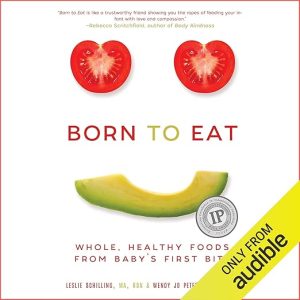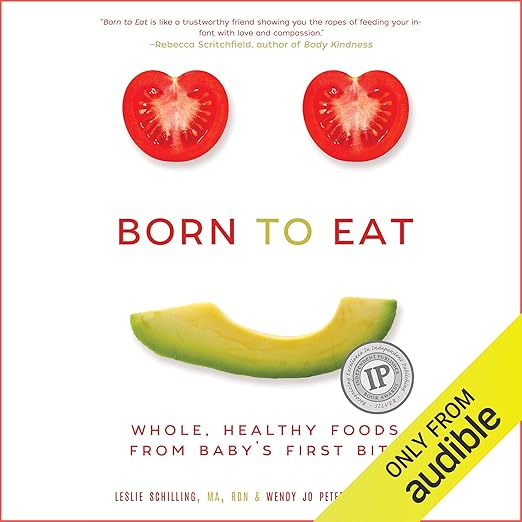
Born to Eat, the audiobook guide to whole-food infant feeding, opens with a provocation that parents who have spent significant time reading infant nutrition advice will find quietly radical: for most of human history, babies ate what the family ate. The premise of specialized baby food is recent, commercially driven, and, the book argues, responsible for a cascade of consequences that begin in infancy and extend across a lifetime. Chronic dieting, disordered eating, body distrust, and epidemic confusion about how to feed a family - these are the downstream effects of a feeding culture that decided, relatively recently, that babies required separate, processed foods rather than whole-food family meals. Nutritionists and wellness experts Leslie Schilling and Wendy Jo Peterson make this case with research rather than sentiment, which is the correct approach for an audience that has been bombarded with competing marketing claims about infant feeding from every direction.
The approach at the center of this audiobook is baby-led weaning: the practice of introducing solid foods by letting infants self-feed from family meals rather than relying on pureed products and dedicated baby food. The approach is standard in many countries outside the United States and has been gaining ground with pediatric nutrition researchers and registered dietitians for the past decade. Schilling and Peterson write from the position that self-regulation is an innate skill that modern feeding culture systematically undermines from the first solid food introduction onward, and the five-hour audiobook is organized to address that problem with practical specificity rather than with general advocacy.
Wendy Jo Peterson Narrates as a Dietitian
The book provides age-based advice on signs of readiness, step-by-step instructions for adapting family meals to baby-appropriate forms, guidance on the distinction between gagging and choking that worries most parents considering self-feeding, and recipes that work for both infants and adults eating together. A registered dietitian reviewer who described herself as professionally motivated to evaluate the content - noting her first reaction was wondering why she had not used this approach with her own children - described the science as backed by research with references included. Another reviewer praised the way the book addresses how to cut food based on the child's developmental stage as one of the most immediately practical elements, providing a specific skill set rather than general principles.
Wendy Jo Peterson narrates the audiobook and brings the co-author's perspective alongside registered dietitian credentials to her delivery. At five hours and fifteen minutes, the listening time is manageable for the new or expectant parent audience this book serves - it can be absorbed across a week of household time rather than requiring dedicated reading sessions. The practical sections on food preparation and stage-based feeding work well in audio because the instructions are descriptive enough to visualize and implement. Listeners should note that the purchase includes a PDF companion in the library alongside the audio - the companion covers visual elements including the food preparation comparisons by developmental stage, which reviewers specifically identified as extremely helpful and which the audio format cannot replicate.
Family-Wide Framework Reaches beyond the Infant
The argument for listening to this book rather than simply reading a summary of baby-led weaning principles is that Schilling and Peterson address the emotional dimension of the approach alongside the practical one. Feeding a baby is an anxiety-laden experience for many new parents, and the authors understand that providing information is not sufficient if the parent's fear of their infant choking or failing to thrive is not also directly addressed. The audiobook covers that emotional terrain in a way that supports implementation rather than leaving parents to work through the anxiety on their own after receiving the information. Peterson's narration of these sections carries the warmth and authority of someone who has walked parents through these fears in clinical practice.
The whole-food framework the book advocates is also addressed as a family-wide practice rather than as an isolated infant feeding decision. One of the book's arguments is that the family meal, practiced consistently from the beginning of a child's solid food introduction, creates conditions for healthier eating across the family rather than just in the infant. That framing makes the advice more ambitious than a typical infant feeding guide and gives the audiobook relevance for parents of older children as well as those with infants approaching the readiness window.
Traditional Pediatric Advice May Create Tension
Families whose pediatricians take a traditional approach to introducing pureed foods first may find the book's arguments in tension with professional advice they are simultaneously receiving. Schilling and Peterson engage with that tension directly and cite their research sources, but parents should treat this audiobook as part of a broader conversation with their own healthcare providers rather than as a standalone authoritative guide. The scope of the book is specifically the solid food introduction period - it does not cover newborn feeding, breastfeeding decisions, or formula choices. A reviewer who praised the science-backed content also noted the wonderful illustrations in the print edition, which do not transfer to audio. The PDF companion is therefore an important complement to the listening experience rather than an optional add-on, particularly for the visual food preparation content.
Third-Trimester Parents Get the Most Value
Expectant parents in the third trimester who want to form a considered approach to solid food introduction before their child reaches that developmental window will get the most from this audiobook - the timing allows for preparation rather than reactive decision-making in the moment. New parents whose infants are approaching the readiness signs for solid foods will find the age-based practical guidance immediately applicable. Parents of older infants or toddlers who have struggled with picky eating or mealtime conflict will find the whole-food, self-regulation framing gives language and strategy to problems they may have been addressing without a clear framework. Pediatric dietitians working with families on infant feeding will find this a well-researched accessible resource that covers the evidence base clearly and without condescension toward parents navigating genuinely unfamiliar territory.
Key Details
- Narration: Wendy Jo Peterson co-authored the book and narrates it, which gives the practical sections a first-person clinical authority - her registered dietitian background comes through in the measured, confident delivery of the evidence-based material.
- Themes: Baby-led weaning as a whole-family practice, unlearning diet culture from the first solid food introduction, self-regulation as an innate skill worth protecting
- Mood: Warm, evidence-grounded, and quietly counter-cultural in the best possible way
- Verdict: A well-researched guide to baby-led weaning that works as an audiobook for expectant and new parents, with a PDF companion that covers the visual elements the audio cannot.
A Few Questions About Born to Eat
Does the Born to Eat audiobook include the recipes and food preparation guidance, or do you need the print version for that content?
The purchase includes a PDF companion alongside the audio, and reviewers specifically identify the food preparation comparisons and recipes as central to the book's practical value. The PDF is available in your library with the audio purchase and covers the visual content that cannot be fully conveyed in audio alone.
How does Wendy Jo Peterson's narration compare to what a professional narrator would bring to this type of parenting audiobook?
Peterson co-authored the book and brings registered dietitian credentials to the narration, which gives the evidence-based sections a clinical authority a professional narrator without that background would not have. The delivery is warm and practical rather than performative, suited to a guide asking parents to make specific changes to how they feed their families.