In Brief
- Narrator: Jamilah Lemieux reads her own essays and, alongside them, twenty-one first-person testimonies belonging to other people, so the pronoun changes owner while the voice does not.
- Subjects: Black single motherhood as an institution, the baby mama slur and its cost, plural testimony, criticism as self-defense
- Tone: Direct and unhurried, tender toward its subjects and hard on everybody else
- Bottom line: Fourteen hours of criticism and testimony that only two people have publicly assessed, both of them within three days of publication.
An audiobook of fourteen hours and seven minutes went up on March 10, 2026, and one of its two written responses is dated March 10, 2026. The same day. Whatever that reader was responding to, it was not a complete pass through this recording at any speed a person uses. The second response arrives three days afterward. Two responses, two maximum grades, a counter that reads two votes, and, for once in this line of work, a page whose numbers all agree with one another.
The Cleanest Arithmetic on This Whole Shelf
My first instinct on a same-day review is suspicion, and I want to be careful, because a reasonable explanation is available: the book exists in print as well, and somebody who had read the text could file on publication day without ever pressing play. The response itself supports that reading. It discusses structure, praising the way the book allows each story to shine, and it never once mentions a voice. What it does not do anywhere is describe fourteen hours of anything.
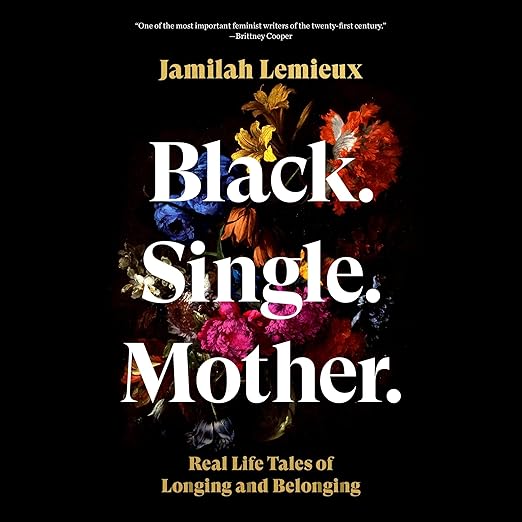
Five stars from both, and the arithmetic is the cleanest on this whole shelf: two votes, two written responses, ten points out of a possible ten, no phantom voters and no missing dissent hiding behind the badge. That consistency deserves naming, because it is genuinely rare. It also means the sample size is two, which tells you nothing beyond the fact that two people who arrived early were impressed enough to say so at length. The second of them gives the title back without its punctuation, writing three plain words where the cover uses three full stops, and that small flattening changes how the phrase lands.
Two responses also means two truncated ones. Both stop dead at the same character count, one breaking off on the bare word The, precisely as it turns toward the essays from other single mothers, and the other cutting out inside a word while saying that the author does not shy away from something. In each case the most interesting sentence is the one you cannot finish, which is a property of the page, not a failing of anybody writing on it.
Why Lemieux Herself Has to Close That Distance
No part of this is only a memoir. The description is precise about the architecture: riveting personal essays, infused with whip-smart cultural and historical analysis, combined with twenty-one intimate first-person testimonies from a spectrum of Black single mothers. So the book is one writer's account braided into twenty-one others, and the second response describes exactly that effect, a rich tapestry of voices bringing forward the experiences of women from diverse backgrounds.
Four qualities the description claims for the prose: candid, humorous, sometimes biting, and unwilling to suffer fools. It also promises that the author courageously reveals the scars of her own parenting journey and her search for self-acceptance in a world that hates baby mamas. That last phrase arrives inside quotation marks in the copy, which tells you the book knows precisely which vocabulary it is fighting and intends to turn that vocabulary back on the people using it. The description positions the whole enterprise as a long-overdue offering in celebration of the American matriarch most often maligned, which is the thesis stated about as plainly as a jacket ever states one.
Three things make the self-narration weigh more heavily here than it normally does. The author is a cultural critic whose standing was built partly in public argument, so the delivery of a biting sentence is part of the authorship and not an interpretation of it. The essays are personal, and a hired performer reading somebody's account of her own parenting introduces exactly the distance this book is working to close. And the blurb the publisher prints calls her one of the most important feminist writers of the twenty-first century, and that is a claim about a voice before it is a claim about a book.
The Pronoun 'I' Changes Owner Twenty-One Times
The twenty-one testimonies are the complication. They are first-person accounts belonging to other people, and one performer is reading all of them, which means the pronoun I changes owner twenty-one times without changing throat. That can work beautifully, a critic handling her sources with visible care, or it can flatten a spectrum of speakers into one register. The record does not indicate which, and neither response reaches the question before running out of characters.
When the description mentions a downloadable PDF of the reading list from the book, treat that as a signal about what kind of object you are buying. A reading list means the essays cite, and citation by ear is a known difficulty: a name goes past once and cannot be scrubbed back to. The publisher has anticipated the problem, which is more than most manage, but plan on having that document open if you intend to follow the argument as well as absorb the testimony.
A same-day review and a three-day review together constitute the entire public record. Nobody has yet described how fourteen hours of essays and interviews behaves across its own length, whether the seams between the author's chapters and the twenty-one contributed accounts are marked audibly, or whether one performer sustains a runtime that long. Those are the questions a listener actually has, and two very early responses are structurally incapable of answering them.
An Institution This Size Needs More Than an Afternoon
What this asks of a listener is patience for accumulation. It is not an argument you can summarize after two hours. It is twenty-two accounts of one institution seen from twenty-two positions, with historical analysis welded onto them. Anyone who reads cultural criticism for pleasure, anyone who has been on the receiving end of the baby mama vocabulary, and anyone who wants the counter-history to it will find this built deliberately for them, and the title's three full stops are doing exactly what they look like they are doing. Fourteen hours is also the right scale for the claim, since an institution this size does not fit into an afternoon.
Listeners after a straightforward memoir with a single arc should know that this is not that, since the structure is plural by design and the second response praises precisely that plurality. The wrong listener here is the one who needs a thesis stated early and then defended, because the description offers a meditation, an examination and a tribute, in that order, and only the middle term argues. The reading list arrives as a PDF, which tells you the publisher expected this one to be taken as coursework.
Questions Listeners Ask
The description promises a downloadable reading list, so does the audiobook include it?
The record says so outright, and what you get is the bibliography the essays draw on. That matters more here than on most titles, because criticism cites constantly and a name heard once cannot be scrubbed back to. Keep the file open if you want to follow the sources instead of simply sitting with the testimony.
How is this audiobook structured?
In two braided strands. Personal essays carrying cultural and historical analysis run alongside twenty-one intimate accounts contributed by other mothers, which comes to twenty-two voices altogether. The second response praises the way that arrangement lets every individual story stand on its own inside the larger design, and calls the result universally resonant.
Can two five-star reviews tell me anything useful?
Not much, although the numbers are unusually honest. Two votes, two written responses, ten points from a possible ten, no phantom voters and no dissent hidden behind the badge. Both were filed within three days of publication, and both stop mid-sentence at the character limit before reaching what either thought of the performance.
Who reads the twenty-one contributed testimonies?
One voice, the author's. The record credits no second performer, so the first-person accounts of twenty-one other women reach you in the same delivery as the essays surrounding them. That may read as a critic handling her sources with care, or it may flatten a range of speakers, and nothing on this page settles the matter in advance.