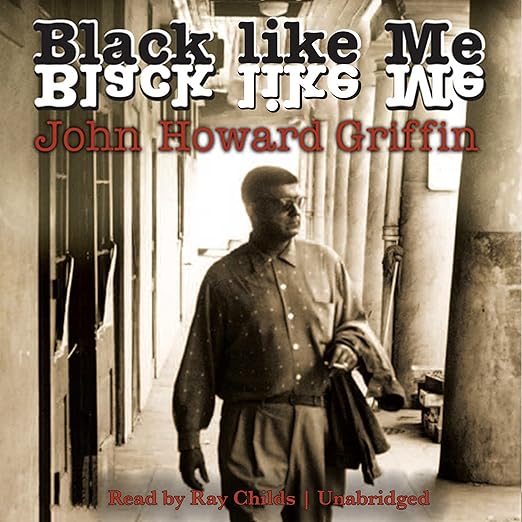
- Narration: Ray Childs takes a first-person memoir solo, a form that transfers to a single voice with little loss.
- Themes: Race and privilege in America, first-person testimony, a classroom classic under review.
- Mood: Plainspoken and uncomfortable, a personal account rather than an argument.
- Verdict: The right format for a book many people own and few finish, provided you know what you are buying.
Historic photographs, an index and an extensive biographical afterword: that is what the description on this audiobook advertises, and not one of the three can exist inside a seven-hour file. The whole summary belongs to a printed edition, down to the corrections made against John Howard Griffin's original manuscripts. What it never does, across its single sentence, is say what the book is about. Anyone arriving without already knowing why this title is called an American classic will leave the page knowing only that somebody took the trouble to index it.
One Reviewer Imagines Griffin at the Microphone
One response on this record is worth more than the rest combined, because it is the only one describing the recording. Filed in March 2019 by a listener who owns the book in print and in audio, it says the reading made the text easier to get through, that listening to the voice was a pleasure, and that it was close enough to imagine Griffin himself at the microphone, with the honest caveat that the writer had never heard Griffin's actual voice. It closes by admitting the book might not have been finished without the audio edition at all.
That last admission is the useful part. Griffin's book is one of those titles people acquire out of obligation and then leave half-read, and the entry says as much, blaming a general drift away from nonfiction rather than any failure of the writing. An audio edition of a book like this is a completion device. It removes the specific friction that stops people, which is a modest claim and a genuinely valuable one on a title that so many readers own and so few finish.
A Listing That Assumed the Title Would Explain
What the listing itself contributes is close to nothing. The genre fields place the book under biography and memoir alongside politics and social sciences, the tag reads Cultural and Regional, and the description spends its entire length on the physical qualities of an edition rather than on the account inside it. For a book with this reputation the publisher evidently assumed the title does the explaining. That assumption fails every listener who has not already been handed this in a classroom.
First-Person Testimony Belongs in a Voice
A June 2010 response makes the case better than any summary of themes could. The writer identifies as a white man who had always bristled at the phrase white privilege, on the grounds that it implied the things they owned were unearned. Griffin's book, that entry reports, finally made the term comprehensible. Whatever you think of the vocabulary, watching a specific reader describe a specific change of mind is the most persuasive argument for a book that anyone can make, and this one was written without any prompting from a marketing department.
Length works in this book's favor. Seven hours is a weekend rather than a project, short enough that a listener can commit without negotiating, which matters for a title people approach with a sense of duty. Compact nonfiction with a clear first-person spine is the easiest kind of serious reading to finish in audio, and the proportions here are close to ideal.
First-person testimony also belongs in a voice. A book built on what one person went through and how it felt at the time is closer to spoken account than to argument, and the transfer into audio costs it less than it would cost a work of analysis with tables and citations. That structural fit is the reason a recording of this book can carry an experience the printed page holds at slightly more distance.
Nobody Knows Which Text Ray Childs Read
Much of the enthusiasm on this page is memory rather than assessment. A September 2025 entry recalls studying the book in high school around half a century earlier and the volatile conversations about race and power it produced in that classroom. That is a real testament to the book's staying power, and it is grading an experience from decades ago rather than this recording. Read the column as evidence of reputation, not as a report on the file.
Settle the apparatus question before you buy. If the corrected text, the index and the biographical afterword are what you want, and for a book taught this often they may well be, then the edition the description is selling is a physical one and the audio is a different purchase. Listeners who want both will need both, and nothing on the listing warns you that the summary and the format have come apart.
One entry here runs to seven words in total. A 2024 response headlines that this is a good book and adds only that all is well, which grades a transaction rather than a text. Nothing on the record indicates which text this 2003 recording used, either, so the corrected manuscript version the description promotes cannot be assumed to be the one Ray Childs read.
The Book Takes Me Into Griffin's Experience
Seven words in a January 2017 four-star put the appeal exactly: the book takes me into Griffin's experience. Listeners who want first-person social testimony rather than historical analysis are the audience, along with anyone revisiting a title they were assigned and never finished, book groups looking for a short work that reliably generates argument, and readers of memoir who want something with consequences attached. That scale makes all of those easy to organize.
Steer clear if you want scholarship, context or the critical apparatus that has grown up around this book, none of which the recording promises. Listeners who need to quote, annotate or cite will be badly served by audio here, and anyone hoping the listing will explain the premise before purchase should be warned that it will not. Go in knowing the page is describing a hardcover and judging a legacy, and let the recording speak for itself.
Before You Listen
Does the audiobook include the historic photographs the listing mentions?
No recording can carry images, and the summary describing photographs, an index and a corrected text belongs to a print edition. The listing gives you a running time, a narrator credit and a publisher, and says nothing at all about how the visual material was handled or whether it was addressed.
Is the audiobook the complete text?
Nothing on the record marks it as abridged, and seven hours is consistent with the full text of a compact memoir. The listing never states it outright, though, so a listener who needs certainty should check with the publisher directly rather than treating the page's silence as proof.
What does this listing actually tell you about the subject matter?
Almost nothing directly. The genre fields file it under biography and memoir alongside politics and social sciences, the tag reads Cultural and Regional, and the written responses talk about race, privilege and Griffin's own experience. Those signals are the entire content description available before purchase.