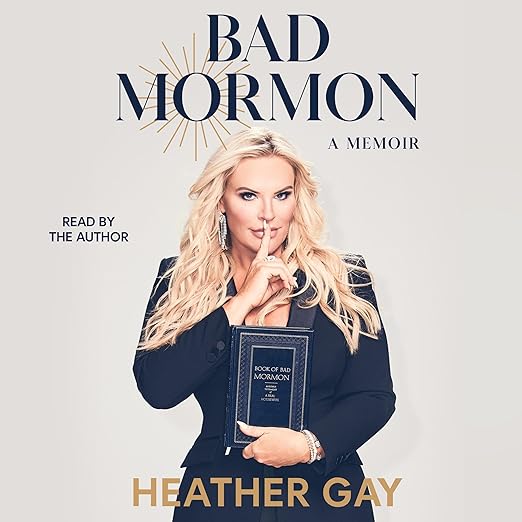
Heather Gay reads her own memoir here, and on an audiobook listing that single fact outranks everything else on the page. Bad Mormon runs seven hours and forty-seven minutes with the same name in the byline and the narrator credit, which means the account of a Brigham Young education, a mission in France, a temple marriage into what the copy calls Mormon royalty, and the collapse of all three, arrives in the voice of the person it happened to. Not one of the five people who wrote in below mentions this.
A Filler Habit Sounds Different Aloud
Born and bred to be devout, in the publisher's phrase, Gay built an entire life on the church before losing the marriage and the faith she had expected to keep forever. What follows covers the departure and the rebuilding after it: business, television, single motherhood. The listing files the book under biographies and memoirs with one tag, Religious, which undersells how completely this is an exit story. The column below treats it as two books at once, an account of one woman's life and a guided tour behind a curtain most of the writers had never been shown.
Ten outlets get named in the description before a single sentence about the content. The New York Times, People, The Cut, Vulture, The Daily Beast, Today, Bustle, Us Weekly, Life & Style and Interview all appear up top, alongside a bestseller banner and a placement on a best celebrity memoirs list. That is a great deal of borrowed authority stacked in front of a seven hour memoir, and it identifies the intended audience precisely: viewers of The Real Housewives of Salt Lake City and of the documentary series Surviving Mormonism. A listener who has watched neither will still follow the book, but loses the shorthand.
Mamacita Martin, whose three stars make the lowest grade posted, files the sharpest objection. The complaint is the constant reference of song lyrics, movie lines and cliches, which makes the book hard to take at times, plus a wish for lines with more substance than tired references to the ocean and Top Gun. Hold onto that one, because a verbal habit that reads as filler on a page behaves differently when the woman who wrote it is the one saying it aloud. The column never tells you which way it lands.
Five Reviews Never Once Mention the Performance
Seven hours and forty-seven minutes is compact for a memoir with this much ground to cover, and the compression shows in what the responses ask for. JRad, who liked the book enough for four stars, wanted more of the journey through the show and instead found something super informative about the church, generous about what happens behind the curtain. The trade looks deliberate. Anyone arriving from the television side expecting production stories will find the balance tipped a long way from where they hoped.
Nobody who posted here describes the performance, and on a self-narrated memoir that absence is worth naming. All five use reading language: worth the time to read, a great informational read, must read and will for sure read the next one. The closest anything comes to the recording is dscott's run of adjectives, witty, heartfelt, raw and brave, which describes a voice as readily as a text. When the author and the reader are the same person, the column being silent about the reading is the gap to know about before committing.
Among the claims made below the fold, one deserves care. scrapsofoz reports that the LDS church went after Heather Gay to try to stop the book from being published and to keep her from using the term Bad Mormon on merchandise, and says that this is what converted a browser into a buyer. The publisher's copy makes no such claim, and nothing else on the listing corroborates it. Treat it as one respondent's account of why the book landed, not as established fact.
Three Whole-Star Votes Cannot Average to 4.2
Three is the number of votes this listing counts, and 4.2 is the average it displays. Both cannot be true, because three whole star votes cannot average 4.2 under any rounding convention you care to apply. Five written responses sit under that counter, which is already two more people than the counter concedes exist. Neither figure is a reason to skip the book. Both are a reason to weigh the sentences rather than the badge, since the sentences are the only part of this arithmetic that survives inspection.
JRad and Mamacita Martin want opposite books out of the same seven hours. One asks for more reality television and less doctrine, the other for fewer pop culture asides and more weight per line. Between them they mark the outer edges of what this memoir does. It is a church story told by a woman famous for a television show, and it leans hard toward the church. Set expectations there and the three star complaint stops reading as a warning and starts reading as a preference.
Content sits heavier than the reality television framing suggests. The book works through religious indoctrination, the end of a temple marriage, and the loss of family, friends and community as the price of walking out, plus what the copy calls the darkness and damage behind a picture perfect life. Listeners who have left a high demand religion themselves should know the ground gets crossed carefully but never gently. Anyone hoping for a light celebrity memoir has the wrong seven hours in hand. The description promises candor and sincerity, quoting Interview magazine, and that is the register the whole way through.
Come for the Voice That Lived It
Listeners who follow The Real Housewives of Salt Lake City and want the backstory the show only gestures at will find it here, delivered first hand. The book also serves anyone curious about the machinery of a high demand faith described from the inside, since JRad found it specific and informative about what sits behind the curtain. Those two audiences overlap less than the marketing implies, and the church material takes the larger share of the running time by a clear margin.
Not the pick for anyone after season by season production gossip, nor for a listener who bristles at pop culture shorthand, since the lowest grade posted is aimed squarely at that habit. It is also the wrong place to start if you want a reviewed opinion of the reading itself, because no one has offered one. Come for the voice that lived it, and leave the television expectations at the door.
- Narrator: Heather Gay reads her own memoir, so byline and narrator credit name one person across seven hours and forty-seven minutes.
- Subjects: Leaving a high demand religion, reality television fame, single motherhood, the family cost of dissent.
- Tone: Candid, wry and unsparing.
- Bottom line: Heavier on the church than on the show, and worth it chiefly to hear the exit told by the person who made it.
Frequently Asked Questions
Does Heather Gay narrate the Bad Mormon audiobook herself?
Yes. The author name and the narrator credit on this listing are identical, so all seven hours and forty-seven minutes come from the person the memoir is about. No co-reader appears anywhere in the credits. None of the five written responses comments on how the reading turned out.
Why does the star rating on this audiobook listing look wrong?
Because it is. The badge shows 4.2 from three votes, and three whole star votes cannot average to that under any rounding convention. Five written responses are visible underneath, two more than the counter admits. The written opinions are sound; the summary number above them is not.
Is Bad Mormon too critical of the Mormon church for a believing listener?
It is an exit story, so yes, expect sustained criticism of religious indoctrination and of what the copy calls the damage behind a picture perfect life. One reviewer describes learning what happens behind the curtain. Believers looking for a balanced account of the faith should choose something else.