The Short Version
- Narrator: Tom Parker's clear, warm delivery suits the long-form nonfiction register perfectly across the thirteen-hour runtime.
- Subjects: American mythology, the formation of genius in unlikely circumstances, and the gap between legend and actual life.
- Tone: Authoritative and absorbing, written and narrated with the patient confidence of journalists who did the work.
- Bottom line: The definitive Babe Ruth biography in audio form, as essential for sports history listeners as anything in the genre.
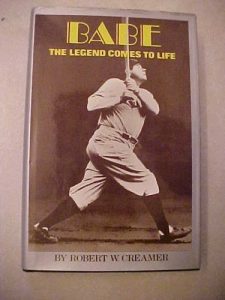
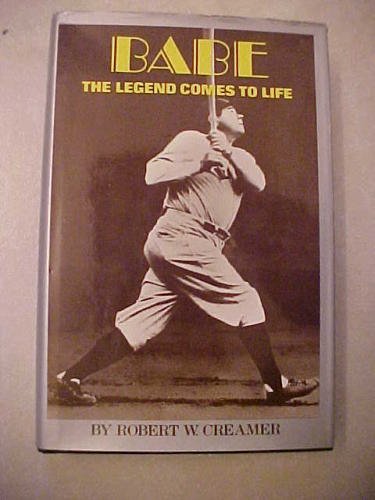
Robert Creamer's biography of Babe Ruth is as close to definitive as sports biography gets, and this audiobook makes the case plainly: the legend of George Herman Ruth is so large that even a straightforward account of his actual life reads as improbable, and Creamer's genius was to treat that life as history rather than mythology. Tom Parker's narration delivers this material with the clear, warm authority that long-form nonfiction demands, and the result is one of the strongest audio productions available to baseball listeners.
Parker Is Authoritative Without Being Stentorian
Published originally in 1974 as Babe: The Legend Comes to Life, Creamer's biography has outlasted every competitor in its field. Creamer was a senior editor at Sports Illustrated during an era when that magazine employed some of the finest sportswriters in America, and he brought to the Ruth project a journalist's skepticism and a historian's patience. The result is a biography that neither flatters nor diminishes its subject, which is a harder balance to maintain when the subject is arguably the most famous athlete in American history.
Ruth's life before baseball is part of what makes the biography so distinctive. His years at St. Mary's Industrial School in Baltimore, the institution where the Xaverian Brothers shaped a kid nobody outside his neighborhood had ever heard of into someone who could throw and hit with supernatural ability, receive the kind of careful attention that most baseball biographies skip over in their rush to get to the Yankees. That origin story matters, and Creamer knew it mattered. Ruth did not emerge from nowhere; he was formed in a specific place by specific people and circumstances, and understanding that formation makes everything that followed more coherent.
The book's second achievement, noted prominently in reader responses, is its treatment of baseball history itself. Creamer situates Ruth in the transformation of the game from the dead-ball era to the home-run era with the precision of someone who had studied the subject seriously. Readers who are not baseball fans have reported finding the biography compelling on its own terms, which is the mark of a book that exceeds its genre.
Tom Parker handles the material with exactly the right register: authoritative without being stentorian, warm without becoming hagiographic. His pacing through the statistical sections and the anecdotal chapters alike maintains the listener's engagement, and he treats Creamer's prose with the respect it earns. Parker is reliable with long nonfiction, and at thirteen-plus hours, this production benefits from a narrator who knows how to sustain a listener's attention across that kind of distance.
Immigrant Baltimore Before the Age of Free Agency
The audio format suits the biography because of how Creamer constructed the argument. The book builds steadily from Ruth's childhood through his years with the Red Sox and then the Yankees, and the cumulative effect of the narrative, the way each chapter adds context to what came before, rewards sustained listening more than it rewards skimming. Parker's consistency as a narrator helps: this is a production where you settle in and let the story proceed at Creamer's pace.
For baseball fans, this is close to essential listening. For sports biography listeners in general, it models what the form looks like when a first-rate journalist takes a first-rate subject seriously. Creamer never lets Ruth's legend excuse sloppy research or convenient mythology, and the biography is stronger for it.
For listeners with no particular attachment to baseball, the broader American history embedded in the Ruth story, the immigrant neighborhoods of early twentieth-century Baltimore, the economics of professional sports before free agency, the cultural role of the Yankees in the 1920s and 1930s, provides enough context to make this a genuinely historical listen rather than purely a sports fan document.
Specificity Restored to an Almost Symbolic Figure
Creamer's biography dates from 1974, which means it predates several decades of subsequent Ruth scholarship and, more significantly, several decades of cultural reckoning with what figures like Ruth actually were off the field. The biography does not sanitize Ruth's well-documented personal excesses, but it also does not apply the evaluative framework that contemporary sports biography tends to bring to the same material. That is not a flaw, exactly; it is a feature of the historical moment in which the book was written. Listeners coming to it with contemporary expectations about biographical accountability may find the treatment of certain aspects of Ruth's personal life less critical than they would expect from a biography published today.
The statistical sections, while handled well by Parker, will slow slightly for listeners with no prior exposure to baseball's numerical culture. Creamer contextualizes statistics rather than merely listing them, but some patience is required in those passages.
One underappreciated dimension of this audiobook is how well Creamer handles the baseball mythology problem. Ruth's legend had been accumulating for decades before Creamer wrote, and the biographical record was already contaminated by stories that had been told and retold until they bore only a passing resemblance to what actually happened. Creamer's forensic approach to source material, separating documented fact from accumulated legend, gives the biography an unusual authority. He does not debunk Ruth; the actual facts are extraordinary enough that debunking is beside the point. What he does is restore specificity to a figure who had become almost entirely symbolic, and in doing so he makes Ruth more interesting, not less. Tom Parker's narration complements this approach by keeping the tone matter-of-fact rather than hagiographic, trusting the material to generate its own power without theatrical enhancement.
An Obligation for Baseball Fans to Correct
Baseball fans who have not yet read Creamer have an obligation to correct that oversight, and the audio format makes it easier than ever. Sports biography enthusiasts of any kind will find this a model of what the form can achieve. American history listeners interested in the 1920s and 1930s will find the cultural context embedded in the Ruth story genuinely illuminating. And anyone who has wondered why a man who has been dead for more than seventy years still gets described as the greatest baseball player who ever lived will find Creamer's answer as close to authoritative as anything currently available.
Before You Listen
Is the Babe audiobook accessible to listeners who are not baseball fans?
Yes. Multiple readers without strong baseball backgrounds have noted that Creamer's treatment of Ruth's life and the historical context surrounding it holds up independently of interest in the sport. The American history embedded in the narrative is the larger draw.
How does the Babe audiobook handle Ruth's personal life and behavior off the field?
Creamer does not avoid Ruth's well-documented personal excesses, but the biography reflects its 1974 publication date in the depth of its critical engagement with those aspects of the subject's character. It is honest without being censorious or applying contemporary frameworks retrospectively.
Does the audiobook require prior knowledge of baseball history?
No prior knowledge is required. Creamer contextualizes the statistical and historical baseball material thoroughly enough that listeners unfamiliar with the game's structure can follow the argument and engage with the broader narrative.