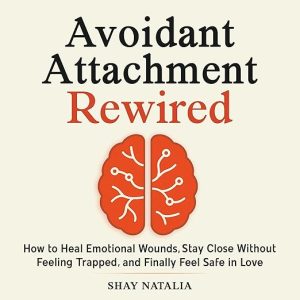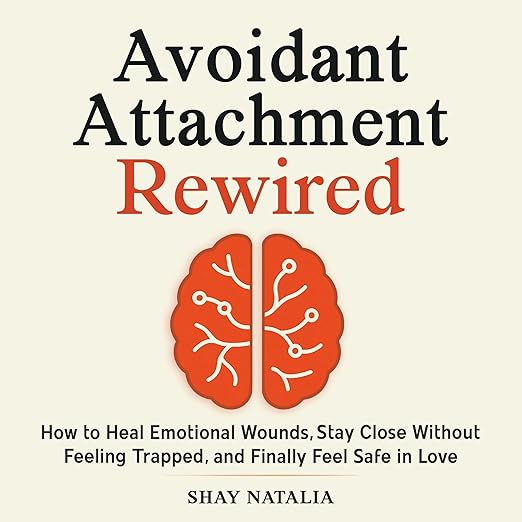
Every written response on this page was filed before the audiobook existed. The recording is dated March 13, 2026; the five notices carry dates of October 29, 30 and 31 of 2025 and February 8 and 15 of 2026. The ninety-eight ratings behind the 4.7 average carry no dates at all. What that means practically is that the entire visible reaction to Shay Natalia's book concerns the text, and a buyer choosing the three-hour-and-thirty-seven-minute recording is making a decision nobody on this page has made yet.
Emotionally Guarded Rather Than Emotionally Unavailable
Shay Natalia opens by drawing a line that the rest of the book depends on: you are not emotionally unavailable, you are emotionally guarded, and the difference matters. That distinction is doing real work. Unavailable describes a deficit, something absent. Guarded describes a strategy, something that was built for a reason and can therefore be dismantled. Everything that follows, from the childhood blueprint chapters to the exercises about staying in the room, follows from choosing the second word.
Jenny B.'s five-star notice is the clearest account of what that reframing does to a reader who recognizes themselves: "I've known for a while that I'm avoidant but I didn't realize that my physical lack of feeling anything in relationships was related to this pattern that I learned in childhood." Note the specific thing being described. Not new information about attachment theory, which is widely available, but a connection between a physical sensation and its origin. That is the transaction this book is offering.
Rebekah Amber Clark reads it, and what deserves naming is that Shay Natalia did not. The publisher line carries the author's own name, so this is a self-published title whose author chose to hand the reading to somebody else. On a personal-development book written almost entirely in the second person, addressed directly to a listener about their own panic and withdrawal, that choice changes the register in a specific way: the voice saying you is not the voice that worked the material out. Whether that reads as clinical distance or as welcome relief from confessional intimacy is genuinely a matter of preference, and a sample settles it faster than any description can.
Gentle Reflections in Under Four Hours
Three hours and thirty-seven minutes is the right size for this material. Attachment books have a tendency to sprawl across ten hours of case studies, and this one does not. The description promises a reflection-driven guide rather than a workbook of checkboxes and clinical prompts, and the runtime is consistent with that claim. You can finish it in two sittings and start applying something immediately, which for a behavior-change book matters more than comprehensiveness does.
Tone comes second, and the reviewers keep returning to it. Steffi's notice singles it out precisely, praising "how it explains avoidant patterns without judgment and offers practical ways to build deeper, safer connections" and adding that "The reflections and exercises feel gentle but powerful". Avoidance is the attachment style most easily written about with contempt, and a book that declines to do that is doing something harder than it looks.
Physiology is the third argument. The description's claim is that your nervous system rather than your logic drives the reactions, which shifts the whole project away from arguing yourself out of a feeling. One reviewer describes the result in one sentence: "It made me realize I truly am living with the same childhood protection mechanism from 35 years ago." That is what the framing is for. It relocates the problem from character to conditioning.
Pausing for Exercises That Audio Wasn't Built For
Guided reflections and exercises are the obvious format friction. The description sells them as central, and the responses confirm they are. In print you stop, write and return; in audio you either pause repeatedly or let them wash past. Anyone planning to listen while commuting or exercising should accept in advance that they will be getting the framework and skipping the practice, which is roughly half of what the book is selling.
Michelle's four-star notice, the most measured on the page, is worth reading closely for a different reason. It credits the book with showing "why avoidant attachment isn't as harsh and social media makes it out to be" while still giving workable solutions. That is a reasonable summary and also a signal about scope: this is a corrective to a popular discourse, calibrated to a general listener rather than to a clinical one.
Ninety-Eight Ratings Earned by the Text Alone
Precision of category is a genuine caveat. The reviewer posting as Almedina wrote something revealing without meaning to, describing a lifelong preference for working alone and concluding, "Because of this book i realized its really because i am anxiously attached." A book titled for one attachment style produced a self-diagnosis of a different one. Read generously, that shows the material travels; read carefully, it suggests the categories blur in practice, and a listener looking for a rigorous taxonomy should look at clinical sources instead.
One more note on the numbers. Ninety-eight ratings is a solid base for a self-published title, but they belong to a version of this book that people read rather than heard. Nothing about how quickly the material moves, how the reflections are cued, or how the exercises are signposted in audio has been reported by anyone, and those are exactly the questions a listener has.
Partners Translating a Book Written to the Avoidant
People who already suspect the label fits are the core audience. Two separate reviewers describe arriving with the self-diagnosis in hand and coming away with a mechanism rather than a name, which is the useful direction of travel. If you have pulled away from someone who made you feel seen and then spent months wondering why, the book is speaking directly to you.
Partners of avoidant people are the second group, with a caveat. The material is written in the second person to the avoidant listener, not about them to a third party, so anyone listening on someone else's behalf will need to translate as they go. What they will get is a non-hostile account of behavior that is easy to read as rejection.
Look elsewhere if you want research citations, therapeutic protocol, or an even-handed treatment of all four attachment styles, because this is a single-style guide written for a general listener rather than a clinical one. Half a book is still half a book, so anyone certain they will not stop for the reflections should weigh the price against that, or choose a format where a pen is within reach.
- Narrator: A hired reader rather than the author, which puts a small but real distance between the voice and the second-person address.
- Subjects: Avoidant attachment, childhood conditioning, nervous-system regulation, intimacy without self-abandonment.
- Tone: Gentle, direct and free of clinical coldness.
- Bottom line: A compact, non-judgmental guide worth the three and a half hours if you already recognize the pattern in yourself.