Failed Diets Point to Structure Over Willpower
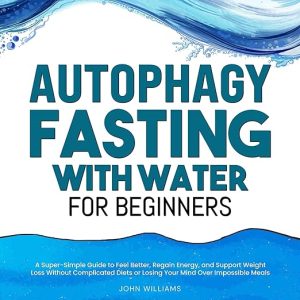
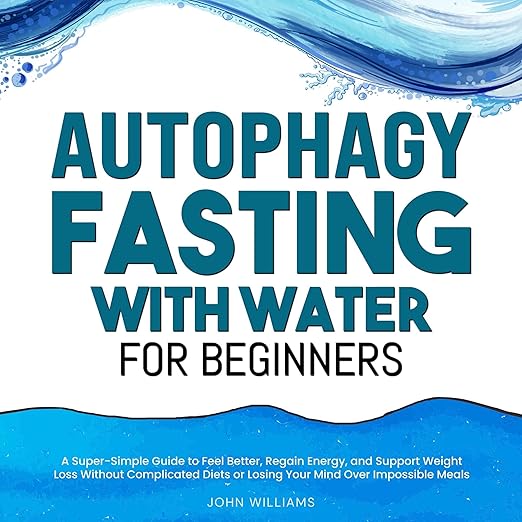
Fasting guides have proliferated so rapidly in recent years that the category has become genuinely difficult to navigate. Autophagy Fasting with Water for Beginners narrated by Duke Holm and written by John Williams, makes a clear bid for the newcomer market, and for that audience it does something most competing titles do not: it acknowledges, directly and without condescension, that most people who pick up a fasting guide have already tried other approaches and found them unsustainable. That framing is not a marketing trick. It shapes the entire structure of this audiobook in ways that turn out to matter.
Williams opens by naming the exhaustion that drives people to simplified approaches, and he does not moralize about it. The acknowledgment that difficulty with diets is usually a structural problem rather than a willpower problem sets a tone that holds throughout the three-hour and fifty-two minute runtime. This is a book that genuinely wants its reader to succeed rather than one that is primarily invested in impressing them with complexity.
Holm's Measured Reassurance Never Rushes Instructions
The audiobook's most valuable contribution is its treatment of the beginner timeline. Williams walks through what typically happens in the first 24, 48, and 72 hours of water fasting without the exaggeration that characterizes so much content in this space. He does not promise dramatic results on day one, and he is specific about the conditions under which a fast should stop. The sections on electrolytes and hydration are practical and precise, addressing the kinds of questions that tend to get generic answers in similar titles.
The autophagy framing is handled accessibly. Williams explains the cellular self-cleaning process that fasting triggers without requiring any background in biology from the listener. He positions it not as a cutting-edge discovery but as a physiological capacity that periodic breaks from eating allow the body to use. This is appropriately modest; autophagy research is real and meaningful, but some writers in this space overclaim its significance, and Williams avoids that trap.
Duke Holm's narration serves the material efficiently. His voice carries the right quality of measured reassurance for content that is partly addressing listener anxiety about health decisions. He reads clearly and does not rush through the instructional sections that benefit from a slower pace. For a health and wellness audiobook, that reliability of delivery matters more than it might in a narrative context.
The section on starting with a 12-hour fast and adjusting gradually is the most practically useful in the book. Williams frames this as body-responsive calibration rather than rule-following, which is a genuinely good pedagogical choice. Listeners who have tried and abandoned stricter protocols will find this graduated approach more sustainable.
Loose Science and Informal Prose Have Limits
The book's brevity means that some important adjacent topics are either absent or thinly treated. The relationship between extended water fasting and existing medical conditions is addressed in general terms but not with the specificity that some listeners will need. Williams appropriately recommends consulting healthcare providers, but the guidance on who specifically should be cautious before undertaking even a 12-hour fast is less detailed than it should be. This is a common limitation of popular health audiobooks, but it is worth naming.
The scientific grounding, while accessible, is sometimes a bit loose. Williams cites general timelines for autophagy activation but does not engage with the ongoing research debates about exactly when and how strongly fasting triggers these processes. Listeners who want to understand the evidence base more thoroughly will need to supplement this audiobook with primary or peer-reviewed sources.
The prose style, as Williams himself essentially acknowledges through his conversational tone, is deliberately informal. Some listeners will find this approachability a feature; others will want more rigorous structure. The audiobook is organized clearly but is not the systematic reference guide that some readers in this space are looking for.
Genuine Empathy Extends to Emotional Eating Too
The emotional texture of this audiobook is worth noting separately from its practical content. Williams writes with genuine empathy for the listener who is tired of nutritional complexity, and that empathy is not performed. He does not condescend toward people who have failed at previous approaches, and he does not use the vocabulary of discipline and willpower that makes so many health titles feel simultaneously prescriptive and judgmental. The effect is that listeners who arrive defensive and skeptical tend to lower their resistance earlier than they might with a more prescriptive guide, which is itself a pedagogical achievement.
One aspect of this audiobook that deserves specific mention is its handling of the relationship between fasting and emotional eating patterns. Williams addresses this briefly but thoughtfully, noting that the most common obstacle to consistent fasting practice is not physical hunger but the psychological habits and social rituals built around eating at specific times. He does not pretend to resolve this in a short section, but naming it explicitly, rather than treating fasting as a purely physiological intervention, distinguishes this audiobook from guides that assume the practical information is sufficient without acknowledging the behavioral and emotional context in which it has to be applied.
Non-Intimidating Orientation for Total Fasting Newcomers
The title accurately describes the target listener. If you are new to intermittent or water fasting and want a non-intimidating, practically oriented orientation, this audiobook delivers what it promises. The explicit focus on beginners, the honest timeline framing, and the absence of extreme claims make it a more trustworthy starting point than many alternatives. Experienced fasters or listeners with specific health conditions that require tailored guidance should look for more specialized resources. But as an entry point for someone who wants to understand what autophagy fasting actually involves before committing to a protocol, the nearly four hours here are genuinely useful and accessible.
- Narration: Duke Holm reads with measured, reassuring clarity that suits health instruction well, keeping technical sections accessible without losing precision.
- Themes: Intermittent and water fasting, autophagy and cellular renewal, sustainable health habits for beginners
- Mood: Calm and supportive, practically oriented
- Verdict: A straightforward and honest beginner's orientation to water fasting that avoids overclaiming and focuses on what newcomers actually need to know.
Before You Listen
Does this audiobook include specific safety guidance for beginners who want to try water fasting?
Yes, Williams covers electrolytes, hydration, and the conditions under which a fast should be stopped. He recommends starting with a 12-hour window and adjusting based on how your body responds, and he advises consulting a healthcare provider before beginning.
What distinguishes this audiobook from other fasting guides in the same space?
Its explicit focus on the beginner experience and its refusal to exaggerate timelines or outcomes. Williams acknowledges that most people arrive exhausted from previous diet attempts, and the entire audiobook is structured around making the approach genuinely sustainable from day one.
How does this audiobook explain autophagy for listeners without a science background?
Williams explains it as the body's natural cellular self-cleaning process, activated by giving the digestive system regular breaks. The explanation is accessible and appropriately modest about what the research currently confirms.
At under four hours, does this audiobook cover enough material to be practically useful?
For a true beginner, yes. It covers the first-week experience, hydration and electrolyte guidance, and a graduated approach to extending fasting windows. Listeners looking for comprehensive research or advanced protocols will need additional sources.