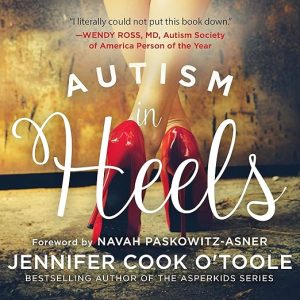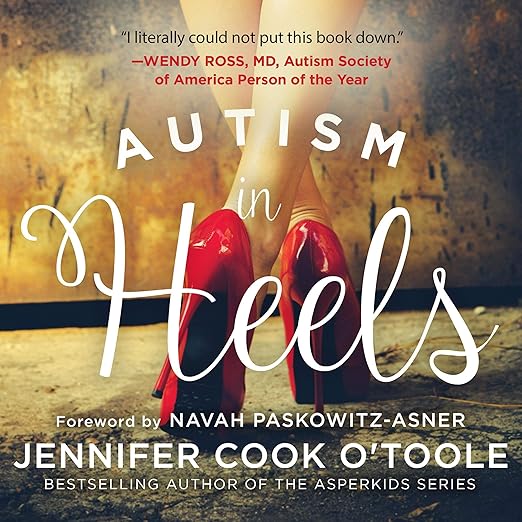
Jennifer O'Toole spent thirty-five years without a name for why she felt like she was performing womanhood rather than living it, so what actually changes once the diagnosis finally arrives in midlife? The Autism in Heels audiobook, narrated by O'Toole herself, spends twelve and a half hours answering that question in her own actual voice rather than leaving it on the page. She was diagnosed with Asperger's syndrome at thirty-five, and the memoir works backward from that moment, examining a lifetime of masking, bad perms, body image struggles, and volatile relationships through the lens of a diagnosis that arrived decades later than it should have.
A Diagnosis Retired From Clinical Use in 2013
O'Toole frames the book explicitly as more than a memoir about autism; she calls it a love letter to women generally, built on the observation that autism looks different, and gets diagnosed far less often, in girls and women than in boys and men. The synopsis's own language, a reverse-self-discovery, captures the book's structure well: rather than a linear account of symptoms leading to diagnosis, it's an adult woman reconstructing her own history with new information, deciding which parts of her carefully crafted persona were coping mechanisms and which were simply her.
The heels of the title aren't incidental. O'Toole writes explicitly about presentation, including a pair of iconic red stilettos, as both armor and honest self-expression, resisting the flattened image of autism as inherently opposed to traditional femininity. One reviewer, writing as a fellow autistic woman, described finding 'a lot of comrodiery' in the book's perspective, which is precisely the audience this memoir is built to reach first, even as its stated ambition extends further.
The book's vocabulary also carries a small but real historical footnote: Asperger's syndrome, the specific diagnosis O'Toole received, was folded into the broader autism spectrum disorder category in psychiatry's diagnostic manual in 2013, meaning the term she uses throughout the memoir to describe her own identity has since been formally retired from clinical use even as it remains exactly the language that captured her lived experience. That's useful context rather than a correction: O'Toole is writing from inside the diagnostic framework that existed when she received her own answer, and the memoir's vocabulary reflects that honestly.
A Voice That Spent Decades Being Edited
Self-narration matters enormously here in a way it doesn't for every memoir. O'Toole isn't just recounting facts about masking and social performance; she's demonstrating, in real time, a voice that spent decades being edited for other people's comfort. Hearing her control the pacing, the emphasis, the moments she lets herself sound angry or exhausted rather than composed, adds information a hired narrator reading her words secondhand simply couldn't supply.
The audiobook format also suits material that's fundamentally about internal experience, the gap between what O'Toole was performing and what she actually felt, better than a purely visual reading might. Tone of voice becomes evidence in a memoir like this one, and O'Toole uses her own instrument deliberately rather than defaulting to a flat, professional register throughout.
Spoken Language Can Be Easier to Process
The underdiagnosis pattern O'Toole writes about is well documented beyond her own individual story: autism research has increasingly recognized that diagnostic criteria were built primarily around how the condition presents in boys, leaving girls and women who mask more effectively, and present differently, undiagnosed or misdiagnosed for years or decades. O'Toole's memoir functions as a lived, specific case study inside that larger, now well-established pattern, which gives her individual story added weight beyond its value as personal narrative alone.
Audio format also carries a specific, practical accessibility argument for at least some neurodivergent listeners: processing spoken language can be genuinely easier than dense printed text for some autistic readers, and a memoir specifically about autism reaching its own potential audience in the format many of them may actually prefer is worth stating plainly rather than treating as incidental. That doesn't mean every autistic listener prefers audio over print, individual processing preferences vary enormously even within the same diagnosis, but it's a real, material reason this particular subject matter and this particular format are especially well matched, beyond the general self-narration argument already made above.
Only One Rating Despite a Real Following
At over twelve hours, this is a dense listen, and one reviewer was candid about the toll: they described needing to read a bit, put the book down for a while, and resume later, repeating that cycle multiple times before finishing. That's a legitimate response to genuinely rich, sometimes heavy material rather than a mark against the book, but it's worth setting expectations accordingly rather than planning to finish this one in a weekend.
This is not a clinical or instructional guide to autism; readers wanting diagnostic criteria, therapeutic frameworks, or parenting advice should look elsewhere. O'Toole's approach is personal and literary, organized around her own experience rather than general education, which is exactly right for a memoir but worth flagging for anyone expecting a different kind of book based on the subject matter alone.
Only one rating is attached to this listing despite the book's clear passionate following among readers who found it, which says more about how this specific edition has been discovered than about the book's actual reception; don't read a thin rating count here as a signal of quality.
Listeners should also know this memoir predates some of the more recent mainstream conversation around autism masking and camouflaging as specific, named concepts; O'Toole writes from her own vocabulary and framework rather than more recently standardized clinical language, which doesn't diminish the book's insight but is worth knowing if you're arriving having already read newer work on the same subject.
Approached in Sessions Rather Than One Sitting
Recommended especially for women wondering whether a late Asperger's or autism diagnosis might explain their own history, for anyone close to a late-diagnosed woman who wants to understand her experience better, and for memoir readers generally who appreciate sharp, self-aware writing about identity and performance.
Best approached in sessions rather than a single sitting, given the density and emotional weight of the material; listeners wanting a light or purely inspirational disability memoir should know this one digs considerably deeper and asks more of its audience than that framing would suggest.
It's a natural companion listen alongside other late-diagnosis women's memoirs for readers building out a reading list on the subject, even though it stands entirely on its own without that context.
Questions Listeners Ask
Is the Autism in Heels audiobook narrated by the author herself?
Yes, Jennifer O'Toole narrates her own memoir in full.
Who is this audiobook for if I'm not autistic myself?
Anyone close to a late-diagnosed autistic woman, or anyone interested in how masking and identity performance work, will find real value here beyond the autism-specific audience.
Is the Autism in Heels audiobook better suited to one long sitting or shorter sessions?
Shorter sessions are recommended; at over twelve hours and genuinely dense with reflection, at least one reviewer described needing to set it down and return to it repeatedly.
How does this audiobook address autism in women specifically, differently from general autism books?
It centers presentation, masking, and femininity directly, arguing that autism looks different in women and girls and is diagnosed far less often as a result, which shapes the entire memoir's structure.