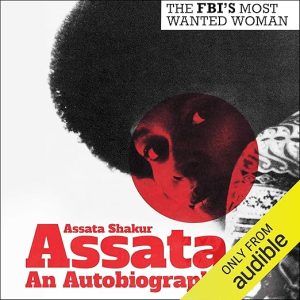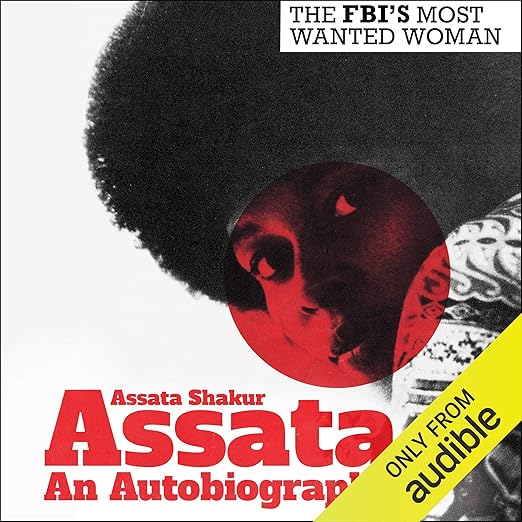
Angela Davis wrote the foreword to this memoir, and two of the people who left responses on this audiobook page came away talking about that foreword instead of the twelve hours of Assata Shakur that follow it. Kushiera Johnstone was intrigued by it. Grak Baver quotes it, crediting Davis with pointing out that Shakur glosses over the worst of what happened to her. For a prefatory essay to draw that much of the response is unusual, and it raises a question the credits do not answer.
Riley Alone, but Who Reads the Foreword
Sirena Riley is the only reader named anywhere on the listing. Audible Studios attaches no second credit, no guest, and no note distinguishing the foreword from the memoir proper, which leaves an open question about a section written by somebody other than the author. Plenty of productions have one reader take everything and plenty split it. The page simply does not say, and given how much attention the foreword attracts below, that is the detail a prospective listener would most like settled.
The memoir itself covers a life that the state and its subject describe in incompatible terms. In 1973 Shakur was tried and convicted for the murder of a white State Trooper, a case that split American opinion along the lines of race and policing. In 2013 she became the first woman placed on the FBI's most wanted terrorist list. Between those two dates sits an autobiography written by a founding member of the Black Liberation Army and a former Black Panther, told with what the description calls wit and candor.
Twelve hours and eighteen minutes is a moderate length for a life this contested, and the shape of the book explains why. This is not a chronicle of the case. It is an account of the experiences that led to activism, followed by an assessment of what the Black and white revolutionary groups of the period got right and what destroyed them. The description promises a portrait far removed from the fearsome image projected onto her, a claim the reader is invited to test, not to accept. The publisher also reaches for the word demise when describing what happened to those groups, which is a heavy term for a memoir to apply to its own side, and it signals that self-criticism is part of the project rather than an afterthought.
A Life and a Telling, Both Land
Rasheed opens with a small theory of the genre that turns out to be the most useful sentence in the column. A biography, that response argues, depends on two things: the life lived and the way it is told. Somebody may have led a full and exciting life and recount it in a drab way; somebody else may have led an ordinary one and make it sing. The verdict on Assata is that both halves land, that the life is extraordinary and the telling is uncomplicated and absorbing.
Uncomplicated is the right word for what makes this work aloud. First-person political memoir can collapse into position papers, and the description signals something different: formative experiences, pained awareness, the strengths and weaknesses of a movement seen from inside it. That register carries in a recording, where an argument delivered as recollection stays human in a way that an argument delivered as thesis does not. Twelve hours in one voice is the natural form for it. Grak Baver pushes that further, saying the cruelty of the imprisonment and the trial runs past what that reviewer has the language to describe, which functions as a content warning at least as much as a compliment.
Publisher copy positions the book beside The Autobiography of Malcolm X and the work of Maya Angelou, a large claim and a revealing one about the intended shelf. C.M. offers an unintended endorsement of it: first read in high school, returned to two decades later with more experienced eyes, and passed along to the next generation. Books that survive that kind of rereading are usually the ones that were doing more than reporting.
Sharkur Once, Shakur Everywhere Else
Count the written responses on this page and you reach five. Count the votes the page admits to and you reach four. The tally is smaller than the column it supposedly summarizes, and 4.9 is not a result four whole stars can add up to, since totals divided by four settle on quarters. All five graders here gave top marks anyway. The badge is therefore neither an average of what you can read nor a number what you can read is able to account for.
Dates make the same point from another direction. This recording was released on July 4, 2017. Grak Baver posted in September 2015 and Rasheed in December 2016, both before the file existed, and the newest responses arrived in October and December of 2025. A column spanning a full decade around a memoir first published decades earlier is not describing a listening experience. It is describing a book that keeps being picked up, a different thing and still a valuable one.
One reviewer writes the author's name two ways in the same paragraph, as Sharkur and then correctly as Shakur, and several bodies break off partway through a sentence, Rasheed's at the moment of first encountering the name. Take the visible text as openings, not as finished judgments. The political framing deserves the same caution: the description states outright that detractors call her a ruthless killer while defenders call her the target of a campaign against Black nationalist organizations.
One Position, Argued From the Inside
Political readers and anyone building a shelf of movement autobiography will already know why they are here, and so does a listener who wants the period rendered from inside, not summarized from outside. The godmother of Tupac Shakur, a founding member of an armed organization, a fugitive on a terrorism list: those facts alone place the book somewhere very few memoirs sit, and the twelve-hour length keeps it approachable. The shelf the publisher claims for it is not a modest one either, and listeners who know those comparisons will want to judge for themselves whether the space is earned.
Anyone looking for a neutral adjudication of the 1973 shooting should understand in advance that this is not that book and has never pretended otherwise. The description names the split without resolving it, and the memoir argues one of the two positions from the inside. That will frustrate a listener who wants both cases weighed on the same page. Come to it for the account Shakur chose to leave behind, and treat the argument as the point rather than as a defect.
Before You Listen
Who reads the Angela Davis foreword in this audiobook?
The listing does not say. Sirena Riley is the only performer credited, and no second voice, guest reader or separate foreword note appears anywhere on the page. Since two responses in this column single out that foreword, it is the one production detail a buyer would most reasonably want confirmed.
Why do reviews on this audiobook page predate its 2017 release?
Because they belong to the book rather than to the recording. This edition carries a release date of July 4, 2017, while responses appear from September 2015 and December 2016. The column runs all the way to December 2025, so it tracks a long publishing life rather than a single audio launch.