- Voice: Nancy Linari reads in a clear, unhurried register well suited to practical scripts and checklists, without dramatic flourish getting in the way of usable guidance.
- Big ideas: Independent living, workplace and dating scripts, self-advocacy for autistic adults
- Atmosphere: Practical and reassuring, more field manual than memoir
- Worth it?: A focused, script-driven guide for newly independent Aspie adults and the people who love them, not a general awareness primer.
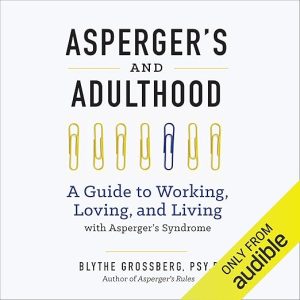
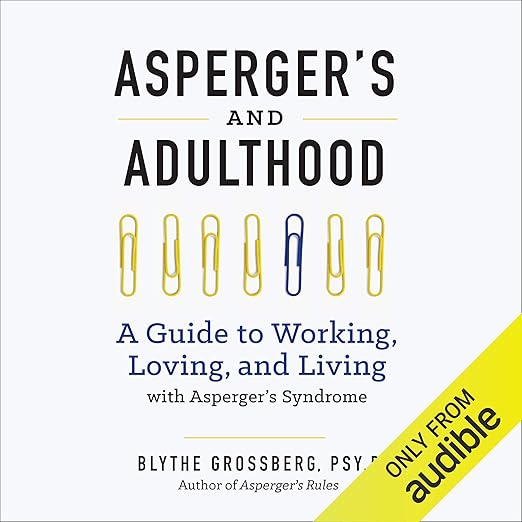
Fifteen years of clinical work with Asperger's patients sits behind every chapter of Blythe Grossberg's Asperger's and Adulthood, and that clinical mileage is audible from the first few minutes of the audiobook. Grossberg, a learning specialist who already wrote Asperger's Rules! and Asperger's Teens for younger readers, pivots here to a genuinely underserved audience: the newly launched Aspie adult trying to hold down a first job, navigate a first date, or simply move out without a parent managing every logistical detail. At three hours and forty minutes, narrated by Nancy Linari, this is a compact, practical listen rather than a sprawling clinical text, and that compactness turns out to be one of its real strengths.
The book's craft is entirely functional, and that is a compliment given the subject. Grossberg organizes the material as a genuine road map rather than a general awareness primer: step-by-step strategies for entering the workforce, scripted language for small talk and first dates, budgeting checklists for independent living, and a section specifically on stimming that frames it as something to manage discreetly rather than something to be ashamed of. That last choice matters. A lot of neurodiversity writing either over-medicalizes stimming or ignores it entirely, and Grossberg's middle path, practical rather than judgmental, sets the tone for the whole book. Worth flagging for anyone browsing by category: this listing carries a 'Children's Health' tag that does not match the content at all. Every strategy here, dating scripts, job interviews, apartment budgets, is written for adults, not for the teen audience Grossberg's earlier Asperger's Teens actually targets.
Real-life stories are threaded through the practical sections rather than collected in a separate anecdotes chapter, and that integration is a smart structural choice for audio specifically. Instead of a list-format chapter of disconnected success stories, Grossberg folds first-person accounts of finding friends, landing jobs, and navigating awkward social moments directly into the strategy sections they illustrate, so a listener hears the concrete script and the lived example back to back rather than mentally connecting a case study heard forty minutes earlier to today's tip. For an audiobook specifically, where flipping back to reread a checklist is less convenient than it would be in print, that pairing of story and strategy in the same breath suits how people actually listen.
Linari's Steady Pace Suits Autistic Listeners Best
Nancy Linari narrates in a clear, unhurried register that suits a workbook-adjacent guide well; this is not material that benefits from dramatic flourish, and she does not attempt any. The bigger asset is Grossberg's own writing, which speaks directly to the listener without the clinical distance that can creep into books written primarily for professionals or parents. That dual-audience design, useful whether you are the Aspie adult or someone who loves one, is baked into the structure rather than bolted on. Reviewer Dianne's account carries real weight here: diagnosed with Asperger's at sixty-three, she writes that she wishes she had this book in her teens, and that she found it an amazing resource for young and old alike. A guide that lands with both a listener newly into adulthood and a lifelong undiagnosed adult finally getting answers is doing something structurally right.
It also helps that Grossberg is not writing from theory alone. Her author bio credits more than fifteen years working directly with Asperger's patients, and the specificity of the advice throughout, exact phrasing for declining a handshake, a suggested script for explaining a meltdown to a new manager, reflects that hands-on caseload rather than a survey of published literature. Listeners who have tried more general neurodiversity-awareness books and found them long on validation but short on usable scripts may find this one's practical density a relief.
The audio format itself is worth a specific word of praise beyond simple convenience. Many autistic adults report finding sustained visual reading more effortful than listening, particularly with dense procedural or list-heavy content, which makes an audiobook version of exactly this kind of practical guide more than a lifestyle preference for a meaningful portion of its target audience. Nancy Linari's steady, unhurried pacing supports that use case directly, giving listeners time to absorb a script or checklist item by item rather than requiring the kind of rapid visual scanning a printed bulleted list often assumes.
Two Reviews Paid For, One Genuinely Independent
Two of the three attached reviews disclose that the copy was received free or the reviewer was compensated to write about it, Super_Dork_42 explicitly and Dianne implicitly through an 'unbiased review' disclaimer that self-published and small-press nonfiction titles use often. That is not disqualifying, self-help and advocacy books in this specific niche rely heavily on incentivized reviews simply because organic reach is hard to come by, but it is worth knowing before treating the 4.2 rating as a fully independent signal. The most genuinely independent-reading review comes from MGran, a speech therapist who works regularly with autistic children and picked this up out of professional curiosity about long-term outcomes; that outside-clinical-context validation carries more weight than the two disclosed exchanges.
It also helps to know what this book is not. At under four hours, it is not a comprehensive clinical text on autism spectrum research, and it does not attempt the scope of a diagnostic manual or a memoir-length personal account. It reads more like a highly focused field manual: here is what a first job interview script sounds like, here is a budgeting checklist, here is language for telling a date you need a break from eye contact. That narrowness is deliberate and, based on the reviews, exactly what listeners in this specific life stage are looking for rather than another general overview of what Asperger's is.
Young Adults Newly Out on Their Own
This audiobook is built for young adults with Asperger's who are newly out on their own, or about to be, and for the parents, partners, and friends trying to understand what that transition actually requires without resorting to generic disability-awareness language. Grossberg's scripts and checklists work best listened to in short sessions rather than one long sitting, since so much of the value is in specific, reusable language you might want to return to before an actual job interview or first date. Anyone supporting a recently diagnosed adult, as Dianne describes herself, will also find real value in the loved-ones framing Grossberg builds into nearly every chapter.
Skip this one if you are looking for research-heavy analysis of autism spectrum science, a memoir-style personal narrative, or content aimed at children and teens specifically, despite what the listing's own 'Children's Health' tag might suggest. Readers who already own Grossberg's Asperger's Teens and are hoping for a straightforward continuation should know this genuinely shifts register toward adult independence rather than simply extending the teen material forward a few years. And if the paid-review pattern in two of the three attached reviews gives you pause about how organically this book found its audience, it is fair to factor that in alongside the otherwise solid 4.2 rating.
Frequently Asked Questions
Can family members or partners get value from this audiobook, or is it only for autistic listeners themselves?
Both; Grossberg writes explicitly for loved ones as well as autistic adults, folding real-life stories and strategies into sections useful for either audience.
How does this audiobook compare to Blythe Grossberg's earlier Asperger's Teens?
It shifts register meaningfully toward adult independence, careers, dating, budgeting, rather than extending the teen material forward, so it reads as a distinct book rather than a direct sequel.