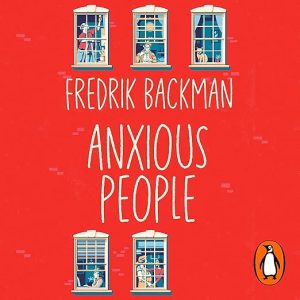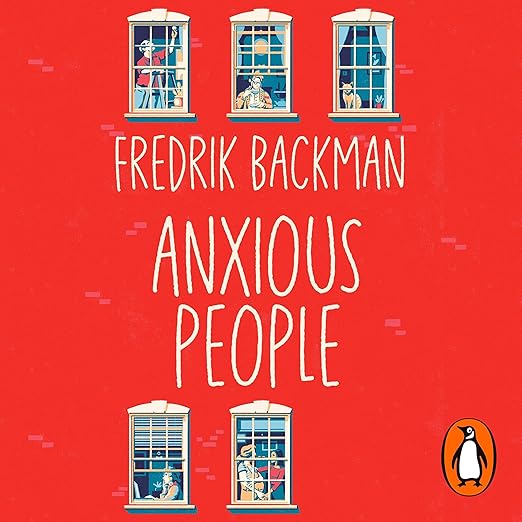
A masked figure walks into what looks like an ordinary bank in a small Swedish town, and within two hours that bungled robbery has turned into a hostage standoff inside an apartment viewing next door, seven strangers trapped together with a captor who won't state any demands. That's the setup Fredrik Backman uses to open this audiobook, and he immediately complicates it: the hostages, irritated more than terrified, start suspecting that whoever is holding them might need rescuing more than they do. I listened to most of it in single, long sittings, which is exactly how this one wants to be consumed, since Backman keeps circling back to reveal pieces of the same hour from different angles.
The Rabbit-Obsessed Hostage Steals Every Scene
This is Backman working in the same register that made A Man Called Ove an international sensation, using comedy as a delivery mechanism for real grief rather than as an end in itself. The seven hostages, plus the police negotiators outside, form an ensemble that could easily collapse into caricature, the pregnant woman, the bickering couple, the elderly rabbit-obsessed man, but the novel keeps pulling back the curtain on each of them just as they threaten to flatten into a type. One reviewer, TapTheLine, quotes the book's own chapter 27 self-description directly: 'it's a story about idiots. But perhaps not only that.' That's about as precise a summary as this book allows. The rabbit-obsessed elderly man alone is worth the price of admission, a small comic engine that keeps resurfacing at exactly the right moments.
The structure rewards patience. Backman reveals the hostage situation's actual mechanics slowly, through police interview transcripts interspersed with the present-tense chaos inside the apartment, and the mystery of how an amateur bank robber ends up here at all becomes the novel's real engine. Reviewer Melissa admits this wasn't her first choice as a book club pick, calling it 'not what I would normally choose to read,' but ultimately found real value in the shared discussion it generated, which speaks to how much of this book's appeal is built for exactly that kind of conversation afterward.
Backman also uses the apartment-viewing device, a real estate showing interrupted by the hostage crisis, forcing strangers who would normally never speak to negotiate close quarters during an actual life-or-death situation, as a sly commentary on how thin the walls are between ordinary domestic anxieties, mortgages, marriages, parenting, and genuine crisis. The Swedish small-town setting grounds what could otherwise read as an abstract morality play in real, specific texture: local police politics, awkward small talk between strangers, and the particular indignity of being held hostage during what was supposed to be a routine afternoon errand.
Ireland's Restraint Preserves the Robber's Hidden Identity
Marin Ireland's narration is the reason to choose audio over print here specifically. She carries a seven-character ensemble without leaning on caricature or exaggerated voices to keep them distinct, relying instead on timing and restraint, letting Backman's humor land the way a skilled comic actor lands a joke, through pause and delivery rather than volume. Her handling of the novel's emotional pivots, the moments where a scene tips from farce into real sorrow, is especially controlled; she allows the emotion to surface rather than performing it outright, which suits Backman's own accumulative, patient prose style.
That restraint matters because this novel's comedy depends on tonal whiplash, jumping from a genuinely funny hostage-negotiation transcript to a quietly devastating aside about loneliness within the same chapter, and an over-performed narration could easily curdle that shift into melodrama. Ireland avoids that trap consistently across nearly ten hours. Reviewer Aybige, admitting this was her first Backman novel, immediately bought two more after finishing it, a good proxy for how effectively the combination of Backman's writing and Ireland's reading builds momentum toward the rest of his catalog.
Ireland resists the temptation to give the anonymous robber a single obvious vocal signature early on, preserving the mystery of their identity through tone rather than telegraphing it the way a less disciplined performance might. That choice matters more than it sounds: the novel's late reveal only works if the audiobook hasn't already tipped its hand three hours earlier through an unmistakable voice.
Only 87 Ratings Undersell This Widely-Read Novel
New Backman listeners should know going in that the opening chapters deliberately withhold context, jumping between the robbery's aftermath, police interviews, and flashback fragments before the full shape of what happened becomes clear. That structure is the whole point, not a flaw, but it can read as disorienting for the first thirty or forty minutes if you're expecting a straightforward linear heist story rather than a puzzle assembled out of order.
The hostage-negotiator subplot, involving a father-son police duo working the scene from outside, adds a second layer of tension separate from the apartment itself, and listeners should expect the narrative to cut between these two vantage points frequently rather than staying inside the apartment for the full runtime. That back-and-forth structure is deliberate but worth knowing about going in if you prefer a single, unbroken point of view.
The rating count here, 87 at time of review, is on the lower side for a book this widely read, likely reflecting review-pooling quirks across multiple editions and formats rather than a small actual audience; Backman's other titles carry ratings in the tens of thousands, so treat the number itself with some caution rather than as a true measure of this specific audiobook's reach. The 4.4 average that does exist lines up comfortably with the overwhelmingly positive reviewer sentiment quoted above, for what it's worth.
It's also worth setting expectations around the ending specifically, without spoiling it: Backman has a well-established pattern across his catalog of resolving high-tension setups through unexpected tenderness rather than conventional thriller payoff, and Anxious People follows that same pattern closely enough that listeners expecting a crime-novel-style resolution should recalibrate toward something gentler and more character-driven instead.
Skip It If You Want Pure Comedy Throughout
This audiobook suits listeners who loved A Man Called Ove's blend of comedy and grief and want Backman applying that same formula to an ensemble cast rather than a single grumpy protagonist. It's also a genuinely strong book club pick, per Melissa's review, since the hostage-situation mystery structure gives a group plenty to untangle together afterward.
Skip this one if you want your comic novels to stay comic throughout; Backman's books have a well-documented habit of pivoting hard into loss and loneliness, and Anxious People is no exception. Listeners who prefer a tidy, single-perspective narrative over a structure that deliberately fragments and reassembles its own timeline may also find the early chapters more work than payoff before the pieces click into place. That said, patient listeners are rewarded with one of Backman's most satisfying final-act reveals, so the investment pays off for anyone willing to sit with the disorientation.
A Few Questions About Anxious People
Does Marin Ireland's narration handle Anxious People's seven-character ensemble well?
Yes. She differentiates the hostages through timing and restraint rather than exaggerated voices, and keeps the novel's tonal shifts between comedy and grief from tipping into melodrama.
Do I need to have read A Man Called Ove before listening to this audiobook?
No. Anxious People is a standalone novel with its own cast and setting, though listeners who loved Ove's blend of comedy and grief will recognize Backman's same instincts here.
Is Anxious People a comedy or a serious novel?
Both. The hostage situation plays for real laughs early on, but the audiobook keeps circling back to loneliness and grief underneath the comic setup.
Does this audiobook reveal the bank robber's identity early or hold it back?
It holds the reveal back, unfolding the full story through police interview transcripts and flashback fragments rather than a straightforward chronological account.