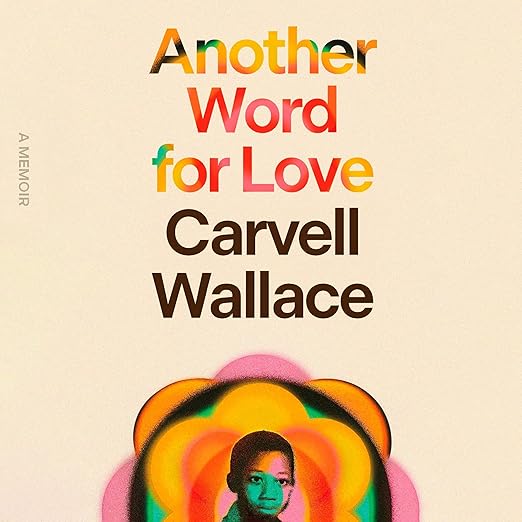
- Narrator: Six hours in a single voice, with no cast, no interpretation layer and no distance between writer and reader.
- Subjects: Growing up Black and queer, homelessness, partnership and parenting, healing.
- Tone: Warm, searching and unhurried.
- Bottom line: A short memoir with a long reach, better taken in pieces than in one sitting.
Publishers rarely lead a listing with somebody else's verdict on the reading, and this one does. Before the copy describes a single scene from the book, it prints an AudioFile line about how the author sounds performing it: poignant urgency, a poetic cadence, narration that seems to fly. That is an unusual choice for an audiobook page, and it is also a signal about where Macmillan Audio believes the value sits in a six-hour memoir read by its own author.
A Pennsylvania Town the Copy Calls Ghostly White
Carvell Wallace covers a great deal of ground in six hours and seven minutes: seeking refuge from homelessness with a young single mother, growing up Black and queer in a Pennsylvania town the copy calls ghostly white, becoming a partner and a parent, and raising two teenagers in what the copy calls a collapsing world. Farrar, Straus and Giroux published the book, Macmillan Audio produced the recording, and the release date on the listing is May 2024.
Shape matters more than chronology here, and the column's only four-star describes that shape precisely: a memoir built as a series of essays, each themed on a form of love, from familial love as a child through friendship, partnership, parenthood, loss and grief. That entry's verdict is worth holding as a calibration, since it calls the result occasionally meandering and ultimately quite beautiful. Both halves of that sentence are honest things to say about an essay sequence at this length.
Another five-star backs the structural reading from the other side, praising short chapters and the way the whole thing is presented. Short chapters plus thematic essays make this a genuinely dippable listen, which is rarer in memoir than you would think, because most of the form asks you to hold a timeline in your head from the first minute to the last.
Checked Out Twice, Never Quite Finished
The reading credit is the argument. The copy states it in its first line, the narrator field repeats the byline, and for once that repetition is settled rather than ambiguous: this program is read by the author. On a memoir whose subject is the author's own interior life, that removes the question of interpretation entirely. Nobody is deciding how those sentences should land except the person who built them.
AudioFile's line, the one the publisher chose to print, goes further, describing a voice with the same cadence as the prose and a delivery that climbs toward an emotional crescendo. Take it for what it is, a trade review selected for sales copy, but it makes a specific claim about the reading rather than a generic compliment, and it is the only assessment of the performance the record carries anywhere.
One reader's account of getting through the book says something about its pull. Checked out from a library, renewed once, and then the second loan ran down with half the book left and three days to finish it. That entry describes highlighting passages, earmarking pages, and concluding that a borrowed copy was never going to be enough. Six hours is a short memoir. It is not, on that evidence, a light one.
A Lot of Freight for Six Hours
Ambition is the risk the copy sets up for itself. It calls the book a radical vision for healing, a theory of life itself, and an irresistible case for the fullness of our humanity, which is a lot of freight for six hours and seven minutes to carry. Essay collections that circle one idea from many directions read to some listeners as accumulation and to others as drift, and the listing tells you neither how many pieces the book holds nor how they are ordered.
A small oddity is worth noting. One of the five-star entries thanks the author using a misspelled version of the byline. It changes nothing about the book, but on a record where the author's name is also the reading credit and the search term, a misspelling in the column is a reminder of how thin the metadata here really is. No chapter list, no essay titles, no indication of which sections carry the heaviest material.
Content is the last thing to weigh. The copy names homelessness, a childhood spent seeking refuge, a white town where a Black and queer kid grew up, and a world its author experiences as collapsing while raising two teenagers inside it. Nothing on the record carries a content advisory of any kind. A memoir this direct about family and survival will land hard in places, and the page gives you no map of where.
Short Enough for One Single Weekend
Memoir listeners who want an author's own voice, and who value structure over chronology, are the core audience. One five-star describes being lost in the book for days and calls the story captivating and relatable, which is roughly what the form is designed to produce: short pieces that accumulate rather than a life told forward from birth. Six hours also makes this a weekend rather than a project.
Pass on it if you want events rather than reflection, because this is a book about what love did and not a sequential account of what happened. Pass too if the copy's largest claims put you off, since the listing leans on a theory-of-life framing that the book's quieter passages would not need. Anyone who reads memoir for craft should weigh the fact that the writer is also the reader, which is either the whole appeal or beside the point, depending on why you listen at all.
Good to Know
How long does the audiobook run, and who reads it?
Six hours and seven minutes, read by Carvell Wallace. The copy states that in its opening line, and the byline and the reading credit match each other. Macmillan Audio produced the recording for the Farrar, Straus and Giroux edition, with a May 2024 release date on the listing.
Is the audiobook a reasonable first Carvell Wallace book?
The copy positions it that way, describing an award-winning journalist known for profiles who now turns the focus on himself. Nothing on the listing assumes prior reading, and six hours makes it a low-cost introduction. No other titles by the same writer are referenced anywhere on the record.