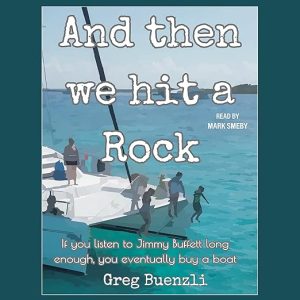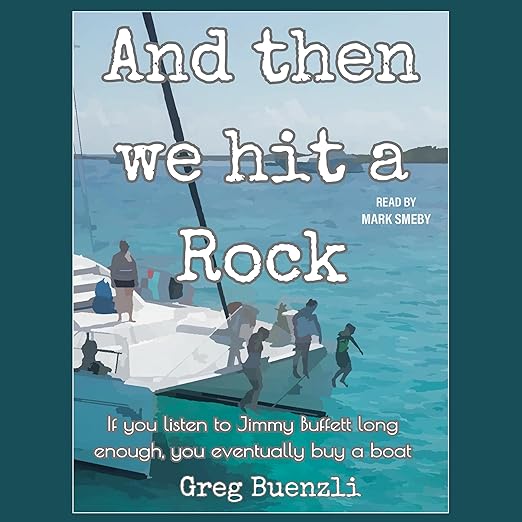
Quick Take
- Performance: Mark Smeby reads a first-person comic memoir its author did not record, and no written response says how that handover works.
- What it covers: A year afloat with three kids and two pets, hurricanes and waterspouts, pirates of a sort, marine plumbing, the gap between a dream and its execution.
- Feel: Rueful, crude, and fond.
- Our call: Good company for anyone who has been around boats, with a comic delivery nobody on the page has yet vouched for.
Sailboat in the first paragraph, catamaran in the last. The description of this audiobook opens with a man moving his wife, three kids, and two pets onto a forty-six-foot sailboat for a year, then closes by inviting you to follow a life newly discovered afloat a forty-six-foot catamaran. Same length both times, two different words, nothing in between to reconcile them. Boat people catch this sort of thing instantly, and boat people are the audience most likely to hand over money for the book. It is a small thing. It is also the kind of small thing a memoir about boats cannot afford to leave loose.
Waterspouts, Hurricanes, and Pirates (Sort Of)
Greg Buenzli wrote it and Mark Smeby reads it, and that single fact shapes everything else. Comic memoir is a delivery format before it is a prose format. The jokes in a book like this normally sit on the author's own timing, the pause before the punchline, the deadpan that turns a disaster into a story afterward. Hand that to a different voice and it becomes a performance of somebody else's rueful recollection, which can work wonderfully and can equally land a half-beat off across six and three-quarter hours. Nothing on this record tells you which of those two things happened.
Twig is the boat's name, and the crew of Twig is how the copy refers to the family of five. The premise is simple and genuinely appealing: decades of dreaming and planning, an actual departure into the sunset, then everything the dream failed to mention. Waterspouts. Hurricanes. A robbery by pirates, which the copy carefully qualifies as sort of. Chicken played with naval warships. Emergency calls to the Coast Guard in the dead of night. The book's own summary of itself is the closing line, which says that if everything had gone exactly to plan it would not have been much of an adventure. The genre fields hedge their bets in the same spirit, filing this at once under memoir, sports and outdoors, and travel, which for a year spent on a boat is less confusion than accuracy.
Where Performance and Product Are the Same Object
Mark Smeby has six and three-quarter hours to fill and five written responses, not one of which mentions the reading. In most catalogs that gap counts as filler. Here it is the missing piece, because comic memoir is the one genre in which the performance and the product are the same object. A response saying the narrator nails the exasperation, or plays it far too broad, would settle the purchase for most people in a sentence. Five people have written about the boat, the humor, and the memories it stirred, and not one has said a word about the voice delivering any of it.
MER's three-star response gets closest to the real question without intending to. It calls the book detailed on what maintaining a sail boat entails, interspersed with humor, and then adds a parenthesis: more of the kind where it would be funny if present. That is a precise diagnosis of situational comedy, the kind that depends on having been in the room. Situational comedy is also exactly what a narrator who was not in the room has the hardest job selling. If MER has it right about the material, the reading is carrying more weight than usual, and the column has left that weight entirely unmeasured.
Read, Read, Read, With No Evidence of Listening
All five responses arrived after the release date, which makes a pleasant change, and four of them landed inside a five-week stretch running from the end of January into the first week of March 2026. MER supplies the likely reason, mentioning the promotions seen for the book and admitting to having hoped for more on the strength of them. A cluster shaped like that tells you a push happened. It does not make the responses less honest, but it does mean you are reading a snapshot taken during a campaign rather than opinion accumulated slowly over a year.
Kindle Customer is one of the five handles, which is its own small piece of evidence about where these opinions were formed. The others point the same way. One calls it a comical read, another an okay read, a third says the writing was not especially good. Read, read, read. Nothing in the column establishes that anybody heard this book at all, and for a listener working out whether six and three-quarter hours of nautical mishap survives being spoken aloud, that gap matters considerably more than the star average does.
A Content Warning Involving Marine Toilets
Parents and shared-headphone listeners should read the description before pressing play. It advertises hygiene calamities, an extended riff on what happens when nature calls during a night watch, the intimate misfortunes of a captain with marine toilets, what a pirate smells like, and instructions on how not to get crabs. The opening paragraph concerns a remora fish and a whale shark's digestive arrangements. None of it is hidden and none of it is aimed at children, whatever the family premise on the cover might lead you to assume.
Shelved Beside Dave Barry and Bill Bryson
Sailors and near-sailors are the obvious audience, and one response says so outright: worth reading for anyone with a boat or who knows somebody with one, since anyone who has been around boats will recognize the weird things that keep happening again and again. Another entry, from somebody who used to live aboard, describes memories flooding back, the good and the bad and the scary alike. The description names its comp shelf openly too, listing Dave Barry, Bill Bryson, and David Sedaris, which sets the register accurately even while setting the bar high. Anyone who has ever planned a departure for years and then discovered what the plan omitted will find the whole thing recognizable, boat or no boat.
Steer clear if you want a sailing narrative rather than a comedy about sailing, since the three-star entry warns that the humor is uneven and the writing plain. Steer clear as well if you need an author's own voice for a first-person comic memoir to work, because this one is read by somebody else and nobody on the page has reported back on the result. And if you are boat-curious rather than boat-experienced, be warned that the funniest material assumes you already know what a nut jiggler is. The book will tell you. It will not tell you gently.
Common Questions
Does the author narrate this audiobook himself?
No. Greg Buenzli wrote it and Mark Smeby is the credited reader. That matters more in comic memoir than in most genres, since the humor usually rides on an author's own timing. Not one written response mentions the reading, so nothing on the page tells you how well the handover to another voice worked.
Is this audiobook suitable for family listening?
The premise involves a family of five, but the description advertises hygiene calamities, marine toilet mishaps, a chapter built around needing a bathroom mid-watch, what a pirate smells like, and how to avoid crabs. None of that is concealed and none of it is pitched at children. Preview it before playing it aloud.
Is the boat a sailboat or a catamaran?
The copy uses both words for what appears to be a single vessel, opening on a forty-six-foot sailboat and closing on a forty-six-foot catamaran, giving the same length each time. Nothing between them reconciles the two. Anyone who cares about that distinction, which is most of the likely audience, should treat the description as loose.