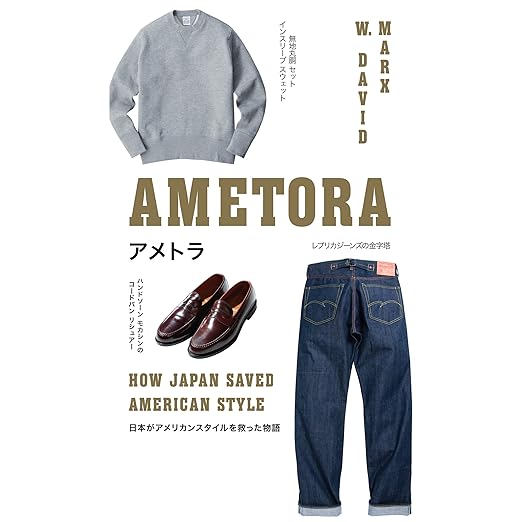
A Japanese label sewn inside an oxford button-down shirt is the small, specific detail that opens Ametora, W. David Marx's cultural history of how Japanese designers absorbed, studied, and eventually perfected what Americans think of as their own traditional style. The audiobook traces roughly a century and a half of exchange between Japanese and American fashion, and Marx's real argument is more surprising than a simple story of imitation: companies like Uniqlo, Kamakura Shirts, Evisu, and Kapital did not just copy American style, they preserved pieces of it more faithfully than America itself did, ritualizing button-downs and raw denim during stretches when those same items had fallen out of fashion back home. That inversion, the copy outlasting the original, is what gives the book its sharpest edge.
Brian Nishii's Fluency with Japanese Brand Names
Brian Nishii narrates with the measured, unhurried pace this kind of analytical cultural history needs, and his fluency with Japanese brand names and terminology is genuinely load-bearing rather than a nice bonus. A narrator stumbling over Kamakura, Evisu, or the dozens of designer and boutique names threaded through this book would undercut the authority of the whole project, and Nishii never does. His delivery treats dense historical material, decades of trade history, subculture formation, specific designer biographies, with the same even confidence throughout, letting Marx's research carry the weight rather than performing enthusiasm on top of it. This is a narrator who understands the material is interesting enough on its own terms and does not need vocal decoration.
One reviewer calls the book a real page turner for anyone already interested in Japanese history and pop culture, and compares it favorably to other deep-dive Japan books like Gotta Have Wa on baseball and Speed Tribes on Yakuza and biker subculture, situating Ametora correctly within a small but rich genre of serious American writing about specific corners of Japanese life. Another reviewer, who remembers the original Preppy Handbook when it came out, notes that this book takes a similar subject seriously rather than playing it for laughs, tracing what the preppy look actually meant once it crossed the Pacific and took root among young Japanese subcultures in neighborhoods like Harajuku.
Kapital and Evisu specifically get real attention in the book's later chapters, according to reviewer detail, as examples of Japanese denim houses that pushed authenticity claims further than most American brands ever bothered to, hand-distressing and hand-dyeing in pursuit of a rawness the original American workwear tradition had itself mostly abandoned by the time Japanese designers took it up seriously. That denim-authenticity paradox, a copy chasing a purity the original no longer prioritized, is Marx's sharpest recurring example of the book's larger argument.
Postwar Japanese Identity Told through Clothing
The book earns its length by treating fashion as a genuine lens on postwar Japanese identity rather than a superficial subject dressed up as serious history. Marx traces how ivy-league style, workwear, and denim culture each got adopted, misread, reinterpreted, and eventually mastered by successive generations of Japanese designers and consumers, and the throughline across all of it is cultural stewardship rather than simple consumerism. For listeners who assume fashion history is inherently lightweight, this book makes a serious case otherwise, connecting clothing choices to broader questions about postwar national identity, American cultural influence, and what happens when a culture takes an import more seriously than the country that exported it ever did.
The audiobook format works well for the narrative history sections especially, the decade-by-decade tracing of specific boutiques, magazines, and subcultures that reads almost like a highlight reel of postwar Japanese youth culture. Marx moves briskly between eras without losing the connective argument, and Nishii's pacing keeps that momentum intact rather than letting the historical detail bog down into a recitation of names and dates.
The Speed Tribes and Gotta Have Wa comparisons one reviewer draws are worth taking seriously as a genre marker: all three books share a commitment to embedding a Western writer deep enough into a specific Japanese subculture that the resulting account reads as insider knowledge rather than tourist observation. Marx's version of that immersion is fashion and menswear specifically, and the specificity pays off in exactly the granular brand and boutique detail that gives the book its authority.
No Photographs and a Menswear-Only Scope
This audiobook is filed under health and wellness in the site's genre system, which has nothing to do with the actual content, and listeners browsing that category should not expect anything resembling a lifestyle or self-improvement book here. What is actually inside is cultural and fashion history, dense with specific brand names, designer biographies, and decades of trade detail that reward a listener already curious about the subject rather than someone browsing casually. One reviewer specifically wishes there were more photographs, noting the book is well illustrated in print, and that is worth flagging directly: the audio format loses all visual reference entirely, which matters more here than in most nonfiction, since specific denim washes, silhouettes, and logo designs are genuinely part of the argument being made.
The book's scope is also worth setting expectations around: Marx concentrates almost entirely on menswear and a fairly narrow set of influential subcultures and brands, so listeners hoping for equal attention to Japanese womenswear or the wider luxury fashion industry will find this a deliberately focused study rather than a comprehensive survey of Japanese fashion as a whole. That narrowness is a strength for depth, the book can go genuinely deep on ivy style, denim culture, and workwear specifically because it is not trying to cover everything, but it is worth knowing going in that this is a study of one specific lineage within Japanese fashion rather than the full landscape.
Japanophiles and Denim Historians Will Want This
Japanophiles and fashion history readers are the clearest audience, especially anyone who has already enjoyed books tracing a single cultural export's journey across borders. Listeners interested in postwar Japanese economic and cultural history more broadly will find plenty here even if fashion specifically is not their primary interest, since Marx uses clothing as a way into much larger questions about American soft power and Japanese cultural absorption. Anyone who has wondered why so many well-regarded denim and workwear brands turn out to be Japanese will get a genuinely satisfying answer. Listeners who enjoyed books tracing how a specific American subculture or product got reinterpreted abroad, denim history, sneaker culture, vinyl collecting, will recognize the same underlying curiosity driving Marx's project here, even though his specific subject is menswear rather than any of those adjacent categories.
Listeners expecting a wellness or self-help book, given the site's genre placement, or anyone who needs visual reference material to stay engaged with fashion content, should look elsewhere or pair this with the print edition.
- Narrator: Brian Nishii's fluent handling of Japanese terminology and unhurried pace make dense cultural history feel effortless.
- Subjects: Japanese fashion history, cross-cultural exchange, postwar identity through clothing
- Tone: Rich, analytical, quietly fascinating
- Bottom line: A genuinely absorbing cultural history that deserves a better genre label than the one it is filed under here.
A Few Questions About Ametora
Is the Ametora audiobook actually about health and wellness?
No, despite how it is filed on this site. The actual content is cultural and fashion history tracing how Japanese designers adapted American style over roughly a century and a half.
Does the Ametora audiobook include the photographs from the print edition?
No. The audio format loses all visual reference, which matters more here than usual, since specific denim washes and design details are genuinely part of Marx's argument.
Do you need prior knowledge of fashion to enjoy this audiobook?
Not particularly. General interest in Japanese cultural history or postwar identity is enough to follow the argument, since Marx uses clothing mainly as a lens onto larger questions.