He Buried Murder Kits Years Before He Needed Them
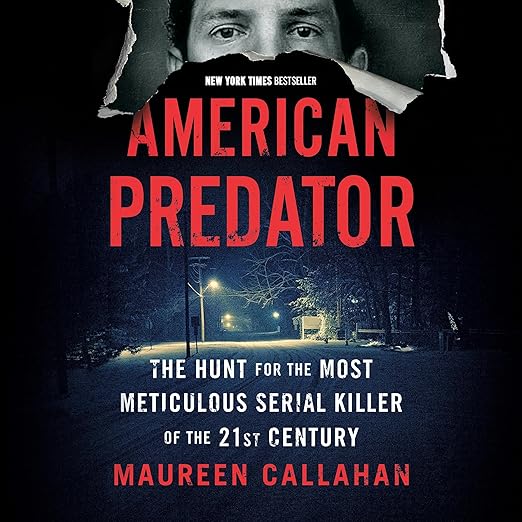
Israel Keyes is probably the most methodical serial killer in the recorded history of American law enforcement, and the fact that most people have never heard of him is precisely what Maureen Callahan's American Predator is trying to fix. I picked up this audiobook after finishing a more conventional true crime title and finding myself unsatisfied by how neatly the genre can package violence into narrative resolution. Keyes refuses that packaging. He buried murder kits across the country years before he needed them. He flew to cities, rented cars, drove hundreds of miles to use those kits, and returned home to Alaska, where he worked as a contractor and raised his daughter. He did this for fourteen years. The FBI considered his behavior unprecedented. Amy Landon's narration of Callahan's nine-hour account brings the full weight of that word to bear.
Callahan is a journalist, and this book reads like the work of a journalist who has spent years with a subject that will not resolve cleanly. The book began as a project in 2012, when Callahan first heard about Keyes during his interrogation process. He had been arrested for the kidnapping and murder of eighteen-year-old Samantha Koenig in Anchorage, and he began to cooperate with the FBI in a way that was itself a form of control: revealing crimes without ever quite revealing enough, managing the investigation on his own terms until he chose to end his own life in custody in 2012.
Landon's Delivery Mirrors the Subject's Own Approach
Landon's narration is essential to why this audiobook works as well as it does. True crime audio presents a specific challenge: the material often involves detailed violence against real people, and the narrator must convey the gravity of those acts without either sensationalizing them or flattening them into procedural report. Landon holds that balance across nine hours. Her voice suits Callahan's prose, which reviewers have described as sensitive and chilling in equal measure, combining investigative reporting with a journalist's moral seriousness about what she is describing.
The structure of the book shifts between two narratives: what Keyes did, drawn from classified FBI files and years of interviews with law enforcement, and what the investigation looked like from the inside, including the institutional failures and limitations that allowed Keyes to operate for over a decade without detection. The second thread is where Callahan's journalism is most uncomfortable. One reviewer noted that the book reads like an exposé of all the things we should be taking different law enforcement and legal agencies to task for, which reflects the book's genuine argument beneath its true crime surface: the system had chances to find Keyes sooner, and it did not act on them.
The FBI interview sequences, in which Keyes negotiates the terms of his cooperation with a specificity that reads as deliberate game-playing, are among the most disturbing passages in the book. He knows things the FBI does not, and he reveals them in fragments, controlling the narrative as completely in custody as he apparently controlled his crimes in the field. Landon's delivery of those sequences mirrors the subject's own approach and makes the material land with the full weight Callahan intends.
He Did Not Fit the Profiles
The book confronts something genuinely unusual in true crime: Keyes did not fit the profiles. He was not a local killer who operated in a known territory. He did not select victims from a vulnerable population with consistent characteristics. He did not leave the behavioral signatures that profilers rely on to identify and locate offenders. The FBI's difficulty with the case is not presented as incompetence alone but as a genuine confrontation with a killer who had designed his methods specifically to defeat the tools law enforcement had available.
Several of Keyes's crimes remain unsolved. Callahan addresses this directly, and the lack of resolution is a feature of the book's honesty rather than a failure of the narrative. True crime that resolves everything neatly is not always telling the truth. American Predator does not resolve everything, because the actual case did not. Listeners who need closure in their true crime will find the book's incompleteness uncomfortable in exactly the way that reflects reality rather than narrative convenience.
The coverage of Samantha Koenig's case, which was the crime that led to Keyes's arrest, is handled with the care that Callahan brings to all the victims' families. A reviewer noted the combination of sensitivity and chilling detail that characterizes Callahan's approach throughout. That pairing, genuine empathy for the people Keyes destroyed alongside rigorous reporting on how he did it and how long he was not found, is what distinguishes this from more voyeuristic true crime. Landon's narration honors that distinction across nine hours.
Callahan's Most Thorough Answer Yet
This audiobook is for true crime listeners who want rigorous journalism alongside the narrative. Callahan's background as a reporter shapes every page, and listeners who appreciate when true crime operates as accountability journalism, examining institutional failure alongside individual atrocity, will find American Predator more substantive than most titles in the genre. Landon's narration rewards the nine-hour commitment throughout.
Listeners who find detailed violence against real victims emotionally costly should know what this material involves. Callahan handles the victims with care, but she does not sanitize what happened to them. Those who want true crime that stays at the procedural surface without examining institutional accountability will find the book's argument more demanding than expected. But for listeners who have wondered why Keyes never became a household name alongside Dahmer or Bundy, Callahan's book offers the most thorough answer available, and Landon delivers it with the gravity it deserves.
Questions Listeners Ask
Who was Israel Keyes and why does the American Predator audiobook argue he matters?
Keyes was a serial killer who operated across the United States for fourteen years, burying murder kits in remote locations years in advance and flying to cities to commit crimes with no detectable pattern. The FBI described his methods as unprecedented. He was arrested in 2012 and died in custody before fully disclosing his crimes, several of which remain unsolved.
Is the American Predator audiobook appropriate for listeners who are sensitive to detailed violence?
The material includes detailed descriptions of Keyes's crimes and methods. Callahan handles the victims with care and genuine empathy, but she does not sanitize the content. Listeners who find detailed crime narration emotionally costly should consider that carefully before starting.
Does Amy Landon's narration suit the American Predator audiobook's tone?
Well. Landon's voice carries the measured, investigative register Callahan's prose requires. She conveys the book's moral seriousness without dramatizing the violence for effect, which is the right approach for material this weighted.