One Listener Finished This in Two Hours
Quitting programs usually arrive with a stopwatch attached, and this listing is no exception. The recording runs four hours and thirty-nine minutes. One of the five people who left a written notice reports finishing the text in two hours flat and calls them "the best 2 hours of my life thusfar", typo and all. That gap is the first practical fact worth holding onto, because Easyway is a method with an order of operations, and an audiobook removes the decision about pace from your hands in a way a paperback never does.
Adapted Specifically for a Female Perspective
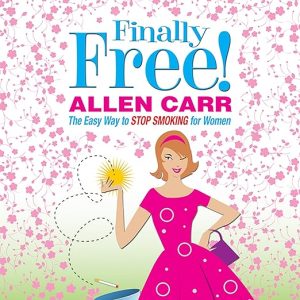
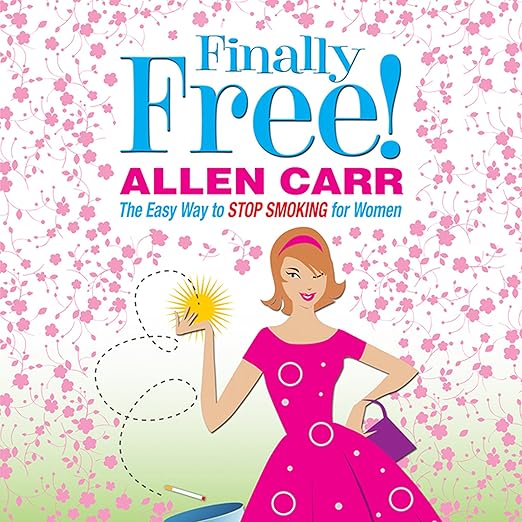
Allen Carr's Finally Free! is a specially adapted presentation of that method, and the publisher's copy is direct about what the adaptation changes: every aspect of smoking is examined from a female perspective, with answers provided to every question and concern. The listing files the title in a series called Allen Carr's Easyway without giving it a number, which suggests it sits beside the other Carr books rather than after them. Nothing on the page asks you to have worked through anything else first.
My own reading of this page is that the method's oddest promise survives the move to audio better than most self-help would. Carr's copy insists on no gimmicks and no scare tactics, promises you will not put on weight, and tells you outright that you may keep smoking while you work through the book. Only that last one is a scheduling instruction, and it is the one that changes shape entirely when the text becomes something you hear over a sink full of dishes.
Collingwood Has to Sound Like She's Arguing Back
Five written notices sit under a 4.5 average drawn from ninety-eight ratings, and four of them sit at full marks. Susan C opens with "I'm no longer a smoker after 38 years!!!" and then adds the conditional that matters more than the exclamation points: if you really want to quit, it will work for you, too. Mary Preston, describing having been "the most 'confirmed' of the confirmed lifelong smokers", arrives at the same conditional from the other direction. Both are outcome reports rather than assessments of the book as a book.
Run the arithmetic on those ninety-eight grades and the page gets more useful. Those five average 4.8 between them. For the counter to round down to 4.5, the ninety-three ratings that arrived without a paragraph attached have to sit a shade lower, somewhere in the middle of the four range. People who type are people it worked on. Knowing that before you read the headline number as a verdict is the difference between using this page and being used by it.
Jane Collingwood is the credited reader here, and what that credit covers is unusual for the form. Easyway is written in the second person and spends its full length dismantling beliefs the listener currently holds, which means every sentence is aimed at somebody who is arguing back. A reading has to sound like a person talking you out of something rather than a person performing a book, and it has to hold that register the whole way without hardening into a lecture. Worth a sample chapter before you commit.
A Review Pool That Stopped Talking in 2016
Two entries in the pool come from accounts named after the retail platform rather than a person, which is a small thing until you try to weigh them. One of those two carries the only sub-five-star grade in the pool, a four star response saying the book gives a non-smoker insight into what a smoker goes through when trying to quit. Read that closely and it is a report from outside the target audience altogether. The honest count of first-hand quitting stories on this page is three, not five.
Every visible notice was filed between December 2013 and October 2016, which puts close to a decade between the newest of them and now. This recording first went on sale in January 2013, so pool and product are at least matched in age. What the page cannot tell you is how the method lands for somebody arriving today, because nobody arriving today has written anything down. Treat the enthusiasm as real and dated, in that order.
Precision is what this listing asks you to trust, and its own copy misspells the author once, printing Allen Car where it means Allen Carr. Small, but a method sold on a precise sequence deserves better proofing than that. More consequential for a listener: the method depends on knowing where you are inside it, and a recording gives you a scrubbing bar where a paperback gives you a thumb wedged between pages. If you like to check how much is left, that habit is harder to indulge here.
For Smokers Who Already Failed at Patches
Smokers who have already failed with patches, gum, hypnosis and cold turkey are the obvious fit, because that exact list turns up in one of the notices on this page, filed by somebody reporting eight days without a cigarette and no temptation. Anyone who needs a method that runs while their hands are busy will also do well here: the whole program fits into one long drive or a fortnight of commutes, and no part of the method requires a pen or a worksheet.
Skip it if you want clinical framing. This is a book of persuasion rather than a survey of evidence, and no visible notice engages with it on those terms. Somebody hoping to hear the case against nicotine replacement argued in pharmacological detail will find it argued rhetorically instead. Buying it to understand a person you live with is a defensible secondary use, and the one four star notice suggests it works, but the book was built to change whoever is listening.
My verdict is narrow and I think that is what makes it useful. Buy the audiobook if you will genuinely finish it in a small handful of sittings, because a chain of arguments broken across three weeks of ten-minute listens is a different object from the one these reviewers describe. Otherwise the paperback keeps one advantage a recording cannot match, which is that you can see the end coming.
In Brief
- Read by: Jane Collingwood is credited; the text is second person throughout, so the reading has to sound like a guide rather than a performance.
- At its heart: Stopping smoking, belief change over willpower, a method aimed specifically at women.
- Vibe: Calm, insistent, argumentative in a friendly way.
- Short version: Worth the four and a half hours if you can give them in a couple of sittings; the method loses shape when it is rationed.
Frequently Asked Questions
Do I need to have read another Allen Carr book before this audiobook?
No. The listing places it in a series called Allen Carr's Easyway but assigns it no number, and the copy presents it as a self-contained adaptation of the method. Nothing in the publisher's description or in the five written notices on the page assumes prior reading. Start here if the female-perspective framing is what drew you.
How long does Finally Free! take, and does the audiobook run longer than the print?
The recording is listed at four hours and thirty-nine minutes. One reviewer reports finishing the printed version in two hours, so a fast reader will spend more than twice as long listening. Audio also removes the option of skimming ahead, which matters for a method built as a fixed sequence.
Do the reviewers say whether the method actually worked for them?
Three of the five give first-hand outcomes: one reports quitting after thirty-eight years, one reports eight days smoke-free after failing with patches, gum, hypnosis and cold turkey, and one reports being finally free of the addiction after a lifetime of smoking. A fourth thanks the author without stating a result. The fifth writes as a non-smoker.