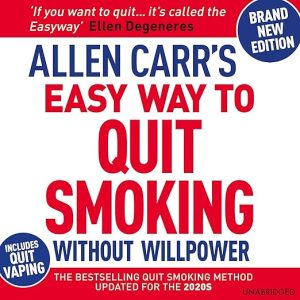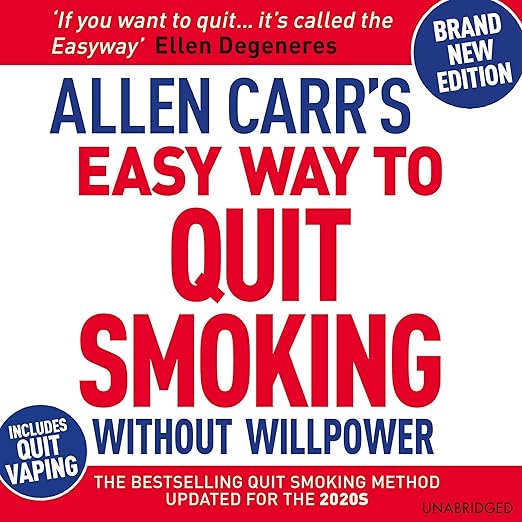
Allen Carr's Easyway method has been in print long enough that its effectiveness is not really in dispute. The question for any listener picking up Allen Carr's Easy Way to Quit Smoking in audiobook form is not whether the method works but whether this particular production delivers it in a way that serves the therapeutic structure the book requires. John Chancer narrates this updated edition, and the craft choice that matters most here is how he handles the central paradox of Carr's argument: that quitting smoking is not about sacrifice or willpower but about changing what you believe you need.
The Easyway method has an unusual relationship to conventional quit-smoking wisdom. Carr is not offering patches, substitutes, or a graded reduction plan. He is not asking you to resist anything. He is asking you to listen carefully until you no longer want the thing you thought you could not give up. That asks something specific of both the writing and the narration: the argument has to be delivered with a patience and consistency that mirrors the psychological shift it is trying to create. Chancer understands this.
Chancer Paces an Argument Built to Accumulate
The audiobook runtime of 8 hours and 8 minutes is longer than many quit-smoking guides, and that length is structural to the method. Carr's argument is cumulative. Each chapter adds another layer to the case that smoking provides no genuine pleasure or relief, only the partial satisfaction of a craving the cigarettes themselves created. The book's central insight, that the "pleasure" a smoker feels when lighting up is simply the easing of nicotine withdrawal, needs to be heard from multiple angles before it becomes the automatic frame through which smoking is understood. Chancer paces the argument correctly, which is the essential performance task here.
Reviewer Pamela Field's account of quitting after 35 years and simultaneously dropping a Nicorette gum habit after listening to this audiobook captures something that reviewers across this book consistently report: the method works when it works completely, not partially. Reviewer Alex K. documents a 15-year quit after first encountering the book in 2010, followed by a vaping relapse, and a return to the method that reestablished clarity about the addiction cycle. That pattern of extended success followed by relapse and return appears across the reviews in a way that is instructive about what kind of tool this audiobook is: a cognitive reframe that holds as long as the reframe holds, and that can be reapplied when it slips.
Listening Suits This Method Better Than Reading
The audiobook format may actually serve Carr's method better than print does. Reading is a more active cognitive process, which allows more opportunity for the mind to resist, argue back, or apply the argument selectively. Listening, particularly listening in the focused, patient mode that an 8-hour audiobook requires, creates more of the sustained receptivity that Carr's slow-build argument needs. Multiple reviewers note that the key is letting the teaching sink in rather than engaging with it analytically, and Chancer's measured delivery facilitates exactly that mode of reception.
The updated edition that this audiobook represents is described as the most cutting-edge version of the method, and it extends the application explicitly to all nicotine products rather than cigarettes alone. Reviewers using the book for vaping have confirmed its effectiveness in that application, which is a meaningful update given how significantly nicotine delivery has changed since Carr's original writing. The core argument is unchanged, but the expanded scope makes this version more immediately relevant to the current landscape of nicotine use.
Willingness to Be Persuaded Is the Requirement
Carr's method is not universally effective, and the book is honest about what conditions it requires. The listener needs to approach the audiobook with genuine willingness to be persuaded, not with the skeptical monitoring for flaws that functions as a self-protective exit. Reviewer tdawn's experience illustrates this well: the teachings work when they are able to sink in, which requires a particular quality of attention that some listeners, especially those in high-stress or defensive mental states, may find difficult to sustain.
Listeners who have tried and failed with Carr's method before should consider whether the failure was a function of timing rather than the approach. The reviews consistently suggest that the book works differently depending on where the listener is in their relationship to the addiction, and returning to it after a relapse, as Alex K. did, can be as effective as the first listen if the willingness is genuinely present. The audiobook also does not substitute for support systems, counseling, or medical advice in cases where nicotine addiction is complicated by other health factors.
For Smokers Who Have Failed Willpower Alone
This audiobook belongs in the library of any smoker, vaper, or nicotine product user who has tried conventional quit methods and found them unsuccessful or exhausting. The Easyway method's specific claim, that quitting does not require willpower or suffering, is aimed precisely at people who have tried and failed with willpower-based approaches. The 8 hours and 8 minutes runtime asks for a genuine commitment of time and attention, but the reviews consistently show that commitment repaid.
Listeners who approach the audiobook looking to engage intellectually with the argument rather than receive it may find themselves resistant in ways that undermine the method. Carr's approach requires a particular quality of open-minded listening that not every moment or mood supports. If you are looking for evidence-based cessation research or a clinical overview of nicotine addiction, this audiobook is not that. But if you are ready to listen to a coherent, patient case for why you do not actually need to smoke, John Chancer's narration of this updated edition delivers it with the consistency and authority the method demands.
- Performance: John Chancer brings a measured, credible authority to Carr's method that suits the book's therapeutic intent, delivering the persuasive framework without slipping into the cadence of a sales pitch.
- What it covers: psychological reframing of addiction, the illusion of willpower, freedom without deprivation
- Feel: Calm and methodical, quietly persuasive
- Our call: Allen Carr's method has worked for millions, and this updated audiobook delivers it with John Chancer's narration in a format that suits the slow-burn persuasive structure of the Easyway approach.
Good to Know
Does Allen Carr's Easy Way to Quit Smoking audiobook work for vaping as well as cigarettes?
Yes, the updated edition explicitly addresses all nicotine products rather than cigarettes alone. Reviewers have confirmed its effectiveness for vaping cessation specifically, and the core argument about the addiction cycle applies across nicotine delivery methods.
Does John Chancer's narration serve the therapeutic structure of this audiobook?
Yes. Chancer delivers the argument with measured pacing and calm authority, without turning the persuasive sections into something that sounds like a sales pitch or self-help hypnosis. The narration sustains the patient, layered quality that Carr's method requires across 8 hours.