At a Glance
- Themes: Pop music as political speech, managerial caution, the Sixties counterculture in song
- Mood: Chatty and argumentative, closer to a record-store conversation than to a lecture
- Verdict: A narrow thesis argued well, and the strongest reason yet to take Brian Epstein seriously as an editor of the band.
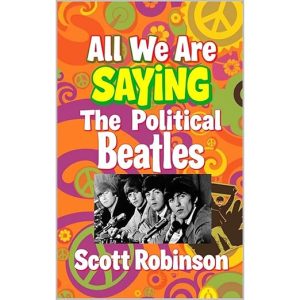
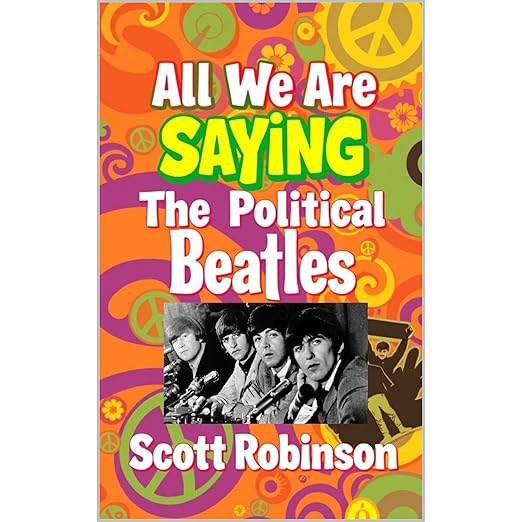
Beatles books arrive at a rate that would embarrass most subjects, so a new one has to justify its angle early. This audiobook does, and the angle is narrow enough to be testable: Scott Robinson argues that the band's politics were held back by management and habit until 1967, then surfaced quickly, and that the songs carrying political content can actually be counted. Fourteen of them across the eight years the four recorded together, by the book's own tally, with a great many more in the first years after the 1970 break-up.
A Synthetic Voice Can't Flag a Quotation
Robinson works chronologically and song by song, which turns out to be the right structure for a claim this specific. The early stretch, 1962 to 1967, is the part most Beatles writing skips over politically, because on the surface nothing political happens. That absence is the book's subject rather than a gap in it. When positions did surface in the music during those years they arrived veiled, with George's Taxman named as the one open exception, and the best pages in the book go to the veiling itself. For a group whose image was managed to within an inch of its life, the useful question is not what the four believed but what they were permitted to say out loud, and that is the question taken up here.
Jennifer K, at five stars, described the appeal accurately: an accessible, approachable treatment that covers everything from the earliest recordings, which seemed frothy and light while quietly carrying a deeper meaning in the lyrics, through to the later compositions that criticized culture and politics outright. That progression is the book's spine. Robinson does not claim the band were radicals in 1963, only that they were being managed.
A synthetic voice is credited as the reader here rather than a person, and it changes how the material lands. This is a book thick with quoted lyrics, song titles, and interview fragments, and none of that arrives with the tonal shift a human reader would use to separate a quotation from the author's own sentence. Robinson's prose is clear enough to signal the boundaries by wording alone, but you will be doing that parsing work yourself throughout.
Brian Epstein Is the Real Hinge Here
One five-star response, posted without a name, made the case better than the publisher copy does: many Beatles books later, this one offers something genuinely different, pulling the thread of politics through every stage of the career instead of retelling the familiar sequence of concerts and albums. That response traces the line from veiled early material such as You've Got to Hide Your Love Away and Taxman to the outspoken solo work, Give Peace a Chance and Imagine.
Brian Epstein is the real hinge of the book, and the most interesting figure in it. A manager worried about alienating part of the fan base discouraged the band from political statements in songs and in interviews, and they mostly complied from 1962 to 1967. After his death in the summer of 1967 the constraint disappears, and the political content increases steadily from that point. Silence that has often been read as indifference turns out to have had a commercial author.
Fourteen songs in eight years is a small number, and putting a figure on it is the most useful thing Robinson does. Beatles criticism runs on impression and anecdote; a count is something you can dispute. Once you accept the tally you start noticing what falls outside it, and the questions that follow, about the Establishment, the class struggle, Vietnam, the feminist movement, are the ones the book actually wants to argue. Counting also exposes its own limits, since a song can be political in effect without carrying a political line, and Robinson has to rule case by case on where that boundary falls.
The Most Detailed Review Cuts Off Mid-Sentence
Anthony OK, whose four-star response is the most detailed on the page, offered the clearest picture of how the book operates in practice, admitting to having had no idea that Paul's Blackbird was a thinly veiled lament about the American civil rights struggle. Interpretive readings of that kind are where a book like this either persuades you or overreaches, and by ear you cannot glance at a footnote to check the evidence. You take the argument at the pace it is delivered.
That same response then begins a warning, and the page cuts it off mid-sentence. The written caution that would tell prospective buyers what to brace for is simply not readable on the entry, which is worth knowing before you weigh the four-star rating attached to it. Several other responses break off the same way, so the most detailed opinions on this title are all partially unavailable to anyone reading before purchase.
Two other things about the listing deserve a note. One response describes the book as part of an ongoing sequence in which this author examines Beatles songs in their political context, yet the series line on the page sits empty, which leaves a browsing listener no route to the companion volumes. And the written reception clusters in the fall of 2025, months ahead of this March 2026 audio edition, so every opinion you can read describes the printed version rather than the recording.
One Argument Beats a Comprehensive Survey
Bob Bond, rating it five, mapped the territory for anyone deciding: upbringing, the formation of the band, the manager's opposition, and then the positions themselves, with Lennon taking the leadership role on homosexuality, the Viet Nam war, gender relations, civil rights, and the counterculture. If music history that doubles as social history appeals to you, that list is the offer. Under six hours makes it a single weekend's listening. Anyone who has read the standard biographies will recognize most of the events here and almost none of the framing.
Not for you if you want musicology, studio detail, or another full biography, none of which Robinson attempts. Not for you either if the veiled-meaning school of lyric reading irritates you, because a good deal of the early argument depends on it. And if hearing a machine pronounce lyrics you know by heart would break the spell, that is a fair reason to take this one in print instead.
The book ends where the band does, and then keeps going a little, into the solo work where the politics stop being coded. That is the right shape for the argument. What Robinson has built is not the biggest Beatles book on the shelf, but it knows exactly which question it came to answer, and it answers it with a number. One argument followed the whole way through beats a comprehensive survey nobody finishes.
Common Questions
Does the audiobook include any actual Beatles music?
None. The songs are quoted and analyzed in text, never played, and a synthetic reading cannot perform a lyric the way a human narrator might phrase one. Most listeners will want the records playing alongside, because the book assumes you can summon the melody as each title comes up.
Do you need to know the catalog to follow the audiobook?
Familiarity with the singles helps, since the structure moves title by title and assumes the tune is already in your head. Terrible Terence praised the organization and the introduction in a five-star note, and that opening section does enough scene-setting to carry a listener who knows the hits but not the deep cuts.
What argument is the audiobook pushing back against?
The received idea that the four were apolitical until Lennon went solo and started making statements. Robinson's answer is that the positions existed all along but stayed coded, and that a manager protecting a fan base, rather than indifference or youth, accounts for most of the early quiet.