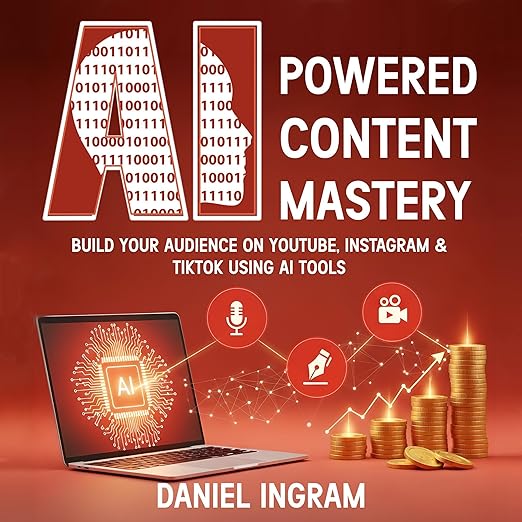
- Narration: Millian Quinteros brings composed, professional delivery well suited to hype-heavy AI business content without tipping into parody.
- Themes: AI content creation, cross-platform strategy, creator monetization
- Mood: Brisk and practical, built for time-strapped creators
- Verdict: A tightly scoped strategic primer for solo creators juggling multiple platforms, best paired with periodic updates as the underlying tools change.
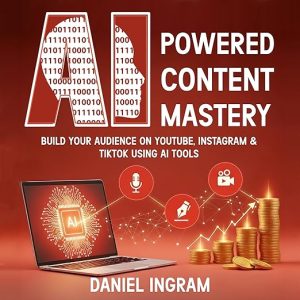
One weekend of focused work, according to this audiobook's own pitch, can now replace a month of scrambling to post twice a week across YouTube, Instagram, and TikTok. That is the premise Daniel Ingram builds AI-Powered Content Mastery around: a four-hour, ten-minute audiobook aimed squarely at creators trying to keep pace with three platforms at once without burning out in the process. The scope is broad by design, covering platform-specific strategy, a stated tool stack, a monetization framework, and what the book calls cross-platform domination, all inside a runtime short enough to finish in a single extended commute or one quiet afternoon rather than a multi-week project.
Twenty-Five Perfect Ratings With Zero Reviews
With a perfect 5.0 average across twenty-five ratings and zero written reviews attached, no real body of listener commentary exists yet to lean on for specifics, which is unusual for a book with this many ratings behind it. What that means practically is that this review has to lean more heavily on the material itself and on genre reasoning than on direct listener testimony. The strong rating average is worth noting as a real signal even without accompanying text, since twenty-five ratings landing at a perfect score is a harder thing to achieve by accident than a handful of five-star reviews would be.
The book's structure follows a familiar and generally sound instructional pattern: platform-specific tactics first, then a consolidated tool stack, then monetization, then a section on managing all three platforms without the workload multiplying along with them. That sequencing matters more than it might seem, since a lot of AI-content guides jump straight to monetization promises without first establishing a workable production system, and Ingram appears to resist that shortcut, at least based on how the material is organized from the description alone.
Millian Quinteros narrates with the same mid-register, professional composure that has made this narrator a reliable fit for hype-heavy AI and business instructional content generally. The genuine craft challenge in a book like this is tonal: source material built on lines like stop struggling and start mastering can tip into parody or exhaustion in the wrong voice, oversold past the point of usefulness. A composed, unhurried narrator who lets the practical steps do the persuading, rather than layering on extra vocal enthusiasm, tends to serve this kind of content better than an amped-up delivery would, and that is the register this recording appears built around.
Four Hours Fits a Stretched-Thin Schedule
At just over four hours, this sits on the shorter end for a business how-to audiobook, which reads as a legitimate structural choice rather than a shortcoming for a book pitched at creators who are, by definition, already stretched thin on time. A four-hour runtime is a realistic ask for someone trying to fit professional development around an existing content schedule, and it suggests Ingram prioritized a usable, digestible system over an exhaustive survey of every possible AI tool on the market, which is generally the right tradeoff for this specific audience and use case rather than a sign the material is thin.
The content-creator economy this book targets has grown fast enough that a whole tier of niche instructional titles now exists just to help solo creators manage the workload of posting consistently across several platforms at once, a problem that barely existed in its current form a few years ago. That context matters for judging a book like this fairly: it is not competing against a handful of established classics the way, say, a general marketing guide would be, but against a fast-moving, crowded field of similarly scoped titles, which puts real pressure on a book to differentiate itself through a genuinely usable system rather than restating widely available tips.
Strategic Thinking Ages Better Than Any Tool
AI content strategy is also, almost by definition, a fast-moving target. Platform algorithms, monetization rules, and the specific tools worth using all shift regularly enough that any guide risks partial obsolescence within a year or two of release, and this one does not appear to flag a specific update cadence or version date the way some competing titles do. That is not a reason to skip it outright, since the underlying strategic thinking, how to structure a repeatable content system, how to sequence platform-specific tactics, tends to age more slowly than any single tool recommendation, but listeners should treat the more tool-specific sections as a snapshot rather than a permanent reference.
The pitch itself leans hard into marketing language, promising creators can stop the scramble and your audience is waiting, and it is worth naming that honestly rather than pretending the synopsis reads like a neutral course description. That kind of hyperbolic framing is standard for the self-published business-guide category this sits within, and it does not necessarily reflect the quality of the actual instructional content inside, but listeners allergic to hype-forward copywriting should know what tone to expect from the packaging even if the core lessons turn out to be more measured than the pitch suggests.
A format tension is also worth flagging, one that runs through almost any AI-tool guide in audio form: naming specific software interfaces, dashboards, or step-by-step upload flows is much easier to demonstrate on screen than to describe purely in speech, and a listener trying to follow along with a specific platform's settings menu in real time may find audio alone insufficient for the most granular, click-by-click sections. The higher-level strategic material, sequencing, positioning, monetization logic, does not have this problem and should translate to audio cleanly, but anyone hoping to use this specifically as a screen-free tutorial for setting up new tools should expect to pair it with the platforms themselves open in front of them.
Solo Creators Juggling Multiple Platforms at Once
Independent creators managing multiple platforms solo, without a team or agency behind them, will recognize themselves immediately in this one, particularly anyone currently posting inconsistently and looking for a repeatable system rather than another list of scattered tips. The runtime works in this audience's favor: four hours is short enough to absorb over one or two sessions and revisit selectively later, rather than demanding a long-term study commitment before any of it becomes actionable.
Depth on one single platform, rather than a cross-platform overview, is not the goal here, and neither are extensive case studies or named creator examples walked through step by step; this leans toward a strategic framework more than a granular tactical manual. Without any listener reviews yet published to confirm exactly how deep the platform-specific sections go, it is worth treating this as a strong candidate for creators who want a structured starting system, with the understanding that any tool-specific advice will need periodic refreshing as the underlying platforms keep changing.
Good to Know
Does the AI-Powered Content Mastery audiobook name specific AI tools, or stay general?
The synopsis promises a complete AI tool stack as one of its core sections, though with no listener reviews published yet, this audiobook's exact level of tool-by-tool specificity has not been independently confirmed.
Is this audiobook still useful without a companion workbook or PDF?
The core strategic content, platform sequencing, and system-building advice should translate cleanly to audio on their own, though any tool-specific screenshots or dashboards referenced would only exist in a print or digital edition.
How current is the platform-specific advice likely to stay?
AI content strategy shifts quickly, so treat tool and platform-specific recommendations as a snapshot rather than a permanent reference, while the broader system-building framework should hold up longer.
Is four hours enough runtime for a real content strategy audiobook?
It is on the short side for the topic's full scope, but that brevity is a deliberate fit for busy creators, prioritizing a usable, repeatable system over an exhaustive tool-by-tool survey.