Key Details
- Voice: Raymond Todd's name sits in the reader field of a devotional biography, a pairing eighty-four grades have never once discussed
- Big ideas: Chinese Christianity outside the missionary framework, ministry under political upheaval, faith and personal cost
- Atmosphere: Warm, orderly and admiring, with the sympathies of a fellow believer
- Worth it?: The standard life of Watchman Nee, valuable to readers already invested and almost invisible to everyone else on this listing.
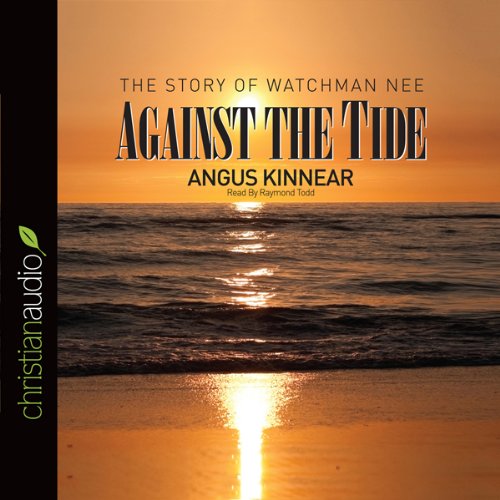
Watchman Nee's name appears nowhere on the front of this audiobook. The title is three words long, the byline belongs to Angus Kinnear, and the only place the subject is identified is a description of a single sentence, which calls Nee one of China's better-known Christians and a dedicated evangelist and gifted Bible teacher. That is the entire pitch for eight hours and forty minutes. Anyone searching for a biography of Nee by name would have to already know that this is it, which is a strange way to sell a book whose whole value is the life inside it, and it goes some way toward explaining why so much of the response column reads like a conversation between people who arrived already knowing.
Kinnear Commands the English Language, Readers Say
Prose is the first thing the column reaches for, and it reaches in unusual terms. A five-star from May 2014 argues that Kinnear commands the English language, that the writing puts you inside both the man and his country, and that the insight on offer lets a reader see the subject as he actually was rather than as the figure the movement has kept. That last distinction is the whole test for a biography of somebody venerated by a living readership. On the evidence of the column, this book passes it with people who came in as admirers, which is the harder audience to satisfy on that particular point.
Scope is harder to establish from the page than it should be. What emerges from the responses is a life lived against constant opposition, inside a China going through political upheaval, revolution, war and mass unrest, and an account its readers describe as orderly rather than dramatic. The book is a chronicle of a ministry and its costs. A reader who knows Nee only as the author of devotional classics is the natural buyer, since the sentences everybody quotes turn out to have been produced under conditions the quotations themselves never mention.
An Unusual Phrase Crediting Nee's Earth-Suit Life
Independence is the argument the book keeps returning to, and one November 2012 five-star states it plainly: Nee made a stand for a Chinese Christianity that answered to itself, without what that reader calls the too often meddlesome help of Western Christians, and the consequences of that stand are still visible. Whatever your position on the theology, that is a serious historical subject. The story of Christianity in twentieth-century China is usually told through missionaries, and this one is told through somebody who declined their supervision while the country came apart around him.
Human scale is the second virtue. An October 2021 five-star reaches for an unusual phrase, crediting the book with insight into the subject's earth-suit life, the challenges he met and the way he got past them. That is precisely what hagiography leaves out and what this account restores. Eight hours and forty minutes is enough room to show a person making decisions with incomplete information under pressure, and the biography is at its best in exactly those stretches, where the reader watches a choice being made rather than being told afterward what it meant.
Raymond Todd's 4.6 Average Draws No Remark
Function matters more than genre here, and a four-star from June 2008 says so directly, describing the book as what finally supplied the context for Nee's writings and lectures and calling Kinnear's account orderly. Orderly is a compliment with an edge. This is a chronicle, arranged by sequence rather than shaped for momentum, and listeners who expect a narrative with a rising action will find the pace even throughout. That same entry also frames the book as a service to the church, which tells you the register the writing assumes and who it expects to be addressing.
Reverence is the standing risk with this subject, and the column runs hot with it. The visible entries reach for the vocabulary of veneration rather than of assessment, which tells you who has been buying the book and what they came for. Kinnear is writing about a figure the intended readership already reveres, and the biography makes no secret of its own sympathies. Anyone wanting a skeptical, source-critical treatment of a contested twentieth-century religious leader should understand what this is before buying, because it is a life written from inside the tradition.
The listing itself is thin to the point of unhelpfulness. A 139-character description carries the entire burden of explaining an eight-hour biography, no subtitle names the subject, and the publisher field holds a web address rather than an imprint. Raymond Todd is the voice on it, and eighty-four grades averaging 4.6 have produced not one remark about it. So the two things a listener most wants settled, what period the book covers in detail and whether the voice suits a devotional readership, are both left to chance.
Read Nee First, Then Come to This Book
Readers of Nee's own books are the obvious audience and clearly the one that has turned up, since almost every response arrives already committed to the subject. Anyone interested in the history of Christianity outside the Western missionary framework will find a well-documented case study, and the China material is substantial enough to hold a reader with no devotional stake at all. Church leaders and students of twentieth-century religious movements get a biography that treats institutional pressure and personal cost as the same story, which is rarer than the category suggests.
Skip it if you have no prior interest in the subject, since nothing on this page will build one for you, and pass on it if you want the critical distance a modern academic biographer would bring. The book is written with affection by somebody within the tradition, for readers within it, and it does not pretend otherwise. Come to it after reading Nee rather than before, and the eight hours will do the work the description entirely fails to promise.
Should I read Watchman Nee's own books before this audiobook?
One November 2013 five-star recommends exactly that, naming The Normal Christian Life and Sit, Walk and Stand as starting points, and adds that the biography works best alongside them. The order is a matter of taste: the life explains the writing, and the writing explains why anyone wrote the life.
Does the audiobook work for listeners outside the Christian tradition?
Partly. The historical material stands on its own, particularly the account of a Chinese church resisting Western supervision during a period of revolution and war. The framing is devotional, though, and the book assumes a reader who already regards the subject as significant rather than one who needs convincing.
How long is the audiobook and how is it paced?
Eight hours and forty minutes, arranged as a chronicle rather than a dramatized narrative. One four-star calls the account orderly, which fits: events arrive in sequence at a steady pace, with the interest carried by the situations themselves rather than by any structural tension the author builds.