Quick Take
- What it covers: Survival against animals and armed men, period adventure writing, the romance of the unrecorded.
- Feel: Blunt, episodic, deliberately old-fashioned.
- Our call: Strong pulp shapes on a page that will not say where any of it came from.
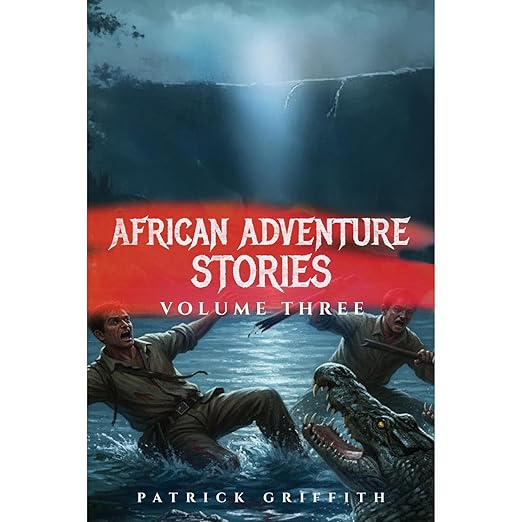
"No rescue helicopters. No second chances. Only nerve, skill, and luck." That is how the description of this five-hour, forty-nine-minute audiobook signs off, and those three fragments tell you more about its register than the rest of the copy manages. Patrick Griffith's third African Adventure Stories collection promises a man-eating lion, rebel soldiers and rivers "ruled by prehistoric predators," and it promises them in the cadence of the pulp era it is imitating. What the page never once says, in any field, is whether any of it happened.
Testimony or Pastiche, the Copy Never Says
Patrick Griffith's copy is careful in a way that ought to make a buyer curious. The accounts are "harrowing" and "first-person," which sounds like testimony. Two sentences later they are "written in a vivid, immersive style drawn from the great age of exploration," which sounds like pastiche. Those are two different products. An account transcribed out of somebody's journal and a modern story composed in the manner of one belong on separate shelves, and the description declines to choose between them. No dates appear. No names appear. No sources appear.
Written or gathered, the material itself is legible enough. Five hours and forty-nine minutes of episodes in which "survival hangs on a single shot, a sudden decision, or sheer stubborn refusal to die." The blurb sets out its hazards plainly: a "notorious man-eating lion beneath a starless African sky," rebel soldiers, cannibal tribes, and rivers with prehistoric predators in them. Every entry is built to one shape, a person against a landscape that does not negotiate, and the pleasure on offer is the pleasure of watching somebody improvise. Nothing in the copy suggests the stories connect to one another, and nothing suggests they need to.
History is one of three genres this listing claims for itself, alongside biographies and memoirs and alongside sports and outdoors. Two of the three hold up on any reading. The history filing is the one that needs the provenance the page will not supply. A collection presented as history should be able to say when, and where more exactly than a continent, and on whose authority. This one says Africa, and it says the great age of exploration, and then it stops talking.
Virtual Voice Reads Animals as Weather With Teeth
Two people have rated this and neither of them typed a word. The badge reads 4.0, which across two whole-star votes can only mean eight of the ten stars on offer, and eight arrives two ways: a pair of fours, or a five alongside a three. The page cannot tell you which, and at that sample size it barely signifies. What you actually have is two strangers who did not dislike it and did not explain themselves.
Hunting stories carry their own audience and their own problem. The appeal is procedural, all wind and light and distance and the one shot, and Griffith's copy foregrounds exactly that. The "great age of exploration" framing also tells you the ethics on display will be period ethics rather than contemporary ones. Anyone who reads period adventure writing for pleasure already knows that bargain and has already made it. Anyone who does not should at least know it is being offered. Worth saying too that the animals here are not characters. They are weather with teeth, and the description treats them precisely that way.
Virtual Voice is what the narrator field says. No person is credited anywhere on this record, which means no performer chose where the pauses fall, and nothing on the page suggests one was hired to. That is a defensible decision on a low-cost independent release. It is also a real consideration on material like this, where the entire pitch rests on timing: a single shot, a sudden decision, a held breath. Whether a synthesized reading serves those sentences is a question a sample settles in about ninety seconds.
Volume Three, With No One or Two in Sight
Five hours and forty-nine minutes is the only quantity anywhere on the page. The copy never says how many stories the collection holds, how long any single one runs, or whether the volumes are meant to be taken in order. It calls itself "Book Three" in the opening line of the description and "Volume THREE" in the title, while both series fields on this listing sit empty, so nothing here links it to the two collections that presumably came first. Finding those means searching by author name. No table of contents reaches this page either, so the collection arrives as one undivided block of runtime.
Language is the thing to brace for. "Cannibal tribes" is the description's own phrase, and it arrives inside a list beside lions and rivers, as a category of hazard rather than as a group of human beings. Griffith is imitating a register, and that register habitually described the people living in these places as scenery. Whether the stories inside complicate that or simply reproduce it is not something this page discloses, and the copy makes no attempt at softening it.
Independently Published is the publisher field, and February 2, 2026 is the release date. That combination accounts for a good deal of what is missing: a synthesized reading, a description doing its own marketing, no introduction, no editorial apparatus, no note on where the accounts came from. None of that makes the stories bad. It does mean every claim on this page originates from a single source, with nobody standing between the author and the buyer. Griffith's is the only human name anywhere on the record, and it appears exactly once, in the byline.
Whether a Machine Can Hold a Held Breath
Armchair adventure readers who want the old shape of the thing, one person against one animal and one decision, will find five hours and change of it right here. Listeners who need provenance, a named reader, or a modern frame set around period attitudes should read the empty fields as their answer, because the fields are not going to fill themselves in later. And anybody shopping this as history instead of as entertainment ought to wait until somebody explains where these accounts came from.
The two silent voters left eight stars behind them and no explanation at all, which is roughly the quantity of guidance this whole page offers. Sample the opening story, listen for whether a machine can hold a held breath, and let that decide it for you.
Are the accounts in this audiobook historical documents or newly written stories?
The description calls them harrowing first-person accounts, then says they were written in a style drawn from the great age of exploration. Those two statements point in opposite directions, and no dates, names or sources appear anywhere on the listing. Until the publisher says otherwise, treat the collection as adventure writing rather than as sourced history.
What does Virtual Voice mean on this audiobook's narrator credit?
It means no human reader is credited on the record. The field carries a label where a person's name would go, so nobody is named as having chosen the pacing, the emphasis or the silences. On material built around single decisions and held breath, that is worth testing against a sample before committing five hours.
Can this audiobook be enjoyed without the first two volumes?
Each entry is a self-contained survival episode by the description's own account, so nothing suggests a plot running across the volumes. The title says Volume THREE and the copy says Book Three, yet both series fields on this listing are blank, which makes finding the earlier two a search by author name.