- Voice: One voice covers farmers, clients, colleagues and the vet himself across seven hours, with regional speech doing most of the characterization.
- Big ideas: Rural veterinary practice, the Herriot inheritance, Yorkshire farming life, professional upheaval
- Atmosphere: Gentle, funny and matter-of-fact
- Worth it?: Dependable comfort listening for animal people, undercut only by a publisher's promise about the author's voice that this edition does not keep.
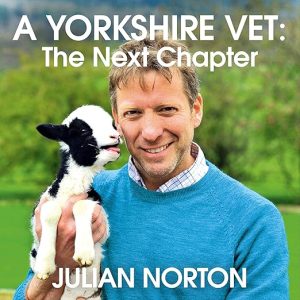
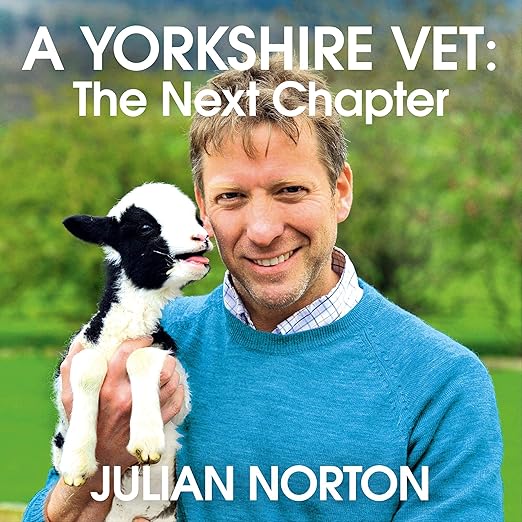
Cows, sheep, pigs, horses, alpacas, dogs and cats: Julian Norton's caseload is the through-line of this audiobook, and the people attached to the animals are the reason it works at all. Seven hours and four minutes of veterinary anecdote out of the North York Moors, the Vale of York and the Yorkshire Dales, following a mixed-practice vet who has spent over twenty years in Thirsk, literally in the footsteps of James Herriot, and who now works from a new veterinary home in Boroughbridge. Hodder & Stoughton published the recording in February 2020, and left its own phonogram line sitting at the bottom of the description.
Norton's Voice and the Weight of Leaving Skeldale
Norton writes the way a good vet talks at the end of a long day: one case at a time, the medicine explained no further than a layperson needs, the owner given at least as much attention as the animal. Hodder's copy promises humor, dedication and love for the animals, and that is an accurate inventory as far as it goes. What the description underplays is how much of it is really about people, their farms, their finances, their reluctance to be told bad news, and the small negotiations that happen in a yard before anybody so much as touches a cow.
Leaving Skeldale is the emotional spine, and an April 2023 reader, five stars, puts a finger on exactly that: Norton's feelings about the departure, the ups and downs of a veterinary life, memories of his childhood and of training at Cambridge, humor woven through all of it. That reader has read the earlier books and calls this one the favorite so far, which is a useful signal for anybody deciding whether to start here or further back. The same response ends on a claim worth repeating: this is a book to reach for when the day has gone badly.
Norton's Update on the Herriot Inheritance
Inheritance is a heavy thing to carry, and Hodder puts it front and center, telling you that Norton has spent over twenty years in Thirsk, literally following in the footsteps of James Herriot, and that the Herriot spirit lives on in the new practice. The framing sets an expectation the book mostly meets and occasionally strains under. Norton is warmer and more contemporary than the comparison implies, considerably more interested in the economics of farming and the realities of a mixed practice, and he is at his best when he stops gesturing at the lineage and simply describes the animal in front of him.
Built for the Barn and Read by a Stand-In
Structure is what makes this work in audio better than most memoirs manage. The book moves in anecdotes rather than in chapters that depend on one another, so it survives interruption completely, and seven hours and four minutes breaks into twenty-minute pieces at no cost. That is the right shape for a book people put on while doing something else with their hands, and it is why this kind of memoir tends to succeed when read aloud. You are never more than a few minutes away from a beginning, which forgives a great many pauses.
Simon Slater reads, and the record carries a quiet contradiction about it. Hodder's own description sells Norton's voice, well known from his television work, ringing out from the page. That is the strongest line in the copy, and it describes something this edition does not supply, because the voice you get for seven hours belongs to somebody else entirely. None of which is a criticism of Slater, whose actual assignment is to carry Yorkshire place names, farm vernacular and a first-person register that has to sound like a working vet rather than an actor playing one. Compare a clip of Norton talking on television against the sample here and decide whether the substitution costs you anything.
Farm work is the natural listening context, and one response confirms it directly. In April 2025 somebody who farms, and reads whenever the work allows, gave it five stars and described listening to the whole book while doing chores, finding Norton's honesty about the veterinary life something that resonated personally, to the point of wanting to write to him with the farmer's side of the same story. That is the audience this book actually finds: people who already know what a call-out costs and want to hear the job described accurately rather than prettily.
Reviews for a Paperback Not This Recording
Paper keeps turning up where audio should be. One five-star response consists of a line about loving Norton's writing and a report that the book arrived in perfect condition, which is a verdict on a parcel rather than on a recording. Five reader notes hang below a rating counter that has logged exactly one vote, and every one of them lands at the top grade. The column is warm, it is unanimous, and at least one entry in it was plainly written by somebody holding a printed copy rather than wearing headphones.
Every visible grade on this page is a five, so the readable column averages a straight 5.0, while the badge above it reads 4.7 and the counter beside that reads one rating. Three numbers, none of them agreeing with the other two. No rounding rule turns a single vote into 4.7, which means the printed average was computed across a population this page never shows you. The practical consequence is simple enough: the score carries no information at all, and the five write-ups carry a modest amount.
Dependable Yorkshire Dales Listening for a Week
Herriot readers are the obvious audience and will need no persuading, but the book works equally well for anybody who enjoys competent people describing competent work. Farmers, smallholders and anyone who has stood in a wet field at six in the morning with a sick animal will recognize the texture immediately, down to the owners who want a second opinion they cannot afford. It also makes an unusually safe gift for a listener who wants something gentle without being sentimental, and seven hours covers a comfortable week of dog walks and kitchen jobs.
City listeners with no interest in livestock may find the farming material repetitive, and anybody who needs narrative momentum should understand this is a book of episodes rather than a story with a shape. Readers who came specifically for Norton's television presence should factor in that the voice on the recording is not his. For everybody else, seven hours in the Yorkshire Dales with a vet whose caseload runs from cattle to house cats is about as dependable a purchase as this category offers.
Questions Listeners Ask
Does this audiobook follow on from Julian Norton's earlier books?
It does, and the subtitle says so, though the series field carries the name Yorkshire Vet without a number, so nothing here tells you where it sits in the sequence. The anecdotes stand alone, and the only thing a newcomer misses is the accumulated background to the practice Norton leaves behind.
Is this audiobook connected to the television series?
Only indirectly. Norton's television work is mentioned in the publisher's description as the reason his voice is familiar, but the book is his own writing rather than a companion volume to any broadcast. Expect written anecdote shaped for the page, not transcripts or behind-the-scenes material.
How much clinical detail should a squeamish listener expect?
A fair amount, given the caseload. A mixed practice running from cattle and sheep through alpacas to household pets means calving, injury and euthanasia turn up as ordinary working days. Norton is factual rather than graphic, but he does not skip the parts that end badly.