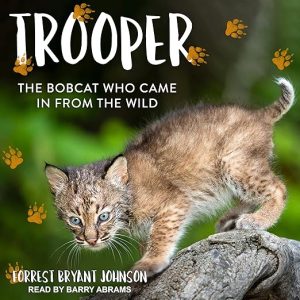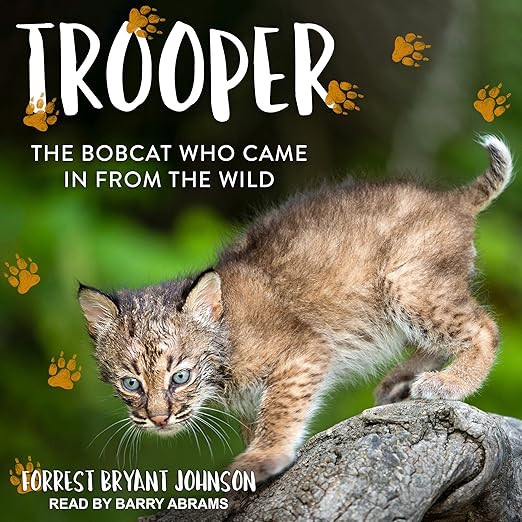
Bobcat kittens do not typically arrive as guests and remain for nineteen years. But when Forrest Bryant Johnson found one injured and orphaned in the Mojave during a desert walk in 1987, the temporary became permanent in the way that only animals can arrange. Trooper, this audiobook about the bobcat who became a Johnson family member for nearly two decades, is a memoir of a particular and unusual kind of relationship: between a human and a wild animal who chose domesticity on its own terms rather than through any deliberate plan.
I listened to part of this audiobook on a quiet evening after a complicated day, and found it did exactly what the best animal memoirs do: it reoriented my sense of proportion without making a point of doing so. Johnson writes about Trooper's life in the Mojave with a naturalist's eye and a genuine affection that never tips into sentimentality, and the result is a book that works as natural history as much as it works as personal memoir. The Mojave itself is nearly a third character: the flora and fauna that Trooper navigates give the book an ecological texture that lifts it above the genre average.
Abrams Carries Johnson's Wry Desert Voice
Barry Abrams narrates with warmth that suits Johnson's prose without softening it past its own character. The book's voice is specific to Johnson: observational, occasionally wry, rooted in knowledge of the desert environment that surrounds his and Trooper's shared life. Abrams reads that voice with care rather than imposition, letting the texture of Johnson's storytelling come through rather than adding a performer's gloss over it. Reviewer feedback described the narration as conveying compassion and insight, and that assessment is accurate for how Abrams handles both the bobcat's behavioral observations and the emotional passages that arrive in the book's later sections when Trooper ages. The voice suits an eight-hour memoir about a specific, loved creature without ever becoming precious about it, which is the hardest note to sustain in this genre.
Specific Species, from Kit Foxes to a Tabby
The central appeal of this audiobook is its specificity. Johnson does not write a generic account of loving a pet; he writes about Trooper the bobcat in particular, with the ecological context, behavioral vocabulary, and accumulated knowledge of someone who spent nineteen years learning what a bobcat actually is and needs. The sections on Trooper's interactions with kit foxes, jackrabbits, and desert tortoises are genuinely interesting natural history embedded in narrative. The relationship between Trooper and Little Brother the tabby, where the bobcat takes on a guiding and protective role that has its own internal logic, is one of the more original subplots in animal memoir writing and rewards patient listening.
The Johnson family's accommodation of a wild animal without attempting to fully domesticate it gives the book an ethical seriousness that distinguishes it from more sentimental versions of this genre. Trooper remains a bobcat throughout: dangerous in specific circumstances, governed by instincts that domestic life modifies but never eliminates, and present in Johnson's world on terms that both parties negotiated over time. One reviewer described the book capturing them from the very beginning, and that pull is sustained across all eight hours by the dual appeal of the naturalist detail and the relationship at the center.
Chi, Trooper's Aging, and a Household Portrait
Listeners should be prepared for the emotional register that any memoir of a long-lived beloved animal will arrive at by its final chapters. Johnson handles Trooper's aging with directness rather than avoidance, and the material in the later sections requires a different kind of attention than the lighter, incident-based earlier chapters. The book does not shy from the fact that nineteen years has an end, and some listeners may want to be in the right headspace for that when they reach it. The emotional honesty is one of the memoir's genuine strengths, but it asks something of the listener.
The genre classification in some metadata places this in home and garden rather than natural history or memoir, which does not capture what the book actually is. Listeners who come expecting practical pet care advice will find something considerably richer and more demanding than that framing implies. This is literary memoir with serious naturalist content, and the listening experience rewards being approached on those terms.
The book's treatment of Johnson's marriage to Chi is also one of the quieter pleasures of the audiobook that deserves mention. Chi's accommodation of a bobcat in their household, with the adjustments to daily life that required, is handled with affection and honesty rather than treated as comic background material. The family picture that emerges across nineteen years, including the relationship between Trooper and Little Brother the tabby, Johnson's wife Chi, the vet who became a cherished contact, and even the neighbor whose initial hostility gradually gave way, is drawn with enough texture that the memoir functions as a portrait of a household rather than just a portrait of a cat. That breadth is what separates Trooper from narrower animal memoirs that could have been written from a single season of observation.
The book's treatment of Johnson's marriage to Chi is also one of the quieter pleasures of the audiobook that deserves mention. Chi's accommodation of a bobcat in their household, with the adjustments to daily life that required, is handled with affection and honesty rather than treated as comic background material. The family picture that emerges across nineteen years, including the relationship between Trooper and Little Brother the tabby, Johnson's wife Chi, the vet who became a cherished contact, and even the neighbor whose initial hostility gradually gave way, is drawn with enough texture that the memoir functions as a portrait of a household rather than just a portrait of a cat. That breadth is what separates Trooper from narrower animal memoirs that could have been written from a single season of observation.
Eight Hours Better Heard Than Read
This audiobook is for listeners who have loved an animal and want their experience of that love reflected with honesty and ecological intelligence. It is for nature writing fans who appreciate memoir that does not separate the personal from the observational. Barry Abrams's narration makes the audio version a natural first choice over print. Skip it if you need a lighter listen without the emotional weight of a nineteen-year relationship told in retrospect, or if you are looking for practical animal care guidance. This is literary memoir about an unusual friendship between species, and it earns that description across every one of its eight hours.
Quick Take
- Narrator: Barry Abrams delivers Johnson's observational, affectionate prose with warmth and restraint, letting the naturalist voice come through without performer's gloss.
- Subjects: Wild-animal companionship, desert ecology, the terms of interspecies relationship
- Tone: Warm and quietly absorbing, with emotional depth arriving gradually in the later chapters
- Bottom line: A genuinely distinguished animal memoir that works as natural history and personal narrative simultaneously, narrated with the right kind of restraint.
Is the Trooper audiobook appropriate for children, or is it written for adult readers?
It is written for an adult audience. The natural history content and the emotional depth of the later chapters assume an adult reader, though older children who love animals would likely engage with large sections of it.
Does this audiobook contain descriptions of animal loss?
Yes. Trooper lived nineteen years, and the book's later sections address his aging and death with directness. Listeners who find animal loss difficult should be prepared for that emotional territory.
How does the Trooper audiobook handle the ethics of keeping a wild animal?
Johnson addresses this throughout without turning the book into a polemic. Trooper retained his bobcat nature across nineteen years, and the memoir is honest about what that required and what domesticity can and cannot mean for a wild animal.
Is Barry Abrams a good match for this audiobook's tone?
Yes. His narration is warm without being cloying, and he handles Johnson's naturalist precision and personal affection with equal care across the full eight-hour runtime.