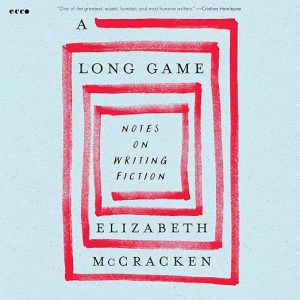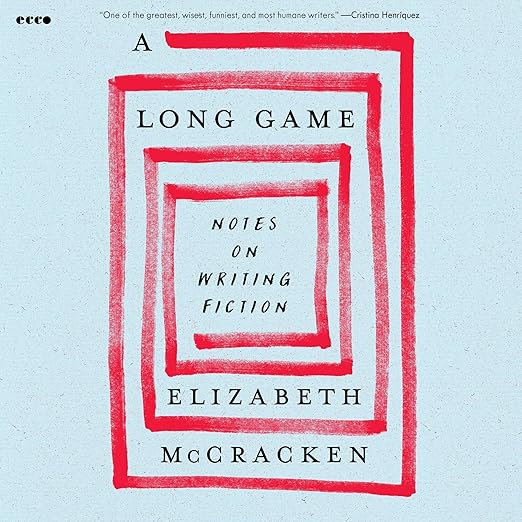
Elizabeth McCracken's A Long Game, narrated by McCracken herself, arrives in the audiobook format as one of those rare cases where the author's presence as narrator genuinely transforms the material. McCracken is a novelist, National Book Award long-listed story collection writer, and memoir author who has spent more than thirty-five years teaching writing at the graduate level. This book is structured not as chapters or themed essays but as 280 numbered notes, each one a compressed observation about fiction craft, gathered from decades of teaching and her own practice. At five hours and thirty-one minutes, it is concise enough for a single extended listening session, though its compression means that each individual note demands more attention than its brevity implies. The format will divide readers: those who want systematic craft instruction may find the notes too fragmentary; those who want the experience of thinking alongside a working writer will find it exactly right.
McCracken's Notes Sound Like Spoken Thought
McCracken opens the book's central idea early: writing is a long game, she says, and what matters is learning to get work done in whatever way is actually possible for you, through consistency or panic, through self-recrimination or self-delusion or self-forgiveness. That formulation is characteristic of the book's voice throughout. It is generous without being falsely encouraging. It acknowledges that the work is difficult and that different writers arrive at different sustainable methods rather than prescribing a single approach as the correct one. The 280-note structure is a genuine structural choice rather than a marketing gimmick. One reviewer described reading the book as access to McCracken's personal journals and teaching notes, which is accurate to the texture of the material. The notes are compressed in a way that feels more like aphorism than advice column. Some are about character, about how a fictional person occupies a room, about the difference between a character who acts and one who is acted upon. Some are about plot, specifically about what to do when you do not have one, which McCracken approaches with a lack of false reassurance that writers who have been stuck will recognize and appreciate immediately. Some cover her thoughts on common writing rules, and her skepticism toward received wisdom about fiction, show don't tell, kill your darlings, maintain consistent point of view, is bracing rather than dismissive. She does not argue that the rules are wrong. She argues that understanding why they exist matters more than applying them as axioms. And then there is the Butter Cow Lady of the Iowa State Fair, McCracken's own ongoing revision project, which appears throughout the book as her primary example of how revision actually works in practice rather than in theory. It is easy to underestimate on first encounter, but it is doing the most important work in the book.
McCracken's self-narration gives the 280 notes the quality of spoken thought rather than transcribed text. Her delivery has pauses and emphases that a third-party narrator would not replicate, and they clarify meaning in ways the prose alone sometimes leaves open. One reviewer described a well-executed craft book as extended office hours from a favorite teacher, which is precisely the experience here. The audio format adds an instructional warmth that the printed notes would not carry on their own, and it is the primary reason to choose audio over print for this particular title.
Modular Notes You Can Return to Later
Craft books for fiction writers face a specific problem: they often arrive too late, addressing difficulties the writer has not yet encountered, or too early, speaking to struggles that require years of practice before they become meaningful. McCracken's note structure avoids this by making the book genuinely modular. Each numbered observation stands alone. A writer working on character problems can locate those notes and sit with them. A writer who has never had a plot and is embarrassed by it can find McCracken's notes on exactly that situation and realize they are in good company. The book is also short enough that re-listening is realistic. At five hours, a second pass a year later, when different creative struggles have surfaced, will produce different useful observations that simply were not the right thing the first time through. This is the kind of craft audiobook that ages well rather than delivering all its value in a single sitting, which is the same thing McCracken says about the writing practice itself.
Revision as Discovery, via the Butter Cow Lady
The Butter Cow Lady thread, which involves a specific creative project McCracken has been revising for years, is easy to underestimate on first listen. Pay attention to it carefully because it is doing the book's most important structural work: demonstrating revision as a creative act that discovers what a piece is actually about rather than fixing what you already know is wrong. McCracken's approach to revision is anti-mechanical and pro-curious, and the Butter Cow Lady is her evidence accumulated across dozens of notes. Also listen carefully to her notes on the rules of fiction. The notes are phrased as questions and skepticisms rather than counter-rules, which preserves the writer's autonomy to make their own determination about whether a given rule serves a given project. That restraint is among the book's most valuable qualities, and it is more audible in McCracken's own voice than it would be read off a page.
Experienced-Teacher Perspective Over Prescriptive Rules
Fiction writers at any stage who want the perspective of a highly experienced teacher rather than a best-selling author performing expertise will find this precisely calibrated to their needs. The note format means it is useful for writers who want concentrated guidance without a long read. Skip it if you want prescriptive rules and specific techniques explained in detailed exercises: McCracken does not offer that and explicitly distrusts it. This is a book about developing a relationship to fiction writing over a career, not a workbook for finishing a first draft by a deadline. Teachers of creative writing will find it as useful as students, possibly more so, because McCracken is working through questions about pedagogy as much as craft.
- Performance: McCracken self-narrates, and the effect is the book's greatest asset: her voice has the cadence of a teacher thinking through ideas in real time rather than reading from a finalized document, which is precisely what the material calls for.
- What it covers: Fiction craft, revision as discovery, the writer's life over decades
- Feel: Warm and frank, like extended office hours with a professor who says what she actually thinks
- Our call: McCracken's 280 notes on fiction writing are among the most honest craft observations in recent memory, and her self-narration makes this audiobook a different and better thing than reading the text on the page.
Does the audiobook format work for a craft book structured as 280 numbered notes?
Remarkably well. McCracken's self-narration gives each note the quality of spoken thought rather than transcribed aphorism, and her emphases clarify meaning that might remain ambiguous on the page. Multiple reviewers identify the note structure as feeling like personal journals, and the audio delivery reinforces that intimacy.
Is this audiobook useful for beginning writers or primarily for more experienced practitioners?
McCracken addresses both populations simultaneously. The notes cover basic craft questions about character and plot alongside more advanced considerations about revision philosophy and the habits of a working writer's life. A beginning writer will find some notes premature; an experienced writer will find some familiar. Both will find enough genuinely useful observations to justify the five-hour listen.
What is the Butter Cow Lady, and why does it appear throughout this audiobook?
The Butter Cow Lady is a specific long-running creative project of McCracken's that she uses throughout the book as her primary example of revision in practice. She does not describe it fully on first reference but returns to it across the notes to illustrate how revision discovers what a piece is actually about rather than simply correcting what is already known to be wrong.
Does McCracken's audiobook cover the same ground as other popular craft books like Bird by Bird or On Writing?
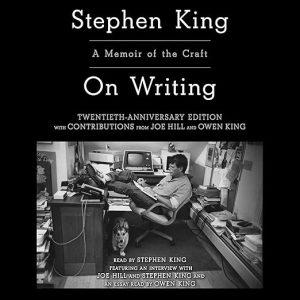
The territory overlaps but the approach is different. McCracken's notes are more compressed and more skeptical of received wisdom than either Lamott or King. She shares the personal register of both but resists prescriptive advice more consistently. The 280-note structure also makes the experience non-linear in a way that extended essays do not allow.