At a Glance
- Narration: Karen Chilton brings warmth and urgency to Barnett's memoir, navigating the dual register of personal coming-of-age story and systemic indictment with real skill.
- Themes: Mass incarceration and racial injustice, the war on drugs and its human costs, the formation of a lawyer's conscience
- Mood: Urgent and deeply personal, with the emotional weight of cases that carry real human stakes
- Verdict: A memoir that earns its anger and keeps its humanity intact across thirteen hours, with Karen Chilton's performance making it one of the stronger legal advocacy audiobooks in recent memory.
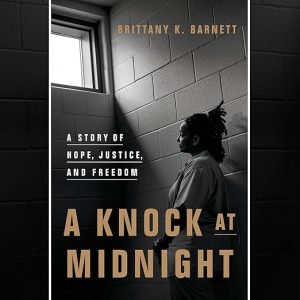
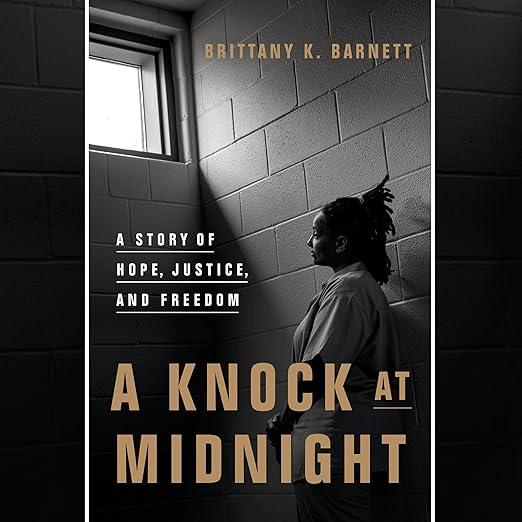
Brittany K. Barnett was a law student when she first encountered the case of Sharanda Jones, and A Knock at Midnight opens with the weight of what that encounter eventually cost and made possible. Jones was a single mother, a business owner, and a first-time drug offender who had been sentenced to life in prison without parole. She had no prior criminal record. She had not been identified as a leader or organizer in the drug network that prosecutors built a case around. She had been, in the language Barnett uses throughout this audiobook, buried alive by a sentencing structure that had grown disconnected from proportionality, from community impact, and from any recognizable notion of justice that Barnett could reconcile with the legal system she was training to join.
How A Knock at Midnight Holds Up
Karen Chilton's narration is the right instrument for this material. She reads Barnett's prose, which is lyrical without being florid and precise without being cold, with a voice that carries genuine emotional investment without collapsing into melodrama. The memoir is doing two things simultaneously throughout: building the case against mandatory minimum sentencing and the racial disparities embedded in drug enforcement, and telling the story of a young lawyer's transformation. Chilton holds both registers across thirteen hours without letting one crowd out the other, which is a significant narration achievement for material this emotionally demanding.
The title draws from a phrase of Dr. Martin Luther King Jr.'s, and Barnett deploys it with intention: the midnight of systemic injustice, and the knock of those demanding a different kind of legal accountability. That framing is present throughout without being repeated until it collapses into a thesis statement. Barnett is too good a storyteller to let the symbolic weight of her title substitute for the work of the narrative. The people in the book are specific, their circumstances are documented, and the argument emerges from the particular rather than being imposed from above.
The book operates on the premise that proximity to injustice is transformative in ways that abstraction cannot achieve, and the audiobook format reinforces that argument with particular force. Hearing Chilton give voice to Barnett's description of the double life she lived, by day closing billion-dollar corporate transactions and by night working pro bono on appeals with near-hopeless odds, makes the cognitive dissonance of Barnett's early legal career visceral in a way that reading about it does not quite replicate. The pressure of that double life is what eventually transformed her from a successful corporate attorney into one of the leading advocates for sentence reform in the United States.
Sharanda Jones's case is the spine of the book, but Barnett brings in other clients and other stories, expanding the portrait of what mandatory minimum sentencing produces in practice across different circumstances and communities. Van Jones called Barnett a star and the book an essential book for our time. The Los Angeles Times agreed, naming it a book prize finalist, and the NAACP IMAGE Award nomination recognized its significance in the conversation about racial justice in the American legal system. The listeners who have posted reviews are consistent: this is the kind of book that produces anger and hope in the same reading.
What to Watch For in A Knock at Midnight
A Knock at Midnight is advocacy as memoir. Barnett does not present the mandatory minimum sentencing debate with equal weight on both sides. She makes a sustained argument through specific human cases, and readers who want detached analysis will need to supplement this with other sources. That clarity of purpose is also one of the book's strengths: Barnett is honest about her commitments and her relationships, and the emotional investment she brings to the cases she describes is inseparable from the intellectual argument she is making.
One reviewer described needing to set the book down for months midway through because the material was so heavy. That is not a critique so much as a warning about emotional preparation. Chilton's narration brings Barnett's descriptions of the prison system and her clients' conditions to vivid life, and some of those passages require a listener prepared to receive what they are hearing fully rather than at a comfortable distance.
The audiobook also captures something that legal journalism often misses: the personal cost of this kind of advocacy work over time. Barnett describes building a legal practice by day and pursuing pro bono cases by night across years of what amounts to sustained dual-track professional life, and the toll of that is present in the memoir without being sentimentalized. Chilton's narration conveys that sustained effort without making it sound heroic in the simple sense. The exhaustion and the commitment are both in the voice, which makes the eventual outcomes, for Sharanda Jones and for other clients Barnett worked to free, land with proportionate weight rather than as Hollywood resolution.
The audiobook also captures something that legal journalism often misses: the personal cost of advocacy work sustained over time. Barnett describes building a legal practice by day and pursuing pro bono cases by night across years of dual-track professional life, and the toll of that is present in the memoir without being sentimentalized. Chilton's narration conveys that sustained effort without making it sound effortlessly heroic. The exhaustion and the commitment are both in the voice, which makes the eventual outcomes for Sharanda Jones and other clients land with proportionate weight rather than as a tidy resolution.
The Right Listener for A Knock at Midnight
Listeners interested in criminal justice reform, racial equity in the legal system, and the human consequences of the war on drugs will find this audiobook essential listening. It works both as memoir, the story of one lawyer's education and transformation, and as a document of the sentencing crisis that continues to play out in American courts and communities. Those familiar with Bryan Stevenson's Just Mercy or Michelle Alexander's The New Jim Crow will find this covers related territory from a more personal and case-specific angle that complements rather than repeats those books. Chilton's performance makes the thirteen hours feel urgent rather than obligatory.
Frequently Asked Questions
How does Karen Chilton's audiobook narration handle the dual tone of personal memoir and legal advocacy?
Chilton balances the registers effectively across thirteen hours. She brings warmth and emotional presence to the personal sections and appropriate gravity to the legal and systemic material, without collapsing the distinction between Barnett's individual story and the broader argument about mandatory minimum sentencing.
Is this audiobook emotionally difficult to listen to, and how does it handle that weight?
Parts of it are genuinely demanding. One reviewer described needing to set the book aside for several months before returning. Barnett's accounts of her clients' circumstances are specific and detailed. The book balances that weight with genuine moments of hope, particularly around Sharanda Jones's eventual release, but listeners should be prepared for material that requires full emotional engagement.
How does the A Knock at Midnight audiobook relate to other criminal justice memoirs?
The book covers related territory to Just Mercy and The New Jim Crow but with a different emphasis. Barnett's memoir is more explicitly autobiographical and focuses specifically on drug sentencing policy and racial disparities in mandatory minimum enforcement, making it a useful companion to rather than a substitute for those titles.