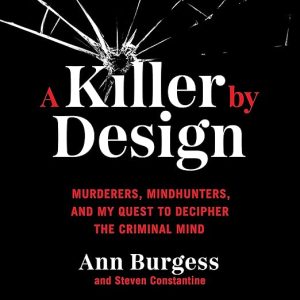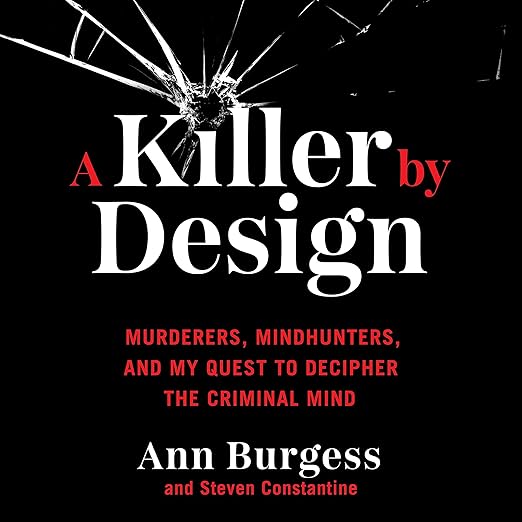
Crime scene drawings and interview transcripts don't usually survive intact into a memoir's audio version, but Ann Wolbert Burgess built this audiobook's entire authority on exactly that kind of primary-source density. Burgess is the forensic nurse who helped transform how the FBI profiles violent offenders, and A Killer by Design reconstructs the creation of the Behavioral Science Unit, the real-life profiling team later dramatized in Hulu's Mastermind documentary, from the inside. Gabra Zackman narrates across just over nine hours, moving through Burgess's pioneering research into sexual assault trauma and how it directly shaped the profiling techniques used to catch Ed Kemper, Dennis Rader, Henry Wallace, and Jon Barry Simonis. The book interweaves never-before-seen interview transcripts with Burgess's own recollections, built less like a procedural and more like a scientist's first-person case file, one she is still, decades later, working through in real time as she narrates it.
What separates this from a lot of true crime is the specific angle Burgess brings: she wasn't law enforcement, she was a trauma researcher whose work on sexual assault victims got pulled into FBI profiling almost as a side effect of taking victims seriously when almost nobody else in law enforcement was doing so systematically. That origin story matters, because it means the book's four featured cases, the so-called Co-Ed Killer, BTK, the Taco Bell Strangler, the Ski-Mask Rapist, get filtered through a victim-centered research lens rather than a purely investigative one. Greg's review captures this directly, calling it 'the story from the psychology perspective' for anyone who came to the subject through the Mindhunter series and wants the version built on actual clinical research rather than dramatized procedure.
The book earns its scope by staying genuinely personal throughout rather than turning into a dry institutional history of the Behavioral Science Unit's founding. Lily Barton's review praises Burgess's 'descriptive writing style,' noting it made her feel like she 'could imagine being in the same room' during interviews with men who committed some of the era's most disturbing crimes, and that immersive quality is exactly what interview-transcript-driven true crime should deliver but often doesn't. Amazon Customer's review adds an important texture too, describing Burgess's close, trusted connection with victims as central to why her research succeeded where more clinically detached approaches had stalled for years before her involvement in the field.
A Voice for Burgess, Another for the Offenders
Gabra Zackman is genuinely well cast for this specific kind of forensic memoir: she holds technical, clinical vocabulary, trauma research terminology, profiling methodology, without ever losing the human narrative running underneath it. That balance is exactly what a book like this needs, since Burgess's material constantly moves between scientific rigor and deeply human stakes, sometimes within a single paragraph, and a narrator who leaned too hard into either clinical detachment or dramatized horror would undercut the book's actual argument about taking victims seriously as a subject worthy of rigorous study rather than tabloid sensation.
The book's real-world credentials back up the narration's confident register: it was featured on ABC's 20/20, named one of Amazon's best true crime titles, and picked as one of Amazon's best books of the month in December 2021, alongside recognition among Apple's own end-of-year audio picks that same month. Those aren't the kind of accolades a shallow, sensationalized treatment usually earns, and Zackman's measured, research-grounded delivery matches the seriousness those credentials imply rather than playing the material for cheap thrills or manufactured suspense between chapters.
A particular skill comes into play in narrating interview transcripts specifically, since Zackman has to differentiate Burgess's own analytical voice from the quoted words of the offenders themselves without either voice bleeding into caricature. That distinction matters enormously in a book built around never-before-seen interview material; a narrator who made Kemper or Rader sound cartoonish would undercut the clinical seriousness Burgess's research demands, and Zackman avoids that trap consistently across the full nine hours, letting the material's genuine unease come from content rather than vocal performance tricks.
Part Personal Memoir, Part Case History
This is heavy material by design, and listeners should go in with clear eyes about what that means: detailed discussion of sexual assault, violent crime, and the psychological damage inflicted on real victims runs through the entire book, since Burgess's whole research career centers on exactly that subject matter. It's not gratuitous in the way some true crime can be, the framing stays clinical and purposeful rather than exploitative, but the content itself doesn't soften around the edges either, and listeners sensitive to detailed victim-impact material should plan accordingly before starting.
The book also functions as two things at once, part personal memoir about Burgess's own career and part case history of four specific offenders, and listeners expecting a pure procedural true crime format might find the memoir sections slower going than the case material. That dual structure is a real strength for readers interested in how the science actually developed, but it does mean the pacing occasionally shifts away from pure crime-story momentum into more reflective, personal territory about Burgess's decades in the field, her own doubts, and the institutional resistance she had to work against.
It's also worth setting expectations about structure specifically: because the book is organized around Burgess's research career rather than a single continuous crime narrative, the four cases don't unfold as one sustained investigative thread the way a true-crime podcast season might. Listeners expecting a single unbroken case-to-conviction arc should know the book moves between offenders as Burgess's own career moved between them, which serves the memoir's honesty but occasionally interrupts the momentum a purely case-driven listener might be chasing.
Mindhunter Fans Wanting Research Behind the Headlines
This audiobook is an easy recommendation for true crime listeners who want the psychology and research behind the headlines rather than just the headlines themselves, and especially for anyone who watched Mastermind on Hulu and wants the deeper, more research-grounded version of that same story. Fans of Mindhunter-adjacent content, criminal profiling history, or forensic psychology generally will find Burgess's firsthand account genuinely valuable, since so few people who actually built the profiling methodology from scratch have narrated their own account of doing it.
Skip this one if detailed discussion of sexual violence and its psychological aftermath on real victims is something you need to avoid right now, since the book doesn't shy away from that material at any point. Listeners who want a lighter, more procedural true crime listen without the trauma-research framing should also know this leans more toward reflective case history than fast-paced investigative thriller, even though the four central cases provide plenty of genuine tension along the way.
Does this audiobook cover the same cases as the Hulu Mastermind documentary, or does it go further?
It covers the same founding history of the Behavioral Science Unit but adds far more depth through never-before-seen interview transcripts and Burgess's own research, making it a fuller account than the documentary alone.
How graphic is the content in this audiobook regarding victims of these serial killers?
It's detailed and unflinching, since Burgess's research career centers specifically on victim trauma, though the framing stays clinical and purposeful rather than exploitative throughout the nine-hour runtime.
Is Gabra Zackman's narration appropriate for such clinical and forensic material, or does it feel too detached?
It strikes a careful balance. Zackman holds the technical vocabulary with confidence while keeping Burgess's human narrative audible underneath it, avoiding both clinical coldness and sensationalized drama.
Do I need to have watched Mindhunter first to follow this audiobook?
No prior viewing is necessary. The book stands entirely on its own, and Burgess's firsthand research account works whether or not you've seen any dramatized adaptation of this history.