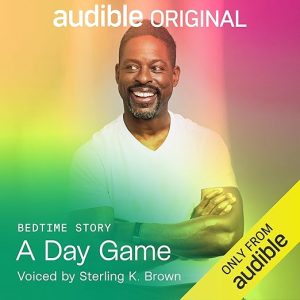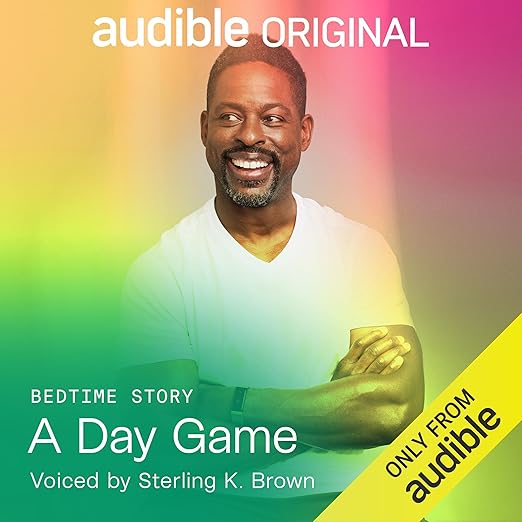
Twenty-six minutes is the entire audiobook, and the design assumes you will never hear the end of it. A beautiful autumn day in 1902, the Philadelphia Athletics against the St. Louis Browns, Sterling K. Brown describing what happens: that single sentence is the whole specification this record offers, and for once the brevity of the description is not negligence. A sleep story that needed explaining would already have failed.
Baseball Solves Sleep Audio's Oldest Problem
Sleep audio is a genuine format with a genuine craft problem, and baseball is an inspired answer to it. The sport moves slowly, its events are small and self-contained, and following it demands almost nothing while still giving the mind a shape to rest against. Nothing is at stake for the listener, no character needs tracking, and the rhythm of a ball game described aloud sits somewhere between narrative and weather. Anyone who has fallen asleep to a radio broadcast in summer already knows this works.
Choosing 1902 is the second good decision. A contemporary game carries teams you might have opinions about, statistics you might argue with and stakes attached to a season in progress. A fixture from more than a century ago carries none of that: the outcome is settled, the names are unfamiliar enough to stay pleasant, and the whole thing arrives as a landscape rather than as a contest. Period distance is doing the same work here that a fictional setting does elsewhere.
What makes the casting notable is that a performance of this kind is the product rather than the vehicle. In a novel the voice serves the text. In twenty-six minutes of scripted calm, the text serves the voice, and Sterling K. Brown was hired for a register, a tempo and a warmth that either settles a nervous system or does not. Check what the reading does with a described crowd and then with a quiet stretch of play, because a sleep story is undone by any moment that wakes you up.
Brown Gives This Sleep Tool a Named Voice
The practical case is that this is a tool, not a book, and tools are judged by whether they work. Twenty-six minutes is long enough to cover the drift into sleep and short enough to loop without irritation, which is a more considered length than it appears. Anyone who has tried to fall asleep to a podcast knows the failure mode: an interesting turn arrives at the wrong moment and you are awake for another hour. A settled game from 1902 has no such turn in it.
Production values follow the money now that this genre is a category people buy deliberately rather than stumble into. A named actor, a scripted premise and a defined running time are what separate a sleep story from ambient noise, and the specificity of this one, a real matchup between two clubs on an autumn afternoon, gives a listener something to picture at exactly the level of effort a tired brain can manage.
It also works for people who are not trying to sleep at all. Twenty-six minutes of an early-century afternoon described without urgency is a pleasant thing on its own terms, and baseball fans in particular may find that the appeal survives being awake for it. The Athletics and the Browns arrive as names from another era of the sport, and hearing them treated as ordinary and present has a small pleasure in it.
Twenty-Nine Ratings and No Named Writer
Audible Sleep occupies the author field, which is a product line and not a person. Somebody wrote this script: chose the year, chose the two clubs, decided what happens and how the sentences end so that nothing snaps a listener back. That writer is credited nowhere on the record. A performer's name sits at the top, a brand sits where the author should be, and the person whose actual craft determines whether the thing works is invisible, which is a recurring problem with commissioned audio and worth naming when it appears.
Twenty-nine ratings sit on this record with nothing written underneath them, which for a sleep product is almost logically inevitable and still leaves a buyer with nothing. The obvious question about any recording in this category, whether the voice suits you specifically, is the one no average can answer, and a displayed 4.8 built entirely from silent clicks tells you that people were satisfied without telling you what they were satisfied by. The filing compounds it: this sits under alternative and complementary medicine, a shelf that implies a therapeutic claim the story itself never makes.
Insomniacs Who Like Baseball Get a Good Voice
Insomniacs with a soft spot for baseball are the obvious audience, and the pairing is more specific than it sounds: this is for people whose minds race at night and who find a described game more soothing than instructions to breathe. It also suits anyone already using sleep audio who has worked through the ambient catalogue and wants something with a human voice and a light narrative pulse behind it.
Anybody looking for a real story, a real ball game or anything about the 1902 season will not get what they came for, since the premise is deliberately inert and the running time forecloses anything else. Anyone whose sleep problem is clinical should treat this as furniture rather than as treatment, whatever shelf the record sits on. What everybody else is offered is a very good voice, an autumn afternoon and permission to miss the ending.
Before You Press Play
- Read by: Sterling K. Brown's register has to survive being played on repeat night after night, which is a harder brief than any single reading.
- At its heart: Sleep audio as craft, a 1902 ball game, deliberate low stakes, period distance.
- Vibe: Slow, warm, designed to be missed.
- Short version: A well-made twenty-six-minute sleep tool whose success depends entirely on whether this particular voice works on you.
Questions Listeners Ask
Is this an audiobook or a guided sleep meditation?
Neither exactly. It is a scripted bedtime story built around a baseball game, with no instructions, no breathing exercises and no wellness language inside it. The working premise is that a low-stakes narrative with a familiar rhythm occupies the mind just enough to let it stop working.
How does the audiobook end, and does the ending matter?
The design assumes you will not reach it, which is both the genre's standing joke and its actual measure of success. A sleep story that holds your attention to the final minute has failed at its job. Treat the last few minutes as insurance rather than as a payoff you are owed.
Is Sterling K. Brown the reason to choose this one over another sleep story?
On this record that voice is close to the only variable. The premise is a single sentence, the length is fixed at twenty-six minutes, and the whole proposition is whether one particular voice at one particular tempo settles you. That is a question of personal fit, and a sample answers it faster than any description.