- Narration: Liz Earle self-narrates with the warmth of three decades in wellness broadcasting, never sounding like a broadcast.
- Themes: Midlife health, evidence-based wellness, aging with agency
- Mood: Supportive, practical, personally grounded
- Verdict: A trusted, broad-ranging wellness guide best suited to listeners wanting one credible overview rather than one narrow specialty.
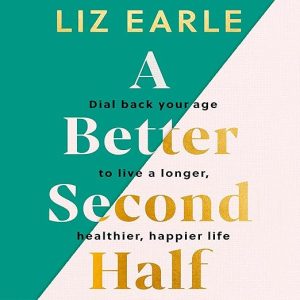
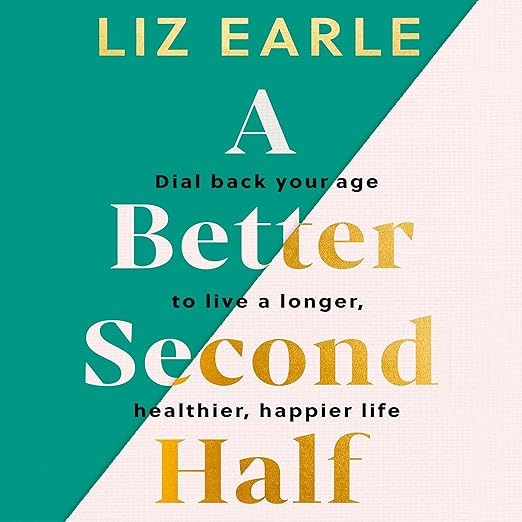
Liz Earle turns three decades of wellness broadcasting into a single audiobook built for midlife listeners, and the craft of the thing is that it never feels like a lecture delivered at you. Part memoir, part evidence-based self-help distillation, A Better Second Half moves between Earle's own health journey and the research she has gathered on the gut-brain axis, nutrigenomics, high intensity weight training, low carb diets, and biohacking, always circling back to a simple frame: live better, feel better, age better. Television presenter Lorraine Kelly called the book a 'godsend' and praised its 'warm, wise advice that really works,' and that warmth is audible from the very first chapter, not just claimed on the cover.
Earle's Broadcasting Decades Translate to Audio Warmth
Earle narrating her own material is close to non-negotiable for a book this personal, and it shows in every chapter. Her decades in front of a camera and a microphone as a wellness broadcaster translate directly into audio warmth, so the delivery feels like a knowledgeable friend talking you through her own hard-won discoveries rather than a professional voice actor reading someone else's manuscript aloud. The pacing holds up naturally across the full ten and a half hour runtime too, never rushing through the denser science sections or dragging through the more personal, reflective passages. For a book that is explicitly part retrospective and part practical guide, having the author's own voice carry both halves keeps the two modes from ever feeling like separate books awkwardly stitched together.
The roster of people willing to put their names behind this book is genuinely notable. Beyond Kelly's praise, Dr. Louise Newson has called Earle's own health journey a real inspiration listeners can learn from directly, and Melissa Hemsley described the book as a treasure trove of life-friendly tips. Professor Tim Spector praised the book as 'an enjoyable and informative read' and 'a positive and empowering take on ageing.' That range of endorsers, a TV presenter, a menopause specialist, a food writer, and a scientist, suggests the book actually holds up across several different expert lenses, not just one narrow angle on wellness.
Gut Health to HIIT, Covered Broadly
The specific science Earle covers is genuinely substantial for a book this approachable. She walks through the gut-brain axis and why gut health increasingly shows up in mainstream longevity research, nutrigenomics and what genetic testing can and cannot actually tell you about your own diet, the real evidence behind high intensity interval training for women in midlife, and a clear-eyed look at both the appeal and the limits of low carb eating. One listener wrote that she read the book twice just to take notes on all the best bits, specifically praising the sensible advice on reducing inflammation as bodies age. That is a strong endorsement for a book trying to cover this much scientific ground without collapsing into either fad-chasing or dense academic jargon.
Her Own Body as the Testing Lab
The book is also unusually direct about who midlife health advice tends to leave behind. Women sandwiched between raising children, sustaining a career, and caring for aging parents are exactly who Earle is writing for, and she names that specific, exhausting collision directly rather than offering generic self-care platitudes that do not account for it. One reviewer said she wished she had had this book in her twenties, which speaks to how much of the advice here, on inflammation, hormones, and sustainable habits, reads as useful well outside the specific midlife window the book is nominally built around. It is aimed squarely at one life stage but rarely feels irrelevant outside it.
Earle also describes herself, in the book's own framing, as never shy about making her own body a testing lab for new discoveries, and that willingness shows up throughout in specific, lived detail rather than secondhand research summaries. Rather than simply reporting what a study found about, say, high intensity interval training or a particular biohacking technique, she describes trying it herself first, which gives the science sections a first-person credibility that a purely academic wellness book would lack. It also means the book occasionally reads as much like a running experiment log as a settled guide, which suits its stated ambition of sorting genuine evidence from wellness fads rather than presenting either as finished, unquestionable truth.
Broad Overview, a Few UK-Specific References
Covering this much wellness science, gut health, genetic factors in diet, high intensity training, low carb eating, and biohacking, within a single book necessarily means no single topic gets the depth a dedicated title on any one of them would offer. Listeners hoping for an exhaustive deep dive into just gut health, or just strength training for women over fifty, may find Earle's treatment more of a well-sourced overview than a comprehensive specialist guide. That breadth is also the book's honest selling point though: most midlife listeners do not want five separate specialist books, they want one trusted guide pointing them toward the right questions to ask next, and Earle's own credibility as an established wellbeing voice makes her a reasonable person to trust with that framing job.
Earle is a well-established voice in British wellness media specifically, and some of the cultural reference points, and a few of the specific health-system details she touches on, lean toward a UK audience more than an international one. American or other international listeners will still find the underlying science, on inflammation, hormones, and training, fully applicable, but a handful of specific references may land slightly differently for listeners outside the UK. It is a minor friction rather than a real barrier, closer to the kind of adjustment any listener makes reading nutrition advice from a different country's health system than a fundamental mismatch in the actual guidance.
Efficient for Midlife Women, Less for Men
Women approaching, in the middle of, or well past midlife are the obvious core audience, and the reviews bear out that the advice resonates broadly within that group, from readers newly grappling with inflammation to longtime listeners already deep into their own wellness routines. Anyone who already trusts Earle's broader body of work, or who wants an accessible, well-sourced entry point into topics like nutrigenomics and the gut-brain axis without committing to several separate specialist books, will find this a genuinely efficient use of ten and a half hours. The self-narration adds real value here too, since hearing Earle's own voice deliver her own hard-won lessons carries a credibility a hired narrator simply could not replicate.
Those wanting a single deep-dive topic, gut health alone, or strength training alone, rather than a broad tour connecting several wellness threads together, may find the scope here a bit diffuse for their specific needs. Male listeners, or anyone outside the book's explicitly midlife-women framing, will need to do more translating to apply the advice to their own circumstances, since Earle's examples and personal anecdotes are consistently drawn from her own experience as a woman navigating this life stage. And listeners strongly skeptical of self-help built around one practitioner's personal journey, rather than a more clinical or academic presentation, may prefer a different kind of wellness book entirely.
Does Liz Earle narrate her own audiobook?
Yes. She reads A Better Second Half herself, and her decades of wellness broadcasting experience give the narration a warm, knowledgeable-friend quality rather than a studio-read feel.
Is this audiobook only relevant to women going through menopause?
No. While midlife women are the primary audience, the health advice on inflammation, gut health, and training applies more broadly, and at least one listener said she wished she had had it in her twenties.
Does this audiobook lean more toward memoir or practical advice?
Both. It is structured as part retrospective of Earle's own health journey and part evidence-based guide, moving between personal story and research-backed recommendations throughout.
Is the A Better Second Half audiobook written from a UK perspective?
Yes, Earle is a long-established British wellness voice, so some cultural and health-system references lean UK-specific, though the core science applies to listeners anywhere.