The Short Version
- Narrator: Emad Schannat's name signals native-level Arabic pronunciation, a real asset for a course built around speaking practice, though no listener review confirms his delivery directly.
- Subjects: Arabic alphabet and script, beginner vocabulary building, conversational practice
- Tone: Structured and encouraging, built for repeat listening
- Bottom line: Worth it for true beginners willing to pair the audio with the companion PDF; skip if you want an audio-only method for reading and writing.
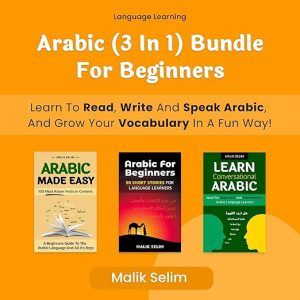
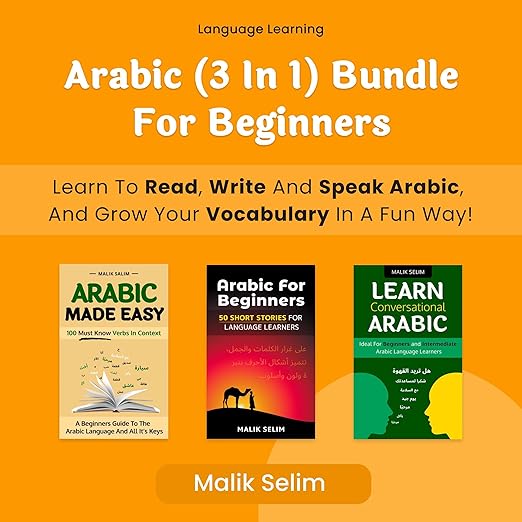
Can three to seven days really turn a complete beginner into someone who reads Arabic script? That's the specific promise Malik Selim makes in this thirteen-and-a-half-hour audiobook, built from three combined books covering the alphabet, a hundred essential verbs, fifty short stories, and fifty beginner dialogues. Selim writes from his own frustration as a self-taught student overwhelmed by grammar-heavy materials, and the course is designed around avoiding that specific trap: less rule memorization, more usable vocabulary picked up through context and repetition.
Sachi Didn't Know This Taught Standard Arabic
Bundling three separate books into one thirteen-plus-hour audiobook is ambitious, and the structure mostly holds together: alphabet and script fundamentals first, then the hundred core verbs with three example sentences each, then fifty stories and fifty dialogues meant to put that vocabulary into practical use. Sachi's review, which opens by noting she didn't even know Modern Standard Arabic was the language being taught until this book explained it, speaks to how much groundwork Selim covers for listeners starting from genuinely nothing.
A companion PDF ships alongside the audio in the buyer's library, and for a course built around reading and writing an entirely new script, that companion document isn't a nice extra, it's close to essential. Selim's own three-part structure translates cleanly enough by ear for the verb and story sections, but the alphabet-writing component in particular leans hard on having that PDF open at the same time.
Arabic presents specific, well-documented challenges for English speakers beyond just an unfamiliar alphabet: a right-to-left script, consonant sounds with no close English equivalent, and a grammatical structure that works differently from Romance or Germanic languages. Starting from pronunciation and spoken vocabulary before tackling the full writing system, effectively what the audio-first sections of this course do, is a reasonable sequencing choice for exactly that kind of steep learning curve.
Thirteen and a half hours is a fraction of what a formal semester-length Arabic class would demand in classroom time alone, and while no self-paced audio course can fully replace structured instruction with a live teacher, that efficiency is part of the appeal for the specific audience Selim is writing for: people who tried and stalled at formal or self-directed study before and want a lower-commitment second attempt.
Schannat's Fluency Signals Trustworthy Pronunciation Practice
The audio format's real strength here is on the speaking side rather than the reading side: fifty dialogues and fifty short stories give a beginner repeated exposure to how Arabic actually sounds in context, which is a harder thing to learn from a printed page alone. Ashley's review describes finally making real progress after a friend's in-person teaching attempt left her almost nowhere, crediting this course specifically with getting past that stall.
Selim structures the hundred core verbs with three example sentences apiece, which means listeners hear each verb used in slightly different contexts rather than as an isolated flashcard entry, a repetition strategy that suits audio learning particularly well. Agustina's review credits Selim's years of studying Arabic himself with producing a genuinely more effective and simpler teaching method than the denser academic materials she'd tried before.
Emad Schannat narrates, and his name is a reasonable signal of native or near-native Arabic fluency, a real asset for a course built specifically around pronunciation and speaking practice. No listener review comments directly on his delivery, so that assessment rests on genre fit rather than confirmed feedback, but clear, replayable pronunciation is exactly what a language course narrator most needs to get right.
Selim frames the whole course around a specific failure mode he experienced himself: prior materials packed with grammatical and morphological rules that overwhelm a beginner before they ever get to speak a full sentence. Structuring around vocabulary-in-context first, then building toward the underlying grammar through repetition rather than upfront rule-memorization, is a deliberate pedagogical choice, and it is the reason several reviewers specifically cite finally making progress after stalling out elsewhere.
Thirteen and a half hours across three combined books also means real pacing variety: alphabet drills, verb conjugation, story listening, and dialogue practice all sit within the same audiobook rather than requiring three separate purchases, which keeps a beginner from having to decide which specific skill to prioritize buying first.
The format also suits genuinely passive listening better than most language courses attempt: a commute or a workout can absorb the fifty stories and fifty dialogues productively even without a notebook in hand, reserving focused, PDF-open study time specifically for the alphabet and writing sections. That division between passive and active listening moments is a practical structure many all-in-one language courses don't bother building in deliberately.
An Audio Format Can't Show You Letters
The core tension worth naming directly: this is a literacy course, reading and writing a new script, wrapped in an audio format that can't show you a single letter. Selim's own note about the companion PDF confirms he built the course expecting listeners to use both formats together, so anyone planning to rely on audio alone for the reading and writing components should recalibrate that plan before starting.
Agustina's review, at four stars rather than five, doesn't specify a particular complaint, so it's worth noting honestly as a data point without overstating it. Reviews overall skew strongly positive and specific about what worked, which is a good sign, but a beginner language course this ambitious in scope inevitably will not land the same way for every learning style.
The fifty dialogues are built around daily situations and scenarios rather than abstract vocabulary lists, which matters for retention; context-embedded vocabulary consistently sticks better than isolated word lists, and a beginner course that commits fully to that structure, as this one does across its story and dialogue sections, is making a defensible pedagogical bet rather than padding runtime with filler content.
A small tension is worth flagging between the title's Beginners framing and a line inside the synopsis describing the material as designed for beginner and intermediate learners alike. In practice, this reads as a course that starts at zero and extends far enough to remain useful past the earliest stage, rather than two audiences with conflicting needs, but it's worth knowing the intermediate claim exists if you're specifically shopping for a zero-to-hero beginner course only.
Zero-Exposure Beginners Who Stalled Elsewhere First
True beginners with zero prior Arabic exposure are the clearest audience, especially anyone who has already tried and stalled out with denser grammar-first materials, as both Ashley and Agustina describe in their own reviews. Commuters wanting to build vocabulary passively during drive time will get real value from the verb and dialogue sections specifically, provided they also spend time with the companion PDF for the script work.
Skip this one if you want a pure audio-only method with no supplementary reading, or if you're already past beginner level and need intermediate or advanced material rather than alphabet fundamentals and core vocabulary.
Do I need the companion PDF to get value from this audiobook, or can I learn Arabic by listening alone?
The PDF matters a lot for the reading and writing components specifically. Listening alone works well for the vocabulary and speaking sections, but Arabic script isn't something audio can teach on its own.
How long does it take to learn the Arabic alphabet with this audiobook's method?
Selim states a goal of three to seven days for a complete beginner to master the alphabet, though that timeline naturally depends on how much time a listener puts in daily.