- Performance: Dan Harris takes the reading credit on his own memoir, and the listing never says which parts of this edition were recorded new.
- What it covers: A televised panic attack, meditation for nonbelievers, the voice in your head as the actual problem
- Feel: Wry, self-deprecating, allergic to its own genre
- Our call: Still the best on-ramp for skeptics, though the anniversary additions are thinner than the packaging suggests.
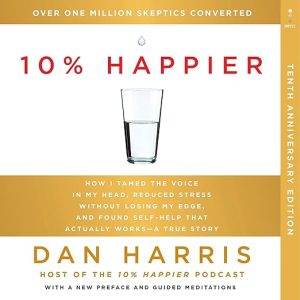
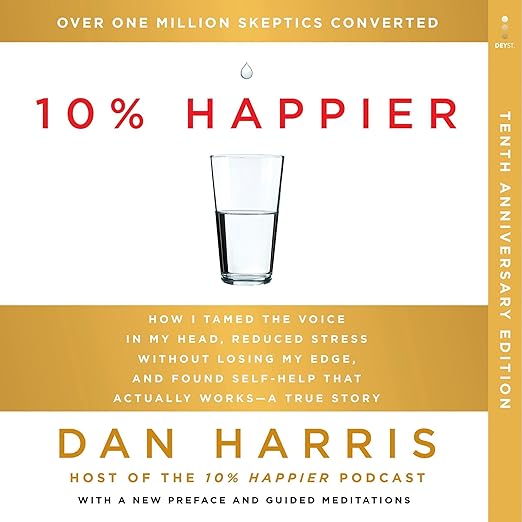
Anniversary editions usually mean a new foreword and a redesigned cover, and this one does slightly more: a fresh preface, a revised and expanded appendix, and ten years of distance between a televised panic attack and the account of what followed it. The audiobook carries Dan Harris's own name in the reading credit, which matters more than usual on a book whose central asset is candor about the least flattering stretch of a career.
Harris's Live Television Panic Attack Started This
Dan Harris had a panic attack live on Good Morning America, and this book is the investigation that followed it. What makes the investigation work is that it was reluctant. A lifelong nonbeliever went looking for an explanation and ended up among a disgraced pastor, a self-help figure he could not quite categorize, and a group of brain scientists, none of which was where he expected to arrive. The conversion is earned by resistance.
Ten percent is the number that made this book durable. It is a deliberately unimpressive claim, and the entire rhetorical strategy sits inside it: no transformation, no enlightenment, no promise that your life becomes unrecognizable by spring. The description says the book can convert even hardened skeptics, and the mechanism is that it never asks them to believe anything at all. It asks them to try something and expect a small return. The title on this listing is worth a glance too, since it reads as a run-together string rather than as a title and an edition, and anyone searching for the book by name will need to know that the words after the percentage are the edition rather than part of the work.
Recording credit goes to Harris himself, which is the obvious call for a first-person memoir and raises a question this page does not answer: whether the whole book was read fresh for this edition, or whether the new preface and expanded appendix were attached to an existing recording. On an edition sold specifically on its updates, that is a reasonable thing to want settled before paying for the anniversary version instead of the original.
Candor About Temper, Drugs, and a Ridiculous Premise
Harris is candid in ways that would embarrass most memoirists. A May 2014 five-star response lists what the book admits to: the temper, the depression that followed war reporting, the drug use, the appetite for more airtime, and the routine viciousness of the industry he was working inside. That same account notes how funny the book is, and the humor is what keeps the confession from curdling into penance.
Accessible is the word that keeps recurring, and a February 2022 five-star response filed on the United Kingdom storefront explains why: this reads as much like a memoir as like a book about meditation, and the practical material arrives as pitfalls and hints rather than as instruction. That response also registers the one real irritation, which is how many of meditation's prominent figures turn out to be personal friends of the author.
Skeptics are the intended reader and the reason this outlasted its cohort. Books in this space normally assume you already want what they are selling. Harris assumes you find the whole thing faintly ridiculous, and he spends a long stretch agreeing with you, which is precisely why the turn lands when it comes. If you have bounced off apps and guided sessions before, the diagnosis here will be uncomfortably accurate. The thesis is not that meditation is profound. The thesis is that the voice in your head is running your temper, your inbox habits and your eating, that you never agreed to any of that, and that a small amount of daily attention takes some of it back.
Do the Math on Twenty Ratings and 4.5
Dating is the problem with this listing. Four of the five written responses were filed in 2014, 2017 and 2022, well before this anniversary edition existed, which means most of the visible enthusiasm belongs to a different product. Only one, from August 2025, postdates the 2024 release, and it praises the appendix and its step-by-step guidance, which happens to be the section this edition expanded.
Twenty ratings sit under this edition while the five written ones average 4.8, and the page displays 4.5. Run that arithmetic and the fifteen silent votes land around 4.4, meaningfully below the people who bothered to write. One reading of the gap is buyers who came for new material and did not feel they received enough of it, and this page offers no way to confirm or dismiss that.
Whether you need this edition at all is the honest question. The core text is the 2014 book, unchanged in substance, and what you are buying on top of it is a preface reflecting on a decade of change plus an appendix of guided meditations and habit advice. If you already own the book in any format, that is a modest addition at a full price. Coming to it new is a different calculation entirely, because then you are buying the complete version of a book that earned its reputation before any of the extra material existed, and the extras cost nothing additional in that scenario.
Skeptics Get More From This Than Daily Practitioners
Meditation skeptics remain the ideal audience, particularly anyone who has been told to try it by somebody insufferable about it. Nonbelievers, lapsed app users and people who suspect the practice is a personality type rather than a skill will find their objections stated more sharply here than they could state them, and then answered without a trace of condescension.
Practitioners who already sit every day will find less. A March 2014 five-star response describes the experience that makes this book work for its actual reader: recognizing yourself so completely in the account that it feels written to order, which is what happens when someone describes the inner monologue you assumed was yours alone. If that recognition does not fire early, the memoir sections will feel long.
Put simply, this remains the best available on-ramp for people convinced meditation is not for them, and the anniversary packaging adds less than the marketing implies. Buy this edition if you are arriving at the book for the first time and want the fullest version of it. Owning the 2014 text already makes a preface and an appendix a thin reason for a second purchase.
What is actually new in the 10th Anniversary audiobook?
A preface reflecting on how much changed for Harris and for public attitudes to meditation across the decade, plus a revised and expanded appendix of guided sessions and practical habit advice. The main text is the 2014 book. If you already own that, weigh whether those two additions justify buying again.
How long is the audiobook, and does the appendix work in audio?
Nine hours and twenty-seven minutes. The appendix is guided meditation and step-by-step instruction, which suits a recording better than most back matter does, though anything you want to consult repeatedly is far easier to find on a page than to scrub back to in an audio file.