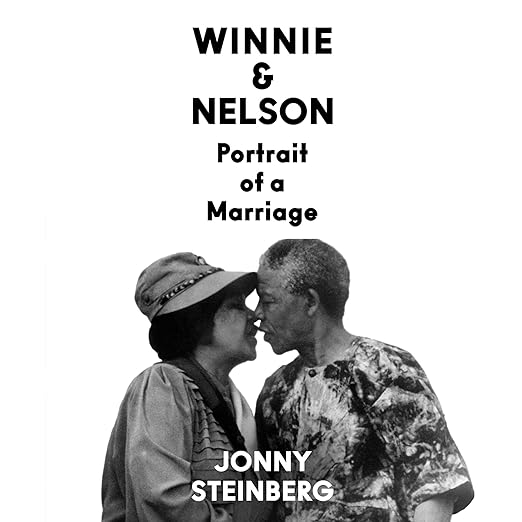
Quick Take
- Narration: Puleng Lange-Stewart brings a South African voice and emotional intelligence to material that carries political weight on every page, handling the book’s shifts from love letters to armed confrontation with consistent authority.
- Themes: Political marriage under apartheid, revolutionary ideology and its personal costs, the gap between public icon and private person
- Mood: Intimate and devastating, like reading private correspondence you were never supposed to see, set against one of the twentieth century’s defining political struggles
- Verdict: Shortlisted for the 2024 Wolfson History Prize for good reason, this is the most searching account yet written of a marriage that was also a political contest, and Lange-Stewart’s narration makes it the definitive audio experience of Steinberg’s work.
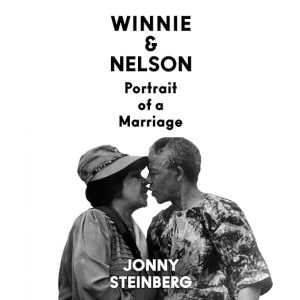
I was halfway through a long Saturday afternoon when I put on Winnie and Nelson and realized within twenty minutes I was not going to get any reading done. Jonny Steinberg’s account of the Mandela marriage demands the kind of attention you give a novel that refuses to let you put it down, and for nearly twenty hours I largely gave it exactly that. The subject is one of the most written-about political figures of the twentieth century, but Steinberg has found a way into the material that feels genuinely new: not another account of the anti-apartheid struggle, but an examination of what it means to love an idealized version of someone through years of separation, and what it means to be the person who has to exist in the real world while being loved that way.
Shortlisted for the 2024 Wolfson History Prize and drawing on never-before-seen material, this is the kind of biography that reorganizes your understanding not just of its subjects but of the political moment they inhabited. The Observer’s description of it as deft and operatic is accurate: Steinberg can hold the intimate and the sweeping in the same paragraph without either register crowding out the other.
The Prison Letters and What They Could Not Say
The most piercing section of the book examines Nelson Mandela’s correspondence from Robben Island. Steinberg’s reading of these letters is not reverential. He traces how Nelson, isolated on the island, constructed an idealized image of Winnie and used his letters to her to sustain it, often at the cost of engaging with the reality she was describing from outside. Winnie’s letters back, written under surveillance, read differently when you understand that everything she wrote was passing through the eyes of the security apparatus. The love story conducted in those letters was also a performance given under compulsion, and Steinberg holds both things simultaneously without resolving the tension into something cleaner.
What he reveals is a profound asymmetry. Nelson was growing into a public figure of extraordinary moral authority partly by being removed from the complications of actual political action. Winnie, every bit his political equal as Steinberg argues directly, was navigating those complications in real time, making decisions that his letters could not acknowledge and that would eventually place them on opposing sides of a fundamental strategic question.
Two Visions of How to Fight Apartheid
The political divergence at the heart of Winnie and Nelson is the book’s most original contribution to the existing scholarship. Steinberg documents how Winnie, increasingly estranged from her imprisoned husband’s politics, was pursuing an armed seizure of power that Nelson believed would lead to endless civil war. Behind his back, she was organizing toward this aim while he was crafting the strategy of negotiated transition that would eventually produce the 1994 settlement. This is not a story of villainy and virtue. It is a story of two people with different assessments of a real strategic situation, operating without the ability to actually talk to each other, with enormous consequences riding on who turned out to be right.
One reviewer described the book as a Shakespearean drama in which bonds of love and commitment mingle with timeless questions of revolution, and that framing is both accurate and useful. Steinberg is interested in how far these two leaders would go for one another, and also where they drew the line, because in the end both knew theirs was not simply a marriage but a contest to decide how apartheid should be fought.
What Puleng Lange-Stewart Brings to the Performance
The decision to have a South African narrator read this book is not incidental. Lange-Stewart carries the proper nouns and place names with native ease, but more importantly, she brings an emotional register that reflects an understanding of what this material means to South African readers and listeners specifically. The love letter sequences are rendered with quiet tenderness; the confrontational political passages carry a different weight. She does not overdramatize either register, which is exactly correct for a book that trusts its material to carry the emotion without theatrical assistance. At nearly twenty hours, her consistency and authority are a genuine contribution to the experience.
Who Should Listen and Who Should Skip
Winnie and Nelson rewards listeners willing to engage with a full biographical project rather than a political highlights reel. Those who want to know which of the Mandelas was right will find Steinberg’s refusal to render a verdict either frustrating or, once they accept it, deeply honest. Listeners who want to understand how personal bonds and political convictions interact under conditions of extreme pressure will find this nearly twenty hours among the most instructive they have spent with an audiobook. Anyone planning to read other accounts of the anti-apartheid struggle will find this an essential companion that illuminates what the standard accounts leave underexamined.
Frequently Asked Questions
Does Winnie and Nelson take a side in how it portrays Winnie Madikizela-Mandela?
Steinberg explicitly treats Winnie as Nelson’s political equal and resists the simplifying narratives that either vilify or canonize her. The book’s central achievement is holding the complexity of both figures without resolving it into a verdict.
What is the never-before-seen material that Steinberg draws on?
The book incorporates previously unpublished correspondence and archival materials that give Steinberg access to the private dimensions of the Mandela marriage, including letters that reveal the strategic and emotional gap that developed between them during Nelson’s imprisonment.
Is this accessible for listeners who do not already know South African history in depth?
Steinberg provides enough historical context that the apartheid era and the anti-apartheid movement are comprehensible to general readers, but the book assumes basic familiarity with Nelson Mandela’s public story. Those entirely new to the subject may want a shorter primer first.
Does Puleng Lange-Stewart’s South African narration add meaningfully to the listening experience?
Yes, in two distinct ways: she handles South African proper nouns and place names with native ease, and she brings an emotional register that reflects an insider’s understanding of what this material carries. The result is a narration that feels embedded in the subject rather than external to it.