Quick Take
- Narration: Suzanne Toren brings steady, measured authority to Quilligan’s revisionist scholarship, though the academic density of some passages benefits from the unhurried pacing she applies throughout.
- Themes: Female political alliance, Renaissance power and culture, revisionist history
- Mood: Scholarly yet accessible, quietly revelatory
- Verdict: Listeners who enjoy history that genuinely recasts the familiar will find Quilligan’s argument about gift-giving diplomacy among four queens both surprising and persuasively argued.
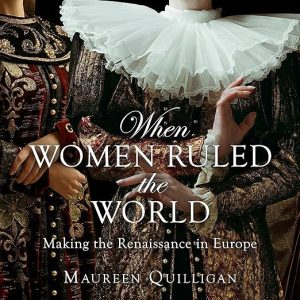
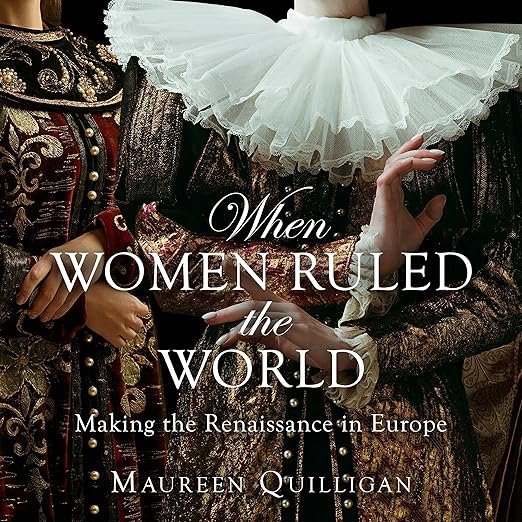
I came to this one on a rainy Tuesday evening after finishing a biography of Mary, Queen of Scots that had left me feeling the usual narrative weight of a woman defined by her failures and her execution. I wanted something that would complicate that picture, and Maureen Quilligan’s When Women Ruled the World did exactly that in ways I did not expect. What I found was not a straightforward celebration of four powerful women, but an academic argument dressed in accessible prose, one that quietly dismantles centuries of received wisdom about how these queens related to one another.
Quilligan is a leading Renaissance scholar, and that background matters. This is not popular history in the breezy sense. It is revisionist scholarship that has been translated into something a careful general listener can follow, and Suzanne Toren’s narration is exactly the right instrument for that kind of material. Her voice carries the weight of the argument without making it feel heavy.
Our Take on When Women Ruled the World
The central claim here is both simple and radical: Mary Tudor, Elizabeth I, Mary Queen of Scots, and Catherine de Medici were not defined primarily by their mutual antagonisms. Centuries of scholarship, Quilligan argues, have emphasized personal hatreds and political rivalries at the expense of something more interesting. These women cultivated a culture of mutual respect, expressed most visibly through elaborate gift-giving rituals that carried diplomatic and personal weight simultaneously. Tapestries, jewels, letters, and symbolic objects moved between courts as expressions of female alliance in a world that offered women rulers few other mechanisms for solidarity. For listeners who know these figures primarily through their conflicts, this reframing is genuinely surprising.
One reviewer noted some disappointment that the book focuses more on jewelry and tapestries than on policy contributions. I understand that reaction, but I think it misses the argument. Quilligan is making a case that the gift-giving is the politics, that the culture these women created together was itself a form of statecraft that has been systematically undervalued because it looks, to modern eyes, decorative rather than strategic.
Why Listen to When Women Ruled the World
The portrait of sixteenth-century Europe that emerges here is genuinely richer than the one most of us carry around. Quilligan situates these four queens against a backdrop of religious wars and destabilized norms, showing how pockets of peace were cultivated by women who had every reason to be enemies but chose something more nuanced. The portrait of Elizabeth I is perhaps the most familiar, but Quilligan draws equal attention to Catherine de Medici, who functions here not as the scheming Italian of popular legend but as a sophisticated political actor navigating an extraordinarily difficult position as regent in France.
At nine and a half hours, this is a comfortable listen for anyone with a genuine interest in Renaissance history. It does not require specialist knowledge, though it rewards listeners who bring some familiarity with the period. One listener described it as filling a major puzzle piece about the political climate that eventually produced English colonial expansion, which is an elegant way of capturing how this book positions itself within a larger historical conversation.
What to Watch For in When Women Ruled the World
The focus on material culture, on objects and rituals rather than battles and legislation, is not a weakness but it is a distinct methodological choice that shapes everything about how the book feels. If you come to this expecting narrative drama in the vein of popular Tudor histories, you will need to adjust your expectations. The drama here is interpretive rather than eventful. Quilligan is asking you to rethink what you already know, not to encounter an entirely new story.
Toren’s narration manages this interpretive weight well. She does not perform the material so much as deliver it with the kind of considered intelligence the scholarship deserves. There are moments, particularly in the more densely footnoted sections, where the audiobook format feels slightly at odds with the academic texture of the argument, but these are relatively few.
Who Should Listen to When Women Ruled the World
This works best for listeners who enjoy history that operates at the intersection of politics and culture, who want their understanding of the Tudor and Valois courts genuinely complicated rather than simply confirmed. Readers of Lisa Hilton’s Queens Consort or Leanda de Lisle’s Tudor will find Quilligan a productive companion, though her focus is narrower and her argument more thesis-driven. If you are coming fresh to this period, this is a solid entry point that will send you looking for more. If you find the policy side of these reigns more interesting than their cultural dimensions, you may find the focus on gift-giving and artistic exchange less engaging than you hoped.
Frequently Asked Questions
Does this audiobook cover all four queens equally, or does it focus primarily on Elizabeth I?
Quilligan gives meaningful attention to all four: Mary Tudor, Elizabeth I, Mary Queen of Scots, and Catherine de Medici. Elizabeth receives the most pages given her reign’s length, but the book’s argument depends on showing all four as participants in a shared culture, so none is simply a supporting character.
Is Suzanne Toren’s narration suited to academic history, or does the prose feel dry in audio format?
Toren’s delivery is measured and intelligent, well matched to Quilligan’s scholarly register. The denser analytical passages can feel slightly challenging in audio format compared to reading, but Toren keeps the argument followable throughout the nine and a half hour runtime.
How revisionist is this book, really? Does it present a wholly positive picture of these four queens?
Quilligan is a scholar first, and her argument is specific rather than hagiographic. She focuses on the gift-giving culture and mutual respect among the queens, not on claiming their reigns were uniformly enlightened. The revisionism is about their relationships to each other, not a wholesale rehabilitation of each individual ruler.
Is prior knowledge of sixteenth-century European history necessary to follow the argument?
Some familiarity with the basic outlines of the Tudor and Valois courts helps, but is not required. Quilligan introduces each queen and her context before building her argument, and Toren’s pacing gives new listeners time to absorb the historical background.