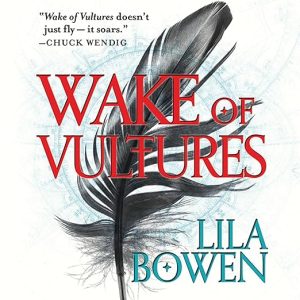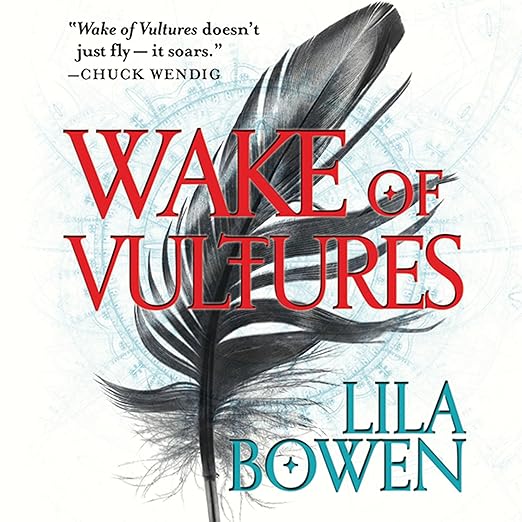
Nettie Lonesome is half Black, half Comanche, effectively enslaved in the sandy desert of a reimagined American West, and entirely convinced she is ordinary in every way that matters - until a vampire attacks her in the dark and she discovers she can kill things that should not die. This is the opening proposition of Wake of Vultures, the first book in Lila Bowen's Shadow series, and the audiobook narrated by Robin Miles delivers its premise with the kind of charged immediacy that makes ten-and-a-half hours feel insufficient.
The Verdict, Briefly
Bowen's particular achievement in this series opener is building a protagonist whose self-doubt is not a trope to be overcome in a single cathartic moment but a lived condition with specific historical roots. Nettie has been told for her entire life that she is ugly, unwanted, and unworthy - by the family that took her in and barely tolerates her existence, by the social structures that have no category for a person of her mixed heritage and complicated gender presentation. When she discovers that she is, in fact, extremely good at killing supernatural creatures, the revelation does not erase those internalized messages. It coexists with them in the same body, which is what makes Nettie genuinely interesting rather than simply heroic.
Reviewer Amanda described the setting as Lonesome Dove-esque, which captures the physical texture accurately - the brutal landscape, the cattle culture, the specific loneliness of the frontier - while missing how thoroughly Bowen subverts that tradition. This is not a western that romanticizes the open range. The violence is real and particular, the structures of oppression are named rather than aestheticized, and the folklore Bowen draws on - chupacabras, skinwalkers, entities from Indigenous and Mexican tradition - is integrated into the world as genuine elements of its supernatural reality rather than used as exotic decoration for a more conventional adventure.
Rachel Caine's blurb calling it a mind-bending mix of history, fantasy, and folklore is accurate, but it undersells how precisely Bowen has calibrated the balance between these elements. The weird western genre has a tendency to reach for the supernatural as spectacle. Bowen reaches for it as metaphor and as history - the things that haunt Nettie's landscape are continuous with the things that have always haunted that landscape. Wesley Chu's blurb captures the other dimension: the book is genuinely strange, and the strangeness is not decorative. Nettie's particular combination of identities - racial, cultural, gendered - places her at the intersection of multiple erasures, and Bowen uses the supernatural threat as the thing that finally forces the world to reckon with what she actually is rather than what it has decided she must be.
Why Wake of Vultures Works as an Audiobook
Robin Miles is the primary reason to choose the audiobook over the print version, and she is excellent in a way that justifies the claim. Her voice for Nettie has a particular quality - rough at the edges, permanently guarded, capable of dry humor that arrives from survival instinct rather than performance - that feels built for this character rather than applied to it. The supporting cast, which includes figures drawn from across the frontier's cultural range, is handled with genuine range. Miles does not flatten secondary characters into accent differentiation; she finds the personality inside each voice and maintains it consistently.
The audiobook also benefits from Bowen's pacing, which is relentless without feeling rushed. Each chapter introduces a new piece of the world's supernatural architecture, and Bowen trusts the reader - or the listener - to assemble the picture from fragments rather than explaining everything upfront. Miles navigates these reveals with the right amount of restraint, letting pieces land without underlining them. Reviewer Valerie Owens, who described blazing through the book and still thinking about it a month later, is responding to exactly this quality: the book moves at a speed that does not permit passive listening.
What Gives Us Pause
This is book one of a four-novel series - Wake of Vultures, Conspiracy of Ravens, Malice of Crows, Treason of Hawks - and it reads as a series opener in the best sense: it establishes the world, the protagonist, and the central threat while leaving substantial threads deliberately unresolved. Nettie's family history is raised but not answered. Certain character relationships are opened at the book's end in ways that require the sequel to develop. Listeners who prefer standalone fiction should know that the story ends at a natural pause point rather than a full resolution.
The gender and identity themes are handled with specificity rather than allegory, and the book does not frame Nettie's gender non-conformity as something that needs explaining or resolving within the text. For many listeners, this matter-of-fact approach will be one of the book's strengths. For readers who prefer these themes to be addressed more directly and explicitly, the book's oblique treatment may feel understated given how central those elements are to who Nettie is.
Who Should Listen to Wake of Vultures
This audiobook is for readers who want fantasy fiction that uses its genre elements to do genuine work - specifically, to examine identity, belonging, and the violence of erasure in a historical context that most fantasy avoids entirely. Fans of weird westerns, supernatural horror with folkloric depth, and protagonists who are genuinely complicated rather than heroically simplified will find exactly what they are looking for here. Start at book one; the series rewards investment in the order Bowen intended. Listeners who need their westerns sanitized or their fantasy conclusions tidy will find Nettie Lonesome's world thoroughly uncooperative with those expectations.
- Narration: Robin Miles is exceptional - she voices Nettie Lonesome with a rawness that matches the character's hard-won scrappiness, and her range across the supporting cast is one of the audiobook's genuine pleasures.
- Themes: identity and self-discovery, otherness and belonging, supernatural folklore in the American West
- Mood: Fierce and propulsive, with unexpected tenderness underneath the violence
- Verdict: Lila Bowen's series opener is one of the stronger weird western debuts in recent memory, and Robin Miles's performance elevates an already confident novel into something that demands the sequel.