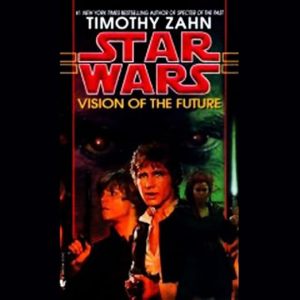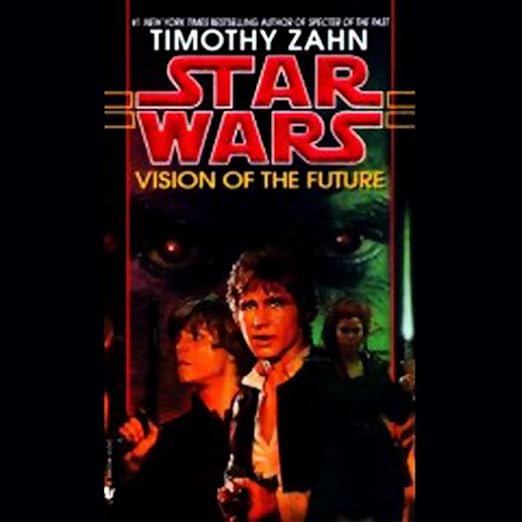
I grew up reading Timothy Zahn's Star Wars novels in publication order, which means Vision of the Future occupied a particular position in my reading life: it was the book that closed the chapter of the Expanded Universe that had defined Star Wars fiction through the 1990s. Coming back to it now, as an audiobook listener rather than a paperback teenager, is an interesting experience. The book holds up considerably better than nostalgia alone would suggest: Zahn writes Star Wars politics with genuine sophistication, and the Hand of Thrawn duology, taken as a complete object, is among the best work the Legends continuity produced before Disney's acquisition reclassified it.
The setup picks up directly from Specter of the Past: the New Republic is on the verge of civil war, rumors of Thrawn's return from the dead are rallying Imperial forces, and Luke Skywalker, Han Solo, Princess Leia, and their allies must simultaneously infiltrate an Imperial fortress, navigate a double-dealing commander, and determine the truth about Thrawn. Zahn is juggling more narrative threads than most thriller writers would attempt, and reviewer Andrew P. noted that the book does not drop any of them, which is a genuine structural achievement in a story this sprawling and politically layered.
The Review
The book's central gamble is using the myth of Thrawn rather than Thrawn himself as the story's primary engine. Whether the legendary admiral is actually alive or whether his supposed return is an elaborate psychological operation is a question that drives the plot, and Zahn uses it to explore how political myths function independently of the people they are built around. A rumor of Thrawn is worth almost as much as Thrawn himself, and the New Republic's response to that rumor tells us as much about their institutional vulnerabilities as any direct military engagement would.
Mara Jade's arc across this duology is the most emotionally resonant thread, and reviewer Pa1adin put it directly: Luke and Mara's story is better than anything in the sequel films. That is a fan-partisan statement, but it points at something true. Zahn writes their relationship as an adult negotiation between two competent, damaged people finding their way toward something they cannot quite name, which is more interesting than most franchise romances manage, and more emotionally grounded than the broader political canvas of the book might lead you to expect.
The audiobook edition runs approximately three hours, which represents significant abridgement of a novel of considerable length and complexity. The duology resolution involves numerous plot threads established across both books, and the condensed format necessarily compresses subplots and diplomatic nuances that give the full text its weight. Reviewer Andrew P. noted that some may find the pacing slow relative to typical Star Wars fare: this is less true of the abridged audio version, where the diplomatic sequences are the sections most likely to have been shortened, which is not entirely to the audiobook's credit.
Weak Spots in Vision of the Future: Star Wars (The Hand of Thrawn)
Heald's performance carries the political weight of the narrative with appropriate dignity and restraint. He is not attempting to replicate film voices, which is the correct choice: the Legends Expanded Universe characters have developed independently of their screen counterparts, and Mara Jade in particular is a character entirely of the novels who requires no film anchor. The measured delivery suits a story about negotiation and political maneuvering more than it would suit a combat-heavy Star Wars narrative.
Who It's For
Committed Legends continuity fans who have worked through the original Thrawn trilogy and Specter of the Past will find this a meaningful conclusion to a significant chapter of the EU. Casual Star Wars audiobook listeners should begin with the Thrawn trilogy rather than the Hand of Thrawn duology. If you are new to Zahn's Star Wars work, starting with Heir to the Empire gives you both a better entry point and a fuller appreciation of what Vision of the Future is closing out.
In Brief
- Read by: Anthony Heald brings a measured, diplomatic register to the political weight of this duology conclusion, though the abridged format necessarily flattens some of what makes the full novel work.
- At its heart: Political legitimacy and galaxy-scale diplomacy, the myth of Thrawn as propaganda, the maturation of the New Republic
- Vibe: Deliberate and politically complex, more chess match than space battle
- Short version: A rewarding conclusion to Zahn's Hand of Thrawn duology for dedicated Legends continuity readers, hampered somewhat by an abridged runtime that shortchanges the sprawling plot.