Key Details
- Narration: The full Brazilian Portuguese cast, credited collectively as 'Elenco,' splits Martin's sprawling political threads across genuinely distinct voices rather than one narrator juggling dozens of characters.
- Themes: War for the Iron Throne, competing claims and shifting loyalties, prophecy and omens against political reality
- Mood: Theatrical, sprawling, tense
- Verdict: A strong pick for Portuguese-speaking fans of the show wanting the fuller book version, unusable for English-only listeners.
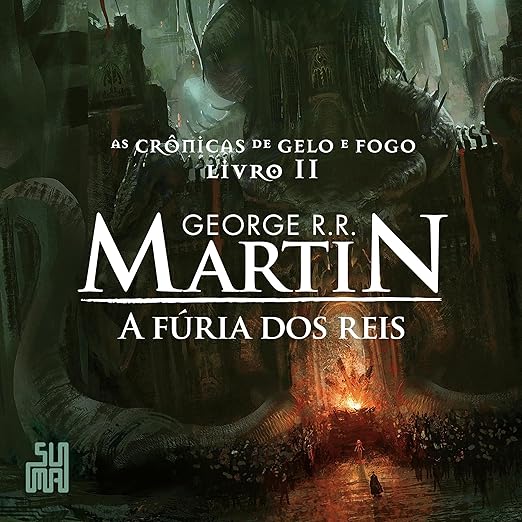
Winterfell and Dragonstone anchor opposite ends of George R. R. Martin's A Clash of Kings, and this particular audiobook, a full-cast Brazilian Portuguese production credited not to a single narrator but to an entire 'Elenco,' Portuguese for cast, treats the distance between them as a genuinely theatrical staging opportunity rather than a narrative inconvenience to read past. This edition is in Portuguese throughout, a detail the listing itself states plainly and that English-only listeners need to confirm before buying.
The synopsis, translated, opens on a comet 'the color of fire and blood' cutting across the sky while six factions fight for the Iron Throne, brother plotting against brother, a princess disguised as an orphan boy, and barbarians descending from the Mountains of the Moon to raid the fields, the second installment of what the listing calls 'As Crônicas de Gelo e Fogo,' A Song of Ice and Fire's real Portuguese title.
Elenco's Two Dozen Voices Build an Audio Drama
Named performers including Daniel Vidal, Zeza Mota, Alexandre Mercki, and Martha Guerreiro, among roughly two dozen more credited in the listing, split Martin's enormous cast across genuinely distinct voices rather than asking one narrator to differentiate dozens of Westerosi lords through pitch alone. For a book built almost entirely around multiple simultaneous political threads, that structural solution earns its keep immediately.
Reviewer Filipe's comparison sets the bar deliberately high, saying only in The Lord of the Rings has he seen someone with such capacity to conceive and create an entire world, with a plot exciting enough to make listeners fear for the heroes' lives throughout. A pull quote from The Denver Post embedded in the listing itself makes a similarly large claim, calling the series destined to be the best fantasy series ever written.
Carlos Otavio's shorter review adds a craft note worth trusting, calling Martin very creative and praising how he weaves a complex and intelligent plot, a fair description of a novel juggling this many simultaneous threads without losing any of them. The full-cast format gives each thread its own distinct voice, which helps a genuinely sprawling structure stay legible across nearly forty hours.
Martin's structural signature, alternating point-of-view chapters across a large ensemble rather than following one protagonist straight through, translates unusually well to the full-cast format specifically; each point-of-view chapter effectively gets handed to a different voice, reinforcing the shift in perspective in a way a single narrator's chapter heading alone can't quite replicate.
The named cast list itself functions almost as a credits sequence worth reading on its own; two dozen-plus performers across a single audiobook signals a genuine production investment well beyond a standard single-narrator recording's budget, consistent with treating this less as a traditional audiobook and more as an audio drama event.
HBO Fans Get an Extended, Freshly Cast Version
Reviewer Pery Passotti Pedro frames the audio experience specifically for viewers of the HBO adaptation, describing it as working like an extended version, reviving the show's story with more characters and much more detail, and calling it a natural page-turner. That's a useful signal for the massive audience that came to Westeros through television first: the books, and this dramatized reading of them, genuinely do add material the show cut for time.
The wider Song of Ice and Fire franchise only grew in profile after HBO's Game of Thrones adaptation became a global phenomenon, and Martin's own famously deliberate pace on the still-unfinished later volumes has made the existing books, this one included, something fans return to repeatedly while waiting. A full-cast Portuguese production like this one gives that patient fanbase a genuinely fresh way to revisit familiar territory.
Listeners new to audio dramatizations generally, not just this specific language edition, should know full-cast productions ask for a slightly different kind of attention than single-narrator audiobooks; sound cues and voice changes carry information a traditional narrator would otherwise state outright, which rewards close listening more than passive background play.
That opening comet, an omen visible to every warring faction at once, is Martin's own signature use of portent throughout the series, and a full-cast production with actual sound design has room to underscore that atmospheric dread in ways a single reading voice working alone cannot.
For listeners who've already watched the HBO series multiple times, hearing entirely new voice performances for familiar characters offers a way to encounter Westeros freshly again, unbound from the specific faces and line readings the show locked in for an entire generation of fans.
Brazilian Portuguese Only, and Definitely Not Casual
The Portuguese-language flag is not a minor footnote here; it determines whether this listing is usable at all for a given buyer, and English-only readers of the series should seek out a separate English-narrated edition rather than assuming this one will work with imperfect high-school Portuguese.
Full-cast dramatized productions also ask something different of a listener than standard single or dual narration does; scene transitions, overlapping dialogue, and battle sequences gain real theatrical energy, but anyone expecting a traditional narrated-novel experience should adjust expectations toward something closer to a radio drama.
Listeners fluent in Portuguese but more accustomed to European Portuguese than Brazilian Portuguese specifically should know this production uses Brazilian pronunciation and idiom throughout, which is a genuinely different listening experience from a Portugal-based production even though the written language overlaps considerably.
Listeners weighing whether to commit to this Portuguese full-cast production versus waiting for an English-language dramatized equivalent should know full-cast Song of Ice and Fire productions remain relatively rare in English audio specifically, which makes this Brazilian edition a genuine rarity in format even setting the language question aside.
This is not a casual weekend listen even for fluent Portuguese speakers; treat it with the same scheduling respect a multi-season television rewatch would require, spread across multiple sittings rather than rushed.
Portuguese Fans Waiting on Martin Get Relief
Portuguese-speaking Song of Ice and Fire fans, especially those who've already watched the HBO adaptation and want the fuller book version in their first language, are the clear core audience, along with anyone specifically collecting full-cast dramatized fantasy productions regardless of language.
English-only listeners, however fluent their interest in Westeros, should look elsewhere for this specific title; no amount of enthusiasm for the source material substitutes for actually understanding the language a nearly forty-hour production is performed in.
Fans specifically frustrated by the wait for Martin's still-unreleased next mainline novel will find that returning to this era of the series, especially in a format as different as a full-cast dramatization, offers a genuinely fresh way to spend time in Westeros without needing new material to exist yet.
A Few Questions About A Clash of Kings
What does 'Elenco' mean, and why isn't a single narrator credited for this audiobook?
Elenco is Portuguese for cast; this is a full-cast dramatized production with roughly two dozen credited performers splitting Martin's large character roster, rather than one narrator voicing everyone.
How does this full-cast Portuguese production compare to a standard single-narrator audiobook of the series?
It plays closer to a radio drama than a traditional narrated novel, with distinct voices for major characters and theatrical scene transitions, a genuinely different listening experience from single or dual narration.