- Read by: Ian Michalsky reads more than thirteen hours of rhymed mnemonic verse and clinical terminology, a delivery job unlike a standard nonfiction read
- At its heart: developmental sequences, germ layer derivatives, species differences, congenital defects, memory technique
- Vibe: Brisk, drilling and repetition-driven
- Short version: Promising as a revision companion, but confirm whether the visual half of the method comes with it.
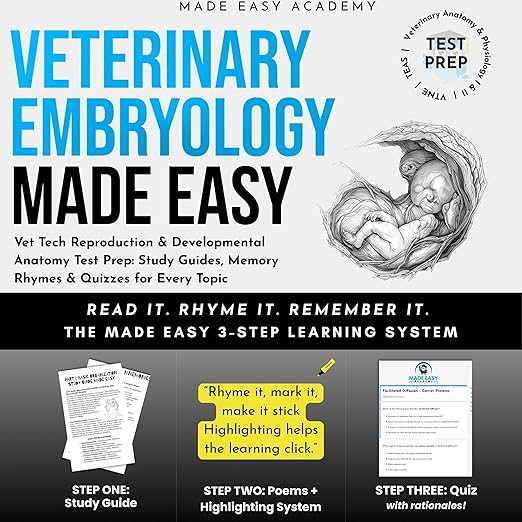
Color-coded highlighting is the entire second step of the method this audiobook is built on, and that is the first thing a buyer needs to think about. The copy promises a five-color system that turns poems into scannable memory maps, mind map templates for visualizing relationships, mastery checklists and quizzes with written rationales. None of those things exist in sound, and the page says nothing about a companion document shipping alongside the thirteen and a half hours of audio.
Michalsky Must Keep Rhymed Verse From Turning Singsong
Underneath the branding, the idea is sound and genuinely well suited to listening. Embryology is a sequencing problem: germ layers give rise to structures in a fixed order, timing varies by species, and the failures produce congenital defects that show up in the clinic. Rhyme and meter are an old and effective way of locking sequences into memory, and a course that delivers developmental sequences as verse is doing something cleverer than another recorded textbook.
Made Easy Academy has been careful about the internal arithmetic, which is more than many study products manage. Five learning principles are named and five are listed: Cognitive Load Theory, Dual Coding Theory, Advance Organizers, Microlearning and Spaced Repetition. A three-step method is promised and three steps are delivered, Simplify, Visualize and Practice. Five highlighting colors are named and five are assigned. Nothing in the copy overpromises a count it does not then meet.
Ian Michalsky carries thirteen hours and twenty-seven minutes alone, and the demand is unusual. Rhymed mnemonic verse read aloud lives or dies on meter, and the vocabulary here is anatomical, which means multisyllabic clinical terms have to stay intelligible inside a rhyme scheme without the delivery turning singsong. Quiz sections need a different register again, since a question read in the same voice as the content it tests is easy to sleep through.
Hear It, Rhyme It, Remember It for the Exam
Rhyme is the reason, and the pitch is stated plainly: hear it, rhyme it, remember it. For a subject that most students meet as an unmemorable wall of stages and derivatives, converting the sequences into verse attacks precisely the part that fails under exam pressure. Anyone who has ever recovered a fact by first recovering the jingle attached to it already knows the mechanism works.
Clinical framing is the second strength. Congenital defects, species variations, germ layer derivatives and clinical problem-solving are all named as the targets of the practice material, which means the content is oriented toward what a working clinic actually asks rather than toward what an exam paper happens to cover. Species differences in particular get their own color in the system, which suggests they are treated as a first-class topic rather than a footnote.
That is also a lot of instruction for a single credit, and study products of this kind are usually much shorter. The length implies real coverage rather than a summary sheet read aloud, and it supports the spaced repetition the method claims, since the material runs long enough to revisit sections across weeks instead of exhausting everything in one commute.
Listeners Get None of the Five Assigned Colors
Most of what makes this method distinctive is visual, and audio cannot deliver it. Step two is called Visualize; it assigns blue to locations and structures, green to normal processes and timing, red to clinical correlations and defects, yellow to timing, stages and species differences, and purple to functions and significance. A listener receives none of that. Mind map templates, mastery checklists and quizzes with rationales are all page objects too, and no accompanying file is mentioned anywhere on the listing.
Absence of feedback matters more here than it would on a novel. This page carries no star rating and nothing written about it at all, and the recording only appeared in March 2026. That means nobody has yet reported whether the mnemonics actually stick, whether the quizzes work without a visible answer key, or whether the pacing suits revision. A study method is a claim about outcomes, and this one is entirely unverified in practice.
Smaller listing issues round it out. The byline reads Made Easy Academy, a brand rather than a named author, while the publisher line reads Callie Parker Publishing, so a buyer cannot tell who wrote or reviewed the content. And the genre tags file a veterinary test-prep title under home and garden alongside education and health, which is a classification error rather than a hint about the material. The series field names a series with no volume number.
Auditory Learners Benefit Most on Repeat Passes
Vet students facing a developmental biology paper are the intended core, and for them the value proposition is clear enough: a long-form audio companion that turns the least memorable part of the curriculum into something rehearsable on the way to campus. The title names vet techs specifically while the copy addresses students, practicing veterinarians refreshing foundations, and techs expanding clinical understanding, so the audience is broader than the label.
Auditory learners and anyone with a long commute get the most out of this format, particularly for the second and third passes. Spaced repetition needs repeated exposure, and repeated exposure is what audio makes cheap, so the sensible pattern is to use the recording for revision cycles rather than for first contact with the material.
Test-prep buyers expecting the full documented system should confirm what ships with the purchase before committing, because roughly a third of the advertised method assumes a page. Avoid it if you need diagrams, since embryology is a spatial subject and no amount of rhyme replaces a labeled figure. Take it if you already own a visual reference and want the sequences drilled into you while your hands are busy.
Good to Know
Does this audiobook come with the color-coded charts and mind maps described in the listing?
The page does not say, and that is the main thing to check before buying. Step two of the advertised method is entirely visual, covering a five-color highlighting system and mind map templates, and none of it can be delivered in sound. Confirm whether a companion file is included with your purchase.
What does it mean that nobody has rated this audiobook yet?
It was published in March 2026 and nobody has rated or written about it. For a study product that matters more than it would for fiction, because the whole proposition is a claim about whether the mnemonics stick. No listener has yet confirmed that the method survives the move from page to audio.