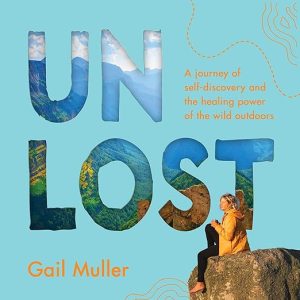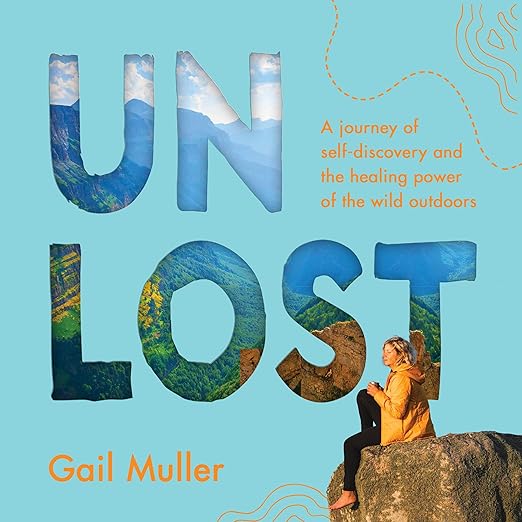
Unlost, Gail Muller's memoir of hiking the Appalachian Trail after being told she would be using a wheelchair by forty, earns its emotional honesty on every page. Muller narrates this audiobook herself, and the decision to do so transforms the listening experience in ways that become apparent within the first chapter. When she describes taking her first steps into the wilderness of the American Northeast at forty-one, having proved the doctors wrong just by being upright, you are hearing it from the person who actually did it, and the difference is not subtle.
The Appalachian Trail memoir exists as its own sub-genre within outdoor adventure writing, and it has been shaped by books like Cheryl Strayed's Wild and Bill Bryson's A Walk in the Woods, two texts that Muller's work inevitably gets compared to. The comparison is fair in terms of audience and partially fair in terms of tone, but Unlost operates with a different center of gravity. Where Strayed was processing acute grief and Bryson was performing genial self-deprecation, Muller is writing about chronic pain, burnout, and what it means to reclaim a body that has spent years under medical management. That is a different kind of struggle, and she handles it without sentimentality.
The audiobook includes exclusive audio commentary that Muller recorded directly from the trail, giving certain sections a texture that purely studio-narrated memoirs cannot match. When she describes the physical experience of a day's hiking at altitude after a bad night or a painful injury, you are getting as close as audio format allows to the actual thing. That production choice elevates the listening experience significantly and justifies the audiobook as a distinct version rather than a simple recording of the print text.
Giovanna Fletcher, the Sunday Times bestselling author, described Muller as writing 'with humour, heart and passion,' and all three are audible in her narration. The humor particularly stands out in an audiobook that deals with subjects that could easily become oppressive. Muller has a gift for absurdist observation, the kind that comes from someone genuinely paying attention to what is happening around her rather than imposing a narrative frame on it in advance. The trail friendships she describes, the unexpected kindnesses from strangers providing food and shelter, carry the weight of reality rather than the tidiness of anecdote.
Why Listen to Unlost
For listeners with personal experience of chronic pain or long-term health management, Muller's account of what it feels like to reclaim physical agency is unusually resonant. One reviewer who identified as dealing with chronic pain described finding her 'honesty and grit encouraging' in a way that felt direct rather than aspirational. The book does not ask you to be inspired by her overcoming. It asks you to understand what overcoming costs, which is a more useful and more difficult thing to offer.
The senior athlete who reviewed this audiobook described feeling 'a kinship' despite significant differences in background and circumstance. That bridging quality is one of the text's real achievements. Muller writes from extreme particularity, her specific body, her specific diagnosis, her specific section of the Appalachian Trail on specific days, and arrives at something that readers from very different physical backgrounds can access. The ten-hour runtime gives the journey enough space to breathe and to show the reader what two thousand miles actually costs.
What to Watch For in Unlost
Listeners who come to this expecting the romantic idealization of nature that some trail memoirs produce will find something more complicated. Muller is honest about the parts that are miserable, painful, tedious, and discouraging. The trail is not a therapeutic landscape in her account. It is a demanding physical environment that occasionally produces moments of extraordinary beauty, and those moments are earned by the difficulty surrounding them. If you want a love letter to the Appalachian Trail as scenery, other books serve that purpose better. If you want to understand what it means to hike it with a body working against you, Unlost is specific in a way that is genuinely rare.
The memoir focuses primarily on the internal and physical experience of the hike rather than on environmental or policy dimensions of trail conservation. Readers interested in the Appalachian Trail as a cultural and ecological institution will find that subject mostly in the background here. Muller's subject is herself, honestly examined, and the trail is the context for that examination rather than the subject of it.
It is also worth noting the production decision to include audio commentary recorded directly from the trail during Muller's hike. This feature gives certain passages a quality that purely studio-narrated memoirs cannot achieve. When she describes the specific texture of a day's physical output or the atmosphere of a shelter stop with fellow hikers, those passages carry field authenticity that a studio recording of the same words would flatten. For listeners considering both the print and audio editions, the trail commentary alone constitutes a meaningful argument for the audio version as the primary format rather than a secondary option.
Who Should Listen to Unlost
This audiobook works well for listeners drawn to outdoor memoir with a strong personal narrative core, for anyone navigating chronic pain or medical uncertainty who wants to read something genuinely honest about what physical reclamation looks like, and for listeners who appreciate self-narrated memoirs where the author's voice is irreplaceable. Prior familiarity with Cheryl Strayed or Elizabeth Gilbert will orient the reader correctly in terms of tone and emotional register, though Muller's specific focus on chronic illness recovery gives her memoir its own territory.
Those who struggle with detailed accounts of physical suffering may find certain sections demanding. Muller does not spare the listener from the reality of injury, medical backstory, and the long psychological work of letting go of chronic pain as an identity. But she also does not dwell for its own sake. The difficulty is purposeful, and the payoff is proportionate to it.
Key Details
- Narration: Muller's self-narration is the definitive version of this memoir; her voice carries the particular timbre of someone recounting a transformative physical experience from the inside, and the trail-recorded audio commentary makes the audiobook feel genuinely documentary.
- Themes: Chronic pain and physical reclamation, long-distance hiking and endurance, burnout and self-recovery
- Mood: Honest and occasionally harrowing, with genuine warmth in the trail community passages
- Verdict: A trail memoir that earns its emotional resonance through specificity and self-narrated authenticity rather than inspirational framing.
Is Unlost a good audiobook for someone dealing with chronic pain or long-term illness?
Several reviewers with personal experience of chronic pain found it directly relevant and encouraging rather than aspirationally distant. Muller does not minimize the difficulty, which is what makes it honest rather than simply motivational.
Does Gail Muller narrating her own audiobook make a significant difference?
Substantially yes. Muller's voice carries knowledge of what the experience cost her that no studio narrator could replicate. The additional trail-recorded audio commentary included in this edition deepens that effect further.
How does this audiobook compare to Cheryl Strayed's Wild for listeners who loved that book?
Both are women writing transformative memoir through long-distance hiking, but Muller's center of gravity is chronic illness recovery rather than acute grief processing. The tone is warmer and the humor is more frequent. Fans of Wild should find the territory familiar but the focus genuinely distinct.
Is the ten-hour runtime for this audiobook justified by the content?
Yes. The length allows the journey to accumulate the way a 2,200-mile hike actually does, giving space for the trail friendships, the setbacks, and the quiet moments alongside the physical challenges. A shorter edit would lose the sense of duration that is part of what the book is about.