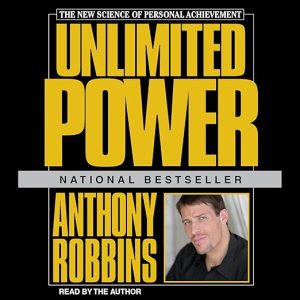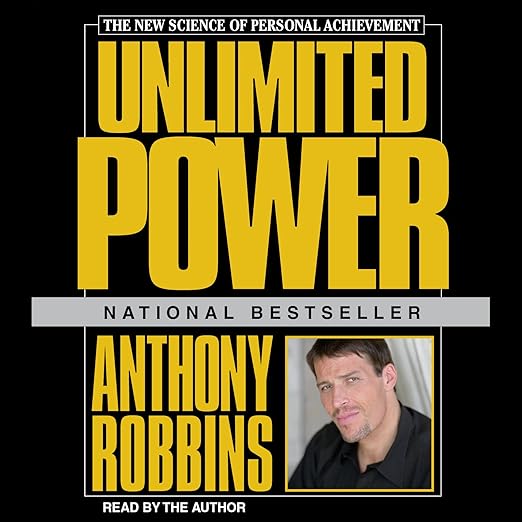
Fifty minutes. That is the first thing to flag about this audiobook. The full print edition of Unlimited Power runs to several hundred pages and is one of the defining texts of the modern self-help industry, the book that introduced NLP-based behavioral change to mass audiences when it appeared in 1986. What this edition delivers is not that book but a fifty-minute excerpt, a compressed selection, and that distinction matters enormously before any listener commits time or money to it.
The Review
Tony Robbins narrating his own work is the format's most compelling argument, and that argument is real. He is one of the few public figures whose speaking voice is itself a significant part of his platform, cultivated across decades of live events and audio programs, and his delivery carries an enthusiastic authority that has made him a durable presence in the personal development space since the mid-1980s. The fifty-minute selection delivers the core NLP-derived framework: the argument that by controlling your physiology and the internal representations of your nervous system you can alter your emotional states, influence outcomes, and replicate the strategies of high performers across any field.
The book's original publication context is important for understanding what Robbins is building toward. The 1986 moment was one in which NLP, neuro-linguistic programming, was a genuinely novel application of behavioral science to personal performance, and Robbins was one of its most energetic popularizers. The listener who encountered this book at sixteen and found its frameworks had shaped the following thirty years without conscious awareness is describing something real about how Robbins's ideas embed themselves. The Seven Lies of Success, the Five Keys to Wealth and Happiness, the rapport-building framework: these concepts are sticky precisely because they are designed to be, built for retention and repeated application rather than academic contemplation.
Hearing Robbins deliver his own material is different from reading it, and not just for the obvious reasons related to energy and tone. His vocal register is calibrated to produce physiological response in the listener. He uses the same techniques he is teaching: strategic emphasis, deliberate pacing variation, specific language patterns designed to create internal states favorable to learning and action. Whether you are persuaded by the underlying NLP theory or not, the experience of listening to this audiobook is itself instructive about how the method is supposed to work at the sensory level. That meta-dimension, hearing the framework applied as it is being described, adds a layer of understanding not available in print no matter how carefully you read the text.
For listeners encountering Robbins for the first time, this fifty-minute selection functions as a high-velocity orientation to the core ideas of a body of work that has influenced tens of millions of people. The brevity is a feature for a certain kind of listener: someone who wants to understand what Robbins actually teaches before deciding whether to commit to the full multi-hour programs he has produced. The selection is dense with ideas and delivered with the characteristic intensity that either energizes or exhausts, depending on the individual listener's relationship to that register.
Reviewer Zachary Slayback's observation that the book is not as self-helpy as you might think captures something important. Robbins's framework is more systematically derived from behavioral science than the genre's reputation suggests, even if the science underneath it has been contested in the decades since publication.
What to Watch For in Unlimited Power
The fifty-minute runtime is the central caveat, and it bears repeating. At full length, Unlimited Power spends chapters on each of its key frameworks, providing the context, the case studies, and the practical exercises that make the techniques usable rather than abstract. The selection here necessarily compresses or omits most of that supporting material. Listeners who want to genuinely learn and apply the material, rather than simply be oriented to its existence, should seek out the complete audiobook rather than this excerpt.
The NLP foundations of Robbins's approach have a complicated standing in the research literature. NLP as a systematic theory has not fared well under controlled empirical scrutiny, and some of the assumptions Robbins draws on, about how representational systems map onto learning styles and communication preferences, are contested by researchers in cognitive science and psychology. He is a practitioner rather than a researcher, and the book reflects that orientation: it argues from results and from the subjective reports of practitioners rather than from randomized controlled evidence. That is a legitimate position for a practical guide to take, but listeners who need empirical grounding should enter with that context clearly in mind.
One reviewer notes that the book's value was most fully understood on a second reading thirty years later, which suggests the framework rewards return engagement rather than single consumption. That retrospective quality makes the audio format particularly interesting: listening at different life stages will likely produce different comprehension.
Who It's For
Listeners who want a rapid orientation to Robbins's core NLP-derived framework, delivered in his own distinctive voice, will find fifty minutes a reasonable investment for that specific purpose. Those approaching the self-help genre skeptically, who want to understand what the most influential practitioner in the space actually teaches before engaging further, will find this selection an efficient starting point that makes the decision about deeper investment more informed.
Anyone expecting the full Unlimited Power experience should know clearly that this is not that edition. The complete audiobook and the full print edition offer the depth of framework, case study, and practical application that the fifty-minute excerpt can only gesture toward. This is an introduction, useful in its way, but not the full work by any measure.
In Brief
- Voice: Tony Robbins narrates his own material with calibrated vocal authority and energy that is inseparable from what he is teaching, making the listening experience itself a demonstration of the NLP method.
- Big ideas: NLP-based behavioral change, emotional state control, replicating high-performer strategies
- Atmosphere: High-energy and persuasive, with the characteristic intensity that defines the Robbins brand
- Worth it?: A fifty-minute excerpt rather than the full Unlimited Power text, best treated as a rapid orientation to Robbins's core framework before seeking out the complete edition.
Questions Listeners Ask
Is this the complete Unlimited Power audiobook or an abridged version?
This appears to be a significantly abridged selection of approximately fifty minutes. The full Unlimited Power text covers hundreds of pages across multiple chapters. Listeners expecting the complete book should verify the edition before purchasing; this excerpt functions as an orientation to the core ideas rather than a full engagement with the material.
Does Tony Robbins narrate this audiobook himself?
Yes, and hearing him deliver his own NLP-based framework adds a dimension not available in print. His vocal register is itself an example of the techniques he is teaching, using the pacing, emphasis, and language patterns that the book describes. That meta-quality makes this audiobook instructive in a way that supplements the content.
What NLP concepts does this audiobook cover?
The selection covers core NLP ideas including the relationship between physiology and emotional states, representational systems, the strategy of building instant rapport, and frameworks Robbins calls the Seven Lies of Success and the Five Keys to Wealth and Happiness. The fifty-minute runtime means these are introduced rather than developed in full depth.
Is Unlimited Power still relevant for listeners today, given it was first published in 1986?
The NLP foundations have not gained empirical validation in the decades since publication, but Robbins's practical framework for state management and performance optimization has proven durable with practitioners. Listeners who approach it as a practical system with documented results rather than as validated science will get more from it than those who require clinical evidence as a prerequisite.