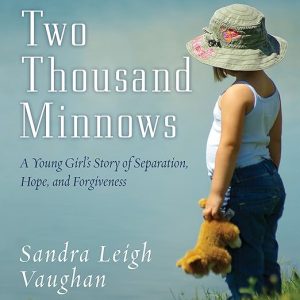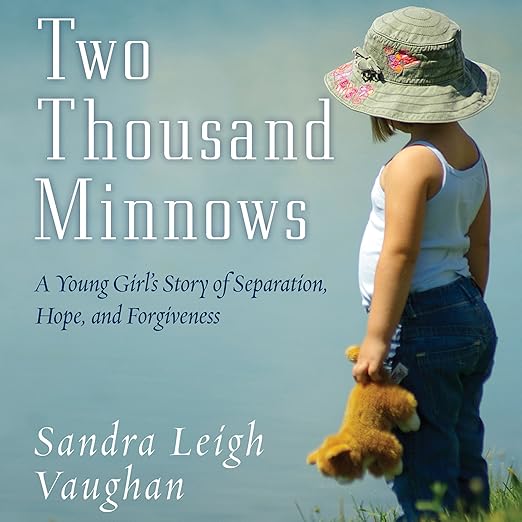
Sandra Leigh was seven years old the winter night she walked her mother out of the house to get her clear of her father's temper, then helped her climb back in through a window once it was safe. That is the household this memoir grows out of, and the audiobook covers seventeen hours and twenty-seven minutes of it, read by Elizabeth Evans for Audible Studios. What Sandra had instead of safety was West Virginia: forests, rivers, rope swings and a shallow stretch of water full of minnows, every bit of it more dependable than the man indoors.
West Virginia does most of the emotional work in this book, and it does that work structurally rather than decoratively. Sandra had been a city child before the family moved, and the long hot summers took getting used to; what the landscape offered was somewhere to be that was not inside the house. Memoirs of abusive childhoods usually organize themselves around the abuser. This one organizes itself around the escape route, which is a far more interesting choice and gives the writing something to do besides recount.
Seventeen hours and twenty-seven minutes is a long stay inside one childhood, and Vaughan spends the room on accumulation rather than on incident. The family moves from town to town chasing a stable life that keeps failing to arrive. The car is small and cramped, everybody in it is worn out, and the moving itself turns into the pattern the book is actually about. Accumulation is what a recording this long does well, and it is also why some listeners will find the middle stretch heavy going.
The Mystery of the Missing Sister at Its Center
Nature writing is where the prose is strongest, and a five-star from July 2022 catches the whole effect in a line: a family observed so closely that you end up inside it, love and hatred arriving in the same breath, all of it seen through the eyes of a small girl. That child's-eye framing is the book's real technique. Sandra does not explain her father, she reports him, and the gap between what she notices and what she is able to understand is where a listener does the work.
Memoirs of hard childhoods are a crowded category, and a five-star from November 2018 names precisely what separates this one: the mystery of the missing sister. Sandra's mother goes into hospital pregnant and comes home without a baby, and nobody explains it to the children. A memoir with an unanswered question at its center behaves like a story rather than a record, which is why that entry recommends it to people who read memoirs generally rather than to survivors specifically.
Elizabeth Evans has an unusual assignment. A first-person memoir read by somebody other than the woman who lived it is a different proposition from the author-read memoir that has become the default, and it moves the experience closer to fiction. Add an age range running from seven years old to adulthood, held in one voice, and the technical demand becomes clear: a child's limited vocabulary has to give way to an adult's understanding gradually enough that you believe both. That gradual shift is what a sample will tell you about.
Spoilers Here Come Straight From the Publisher
Accuracy is the one substantial complaint on this page, and it arrives in a four-star filed five days after the recording appeared. That reader liked the book a great deal and withheld the fifth star over the timeline: the same anecdote told once about a neighbor and again, later, about a different person entirely, plus brand names turning up years before they existed, with diet Cokes offered as the example. The entry breaks off mid-word as it begins on a further instance, so I will not guess at what was coming.
Spoilers on this record come from the publisher. The description tells you the mother returns from hospital without the baby, and then tells you that Sandra, as an adult, refuses to give up until she finds the sister who never came home. Those two sentences hand over both the question and its answer, which the book spends its full length arriving at. Anybody who reads the page before pressing play has been told the shape of the ending, and that is a poor way to enter a memoir built around something nobody would explain to a child.
Length deserves an honest warning of its own. This is one of the longer memoirs on the shelf and the material is unrelenting: a violent father, a mother unable to protect anybody, four children managing one adult's moods, and a loss nobody will name aloud. Relief comes only from the outdoors, and the outdoors is where the writing goes whenever the house becomes unbearable. Listeners who need tonal variety across a long recording should know that the variety on offer runs between fear and river water. The copy on this page also drops a clause partway through, so a sentence about chasing a perfect and stable life runs straight into the next thought without a break.
The Wrong Purchase for the Author's Own Voice
Anybody who grew up managing an adult will recognize the particular vigilance this book describes, and a four-star from November 2018 says exactly that, finding parallel after parallel to a personal history and taking away the reminder that a past does not have to become a future. That is the readership in one sentence: people who came from something similar and want it described accurately rather than resolved neatly for their comfort.
This is the wrong purchase for anybody wanting a brisk memoir, a redemption arc delivered on schedule, or the author's own voice telling the author's own story. It is the right one for listeners who read memoir the way other people read novels, who can stay with a long accumulation of small days, and who want a childhood rendered from the inside with no adult standing over it explaining what it all meant. A January 2015 five-star describes laughing, then crying, then smiling at an ending nobody sees coming, and that sequence is about as fair a description of these seventeen hours as anyone has managed.
Questions Listeners Ask
Is the Two Thousand Minnows audiobook read by the author herself?
No, and it changes the experience. Elizabeth Evans performs the material, which means you get a reading shaped for listening rather than the slightly halting authenticity of a writer speaking about her own family. Some memoir listeners strongly prefer one over the other, so it is worth knowing which camp you fall into before buying.
Does the book actually resolve what happened to the missing sister?
The search is the spine of the adult section, and the memoir is built as a return to unanswered questions rather than an evasion of them. Going in without reading the full product description will preserve considerably more of that suspense than the page itself allows, so resist scrolling down before you start.
Is the audiobook too heavy going for casual listening?
For most people, yes. Domestic violence, a frightened mother, children keeping watch on an adult and an unexplained bereavement run through the whole thing, and the length means you sit with all of it for a long time. The outdoor passages lighten the weight without ever removing it.