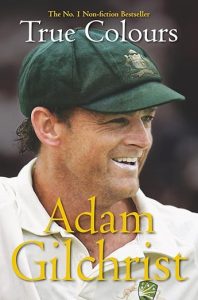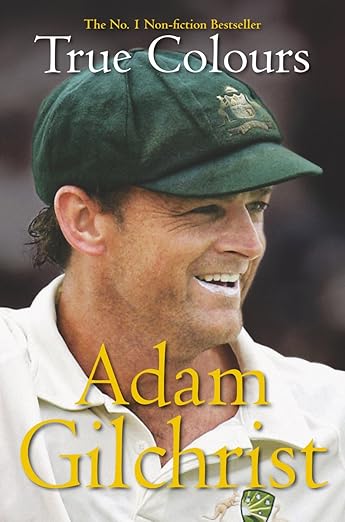
Every scrap of listener evidence attached to this audiobook describes a different book from the one in the byline. The credit reads Stephen Leather and the description sells a Spider Shepherd thriller; all five written responses discuss a cricketer's autobiography. Nobody has done anything wrong on purpose. Two books share a title, a catalog has welded them into one record, and the result is a page that misinforms whichever of the two buyers arrives.
Five stars in July 2013, from a reader in the United Kingdom, put it beyond argument. That response opens by naming Adam Gilchrist's True Colours: My Life, calls it a 608-page epic, and praises it for humanizing a pioneering wicketkeeper-batsman from Australia's last golden age. That is a sports memoir written by an athlete. The listing sitting above it is a spy novel published by Hodder & Stoughton. Same two words on the cover, completely different book underneath.
What Leather actually wrote, according to the description, is the tenth Spider Shepherd novel. Russian oligarchs travel without borders and live without restraint until an assassin starts killing off some of the world's richest men; one of them buys MI5 protection, and Shepherd is assigned to keep alive a man he neither likes nor respects. Complicating the job is a Taliban sniper who once put a bullet through his shoulder and is now living in London.
Shelving compounds the error rather than catching it. This sits under travel and tourism, tagged Cricket, which is the memoir's subject and has no bearing whatever on a book about oligarchs and the security services. A shopper browsing travel writing meets a counter-terrorism thriller. A shopper following the cricket tag meets the same thriller. Neither one finds the book the tag was describing, because that book is not the one on sale.
What Works
Continuity is the honest argument for buying. A tenth outing means Shepherd arrives carrying a decade of history, and Leather builds this one on the oldest debt in the sequence: the sniper who shot him is alive and well, and the assignment is protecting a billionaire he despises. Those two lines pull against each other for fourteen hours, which is a sound structure for a long thriller and a genuinely good hook.
Buyers who came here for the memoir do get something out of the page, oddly enough. A five-star response from May 1, 2014 describes what it was like to be a Test cricketer, the relationships inside a dressing room, and the cost a family pays for that profession, singling out a chapter on a visit to Gallipoli. Warm and specific, and useless to anybody standing where you are standing.
Paul Thornley is credited as the reader, and that credit, along with the length, is one of only two things about this recording the page will confirm. Nothing else transfers. Four of the five written verdicts predate the audio release, and all five grade a different author entirely. If the voice matters to you, and on a series entry leaning this hard on a returning antagonist it should, listening to the sample is the only test available.
Things to Know Before Starting True Colours
Depth of the contamination is worth measuring. The pool's three-star response from December 23, 2013 complains that too little space goes to matches before the 2005 Ashes, wants more on a run chase against Pakistan alongside Langer, and names a 144 against Bangladesh and a 149 in a final. Those are innings. The book on sale concerns a Taliban sniper hiding in London. Nothing about the mismatch is subtle.
Print residue sits all over the record. A page count of 675 is stored against a listing that contains no pages, the ISBN string carries an invisible formatting character ahead of its digits, and the publisher line names a print house without identifying who produced the audio. None of those three items can be verified by a listener, and together they suggest a record assembled from a paper catalog rather than an audio one.
Series numbering is the next trap. The display title gives no hint that this is entry ten, and the description never says so either; the position lives in a slot most buyers never look at. Leather has run the sequence long enough that anybody starting here inherits a protagonist, an employer and an old wound without being told about any of them. Begin earlier, or accept that the backstory arrives sideways.
Blurb quotes deserve a mention too. Five anonymous reader endorsements open the description, each trailing a row of stars, one of them announcing that Shepherd is the new James Bond, and the closing line offers the book to fans of Jack Reacher, David Baldacci and Jack Carr. That is a publisher choosing its own comparisons. Read them as positioning rather than as evidence, particularly on a page where the actual evidence belongs to somebody else's book.
Who Stephen Leather Is Writing For
Anybody buying this needs to decide first which of the two books they are actually after. If it is the Leather thriller, the description is accurate and the audio credit is real, and you should ignore the star rating completely because it was earned somewhere else. If it is the cricket autobiography, this is not it, and searching the athlete's own name rather than the shared title is the only route that works.
Established followers of the sequence lose the least here. They already know the protagonist, they are buying entry ten on the strength of the previous nine, and a broken review pool costs them nothing they were planning to use. Thriller listeners who like the oligarch-and-intelligence-service register, and who do not mind a villain carried over from an earlier book, make the other safe purchase.
Steer clear if you were relying on this page to tell you anything true about the recording, since the counter admits to four votes against five written accounts, and not one of those five was listening to anything. Newcomers to the series should also hold off, because ten books of accumulated history is a lot to absorb sideways. Until somebody untangles the two titles, treat every number here as belonging to a different book.
At a Glance
- Voice: Paul Thornley reads for Hodder & Stoughton, and the credit plus the running time are the only two audio facts this record supports.
- Big ideas: Russian oligarchs and private security, MI5 protection work, an old debt owed to a Taliban sniper
- Atmosphere: Procedural and grudge-driven
- Worth it?: A solid tenth series entry sold on a page whose entire review pool belongs to an unrelated cricket memoir.
Why do the written responses on this audiobook describe a cricketer?
Because a second book shares the title. A five-star response from January 3, 2023 praises a golden era for Australian cricket and credits its subject with reinventing the wicketkeeper-batsman role, which describes an athlete's autobiography rather than a spy novel. Every written verdict on the listing belongs to that other title, so none of them grades what you would be buying.
Do you need the earlier Spider Shepherd novels before this one?
You would benefit from them. The description hangs the emotional half of the plot on a sniper who shot Shepherd in an earlier book and has resurfaced alive, and it never says which book that was. Entry ten also assumes you know who employs him and why he takes orders. The thriller half stands alone; the grudge does not.
Does this audiobook suit listeners who came from Jack Reacher or Jack Carr?
Those are the publisher's own comparisons rather than a critic's, and they set the right register: competent operator, institutional backing, a personal score underneath the assignment. Fourteen hours and forty-two minutes is longer than most of that shelf runs, so expect a slower build than a Reacher novel gives you.