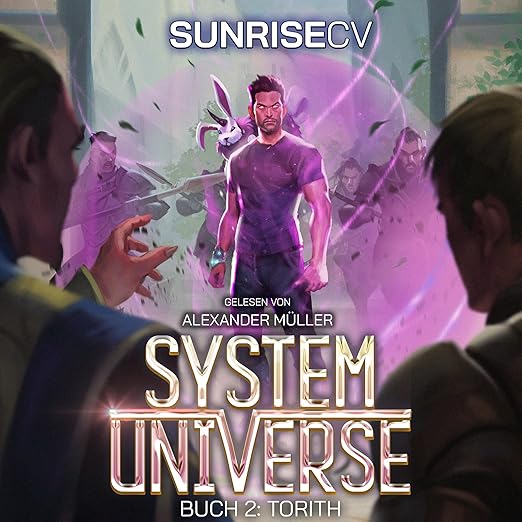
I should note upfront that Torith is a German-language audiobook, the second entry in SunriseCV's System Universe series. My review draws on the translated synopsis and the pattern of reviewer responses, which come from German-speaking listeners who encountered it in its original language. The listening experience this review describes is the German audio experience, which is relevant context for English-speaking readers deciding whether to add it to their queue or to seek out any available English editions of the series.
The System Universe series blends three genres that do not always coexist gracefully: LitRPG, with its game-system mechanics and progression logic; Isekai, the Japanese-influenced subgenre of protagonists transported to another world; and Slice of Life, the genre least often associated with either of the other two. That combination is SunriseCV's actual point of distinction. The first book established Derek as a system traveler who arrived in a new world, found companions, and prevented a catastrophic dungeon overflow. Torith begins the next chapter and moves Derek from the rural village that was his initial landing zone into his first city, the title location of Torith, and the shift in scale is where the book earns its thirteen-hour-fifty-five-minute runtime.
The novel's self-awareness is one of its more interesting qualities. Derek knows he is a protagonist operating in a world that resembles the literary conventions he grew up reading. His concern about Torith's noble class, for example, is framed explicitly in terms of whether the bad-noble trope that dominates popular fiction will hold, or whether the singular unpleasant aristocrat he has already encountered was an outlier. That meta-awareness is a staple of isekai comedy, but SunriseCV uses it to do something more interesting than pure parody: Derek's self-consciousness about genre tropes becomes a way of showing how his life before this world has shaped his expectations, and how those expectations are sometimes correct and sometimes spectacularly wrong.
The companion dynamic continues to develop in this volume. Silvi, the entity that German reviewers describe as Derek's Psychokaninchen, his psycho rabbit companion bound accidentally to his soul, gets significantly more narrative space in Torith and finally acquires the ability to speak. That development is treated with appropriate comedic weight, since Silvi's personality is simultaneously terrifying and oddly domestic, and her desire to become a chef is one of the series' running sources of surreal delight. One reviewer specifically praised the skurrile Umstände, the bizarre circumstances, through which Silvi's culinary ambitions are realized in this volume. Her increasing presence is one of the genuine pleasures of Torith over book one.
The Strengths
The move from village to city is not just a setting change. It is a structural expansion of the story's social range. Villages in LitRPG and isekai fiction tend to be isolated communities where the protagonist's power is the dominant organizing force and everyone's relationship to Derek is relatively simple. Cities have politics, competing factions, layers of institutional authority, anonymous social complexity, and the kind of environment where power is harder to deploy cleanly because the variables multiply. Derek's discomfort with the urban aristocratic environment, and his navigation of new allies and enemies who do not already know his reputation, is the primary engine of this volume's conflict and character work.
German reviewers were consistent in their praise for the translation quality, noting that good LitRPG translation is rarer than the market would suggest. Alexander Müller's narration was specifically praised as a worthy sequel performance to the first volume, with the character voices handling the expanded cast coherently without losing the established characterizations. The thirteen-hour runtime drew the same complaint from multiple reviewers in different countries: it ended too soon. That is exactly the response a successful sequel should generate.
Things to Know Before Starting Torith
LitRPG with a Slice of Life sensibility requires a narrator who can hold comedic timing alongside genuine warmth, and who can treat the system-update conventions of the genre with just enough lightness that they do not become monotonous. Müller manages this with what sounds, based on consistent reviewer response, like a narrator who genuinely enjoys the material. The humor in SunriseCV's writing, the WD-40 jokes familiar to genre readers, the rabbit's culinary ambitions, Derek's resigned relationship with his own power level, all require a light touch that a narrator who oversells the comedy would ruin. Müller provides the right calibration.
Recommended For
Torith is the second volume in an ongoing series and assumes full familiarity with the first book's events and character dynamics. German-speaking listeners who enjoy LitRPG with comedic and warm Slice of Life sensibility, and who value character development over combat escalation as the primary engine of narrative interest, have consistently found both volumes deeply rewarding. English-speaking listeners considering the series should note the German-language format and plan accordingly. This free audiobook is an enthusiastic recommendation for the System Universe audience, and the breadth of enthusiastic reviewer response across Germany, France, and elsewhere suggests the series has found exactly the readers it was built for. The System Universe series has generated a dedicated readership precisely because SunriseCV understands that the LitRPG genre's core appeal is not the numbers but the sense of a character growing into their situation with enough humor and warmth to make the journey feel like company rather than a performance of competence. The cooking subplot alone, with Silvi's increasingly elaborate culinary ambitions playing out against the backdrop of city politics and inter-guild negotiations, is worth the full runtime for readers who appreciate absurdist humor handled with genuine affection rather than ironic detachment.
Before You Press Play
- Read by: Alexander Müller brings Derek's wry, self-aware voice to life with comfortable authority, handling the expanded city ensemble with clear tonal distinction throughout nearly fourteen hours.
- At its heart: Carrying literary tropes as conscious baggage, power in an unfamiliar urban setting, found family and belonging
- Vibe: Light and witty with genuine warmth underneath, the literary equivalent of a satisfying meal after a long journey
- Short version: A second installment that earns its runtime through character rather than escalation, and Müller's narration makes Derek's company genuinely pleasant for the full ride.