Key Details
- Narration: Keith Spengel delivers Ric Edelman's clear and methodical prose with measured authority - a clean, professional read that suits the educational register without adding warmth that is not in the original text.
- Themes: 401(k) mechanics and common misconceptions, investment choice within retirement plans, converting savings into sustainable income
- Mood: Calm and instructional, occasionally reassuring - designed to reduce anxiety rather than generate it
- Verdict: A practical audiobook that earns its place in any retirement-planning library precisely because it focuses on what most guides skip: the specific mechanics of plan participation rather than general investment philosophy.
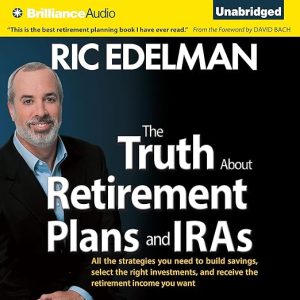
Ric Edelman's audiobook The Truth about Retirement Plans and IRAs arrives with a specific and declared purpose: to explain the mechanics of 401(k), 403(b), 457, and IRA accounts in enough detail that participants can actually use them well, rather than defaulting to whatever contribution rate their employer auto-enrolled them at. Edelman, ranked three times by Barron's as the top independent financial advisor in America, approaches the subject as a practitioner who has counseled thousands of actual savers and retirees - and that practical orientation distinguishes this from the abstraction-heavy investment philosophy books that dominate the retirement planning shelf. Keith Spengel reads the audiobook across just over seven hours with a delivery calibrated to the material: clear, unhurried, and free of the enthusiasm inflation that can make financial audiobooks feel like infomercials.
The central argument is modest but genuinely useful: most people who are eligible for retirement plans do not maximize them, primarily because the plans themselves are badly explained and poorly understood. Edelman sets out to correct that, and the audiobook is the format in which he originally designed the work to be consumed.
From First Contribution to the Income Conversion Question
The book's organizational logic follows the lifecycle of a retirement plan participant. It begins with the case for contributing at all - addressing directly the objection that you cannot afford to contribute right now - and then works through investment selection within the plan, the key decision points around contribution amounts and fund choices, and finally the conversion question: how do you take decades of accumulated savings and turn them into reliable income in retirement without running out of money? This last section is where Edelman does his most distinctive work. Most retirement planning guides stop at accumulation, treating the investment-to-income transition as someone else's problem. Edelman refuses that evasion.
The myth-busting chapters are the most practically useful for listeners who have been saving for years on the basis of received wisdom. The conventional advice around traditional versus Roth accounts, the actual impact of contribution limits, the real cost of cashing out a plan when changing jobs - Edelman addresses each of these with the specific numbers and logic that general financial journalism tends to compress into oversimplified rules. One reviewer noted that after reading the book, they purchased copies for family members in the early years of their working careers, which is precisely the audience that benefits most from getting these mechanics right at the start.
Spengel Paces the Numbers Without Losing You
Spengel's narration deserves credit for the audiobook's accessibility. Retirement plan mechanics involve a lot of numbers, plan names, and regulatory details that could easily become numbing in audio format, but Spengel paces the technical sections carefully, giving listeners time to absorb specifics before moving to the next concept. The seven-hour length is calibrated correctly: long enough to develop each topic in real depth, short enough that the book does not become a reference document that listeners abandon halfway through.
Edelman also benefits from being a writer who understands that his subject is inherently anxiety-adjacent. Many of his readers have been procrastinating on retirement planning for years and come to the book with a mixture of guilt and defensiveness. The tone - clear and reassuring without being condescending - is designed to reduce that anxiety rather than exploit it, which makes the audiobook genuinely more pleasant to engage with than the subject matter might suggest.
Where the Investment Chapters Need a Print Backup
The investment options chapters require more active listening than the framing sections. When Edelman walks through the specific characteristics of different fund types available within typical 401(k) plans, the information comes quickly and benefits from being revisited. Listeners who want to use the book as an active reference tool should know that a print edition will serve that function better than audio alone - the audiobook is best for building understanding of concepts and their relationships, not for looking up specific contribution limits or tax rates.
One reviewer described the book as leaving them disappointed despite finding it useful, primarily because they had hoped for guidance on their specific situation that a general guide cannot provide. This is worth flagging honestly: the book teaches framework and principles, not personalized advice, and listeners who need specific recommendations should treat it as background education rather than a substitute for working with a financial advisor directly.
The sections dealing with common employer plan mistakes - limited investment menus, high-fee default options, auto-enrollment at insufficient contribution rates - are particularly useful for listeners who have never examined their plan documents carefully. Edelman is specific about what to look for and what to push back on, which is information that most plan participants never receive from their employers. This practical advocacy dimension separates the audiobook from the more philosophical wealth-building guides that dominate the personal finance shelf.
Edelman's Sweet Spot Spans Three Career Stages
The sweet spot is listeners who have access to a workplace retirement plan and know they should be engaging with it more thoughtfully but have not found an accessible starting point. Early-career workers in particular will find the front-loaded argument for starting contributions as early as possible, even at a small percentage, to be the most immediately actionable section. Mid-career listeners who have accounts they have not thought about since enrollment will find the investment selection and rebalancing chapters most relevant. Those approaching retirement will get the most from the income conversion section. For any of these groups, seven hours with Edelman is a more efficient path to functional understanding than most of what is available in the genre.
Before You Listen
Is The Truth about Retirement Plans and IRAs audiobook suitable for someone who knows nothing about investing?
Yes. Edelman builds from first principles and avoids assuming prior knowledge. The intended audience includes people who have a plan through their employer but have never looked at it carefully, and the audiobook is pitched at exactly that level.
How does Keith Spengel's narration handle the technical financial content in the audiobook?
Spengel is measured and clear throughout, with careful pacing through the more data-dense sections. He does not add interpretive color to Edelman's arguments, but the audiobook does not need interpretation - it needs clarity, which Spengel provides.