Quick Take
- Narration: Virtual Voice delivers this short historical overview with mechanical consistency, functional for basic information transfer but stripped of the gravity this subject demands and deserves.
- Themes: The economics and mechanics of the transatlantic slave trade, the roles of African, European, and American actors, the trade’s continuing legacy in global wealth distribution
- Mood: Earnest and urgent in framing, though the narration flattens the moral weight of the content
- Verdict: A short and readable overview that covers familiar and some less-familiar ground, but the Virtual Voice narration and sensationalized framing limit its usefulness compared to more rigorously sourced treatments.
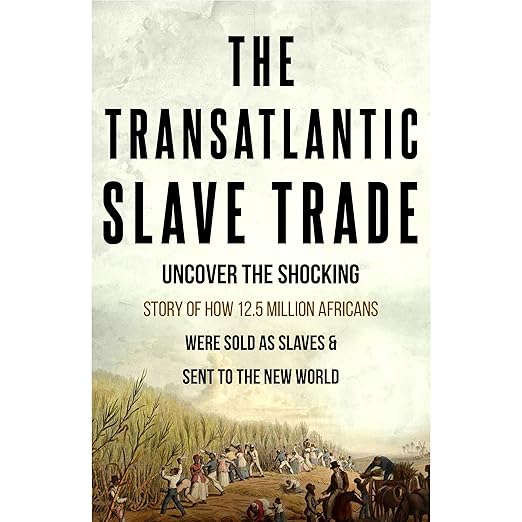
At three hours and forty-three minutes, The Transatlantic Slave Trade by Melvin King positions itself as an accessible entry point into a subject that has generated vast amounts of scholarship and continues to generate significant political and cultural debate. The book’s framing, with its marketing language about hidden histories and truths that were deliberately suppressed, gestures toward a revisionist project, though much of what King covers is in fact well-documented in academic literature and not as buried as the packaging suggests. That tension between the populist pitch and the substantive content runs through the audiobook, and it is worth addressing directly before turning to what the book actually accomplishes.
The core content covers a substantial range of material: the mechanics of the triangular trade, the specific economics of the Middle Passage, the roles of African rulers and traders in the supply chain, the use of European financial and insurance institutions to underwrite the trade, the persistence of the trade under nominal abolition, and the argument that slavery’s economic legacy continues to shape wealth distribution in the present. None of this is false, and some of it is genuinely underrepresented in popular accounts.
The African Dimension: What the Book Gets Right and Where It Simplifies
King addresses the participation of African political actors in the slave trade directly, and the reviewers who praised this section are responding to something real: the role of African rulers in the capture and sale of enslaved people has been omitted or minimized in some popular accounts, for reasons that are understandable but historically distorting. King’s treatment acknowledges this complexity without using it to deflect responsibility from European and American actors. His point, which aligns with the scholarly consensus, is that the Atlantic demand was the structural driver that created conditions in which African rulers participated, and that the trade created feedback loops of political violence that destroyed the stability of multiple regions over several centuries.
Where the book simplifies is in its handling of specific circumstances across different regions and periods. The trade operated differently on the Senegambian coast in the seventeenth century than it did in the Bight of Benin in the nineteenth century, and the specific mechanisms varied significantly. King moves quickly over regional and temporal variation in ways that a listener who wants precision will notice.
Virtual Voice and the Problem of Narrating History That Weighs This Much
The narration is a significant limitation for this particular content. The Middle Passage, the details of shipboard conditions, the accounts of resistance and rebellion: these are among the morally heaviest passages in human history, and they require a voice that can hold that weight. Virtual Voice reads them with the same tone it would use for a product description or a travel itinerary. The three five-star reviews suggest that some listeners are connecting with the content despite this, and that is worth acknowledging, but the narration actively impedes the kind of engaged, morally present listening that this subject material deserves.
Listeners who want an audio treatment of the transatlantic slave trade narrated with appropriate gravity should consider Saidiya Hartman’s Lose Your Mother, narrated by the author, or Edward Baptist’s The Half Has Never Been Told, narrated by Ron Butler. These are longer, more extensively sourced works, but they handle the weight of the material in ways that an AI narrator cannot replicate.
The Legacy Argument and Its Scope
King’s final section, arguing that the economic legacy of the slave trade continues to shape contemporary global wealth distribution, is the most politically engaged part of the book. The core argument is well-supported in economic history literature, and economists including Nathan Nunn have documented specific mechanisms through which the trade’s demographic and institutional damage still appears in development data today. King covers this material accessibly, though the brevity of the audiobook means the argument is sketched rather than demonstrated. Listeners who want the full case should read the economic history literature directly; what King provides is a readable introduction to the argument rather than a primary contribution to it.
Who Should Listen, Who Should Look for Something Stronger
This is a short, accessible overview suitable for listeners who want a starting point and who will not be misled by the sensationalized marketing into expecting novel research. Those who have already read even one serious history of the transatlantic slave trade will find most of the content familiar. For listeners with no prior engagement with the subject, the brief runtime makes it a manageable entry point, though the Virtual Voice narration will limit the intellectual and emotional engagement the subject deserves. Anyone ready for a more sustained and rigorously sourced treatment should go directly to Baptist, Hartman, or Hochschild’s Bury the Chains.
Frequently Asked Questions
Is The Transatlantic Slave Trade by Melvin King based on academic research, and how reliable is its sourcing?
The book covers content that is generally consistent with the scholarly consensus, but it does not include footnotes or a bibliography in the standard academic sense. The framing language about hidden histories and suppressed truths overstates the novelty of material that is well-documented in existing scholarship. Listeners who want rigorously sourced treatment should look to Edward Baptist’s The Half Has Never Been Told or Joseph Miller’s Way of Death.
Does the book address the role of African political actors in the trade honestly?
Yes, and this is one of its stronger sections. King treats African rulers’ participation as a real and important dimension of the trade without using it to deflect responsibility from European and American actors. He situates African participation within the broader structural argument about how Atlantic demand created conditions that drew African political actors into the trade.
How does the Virtual Voice narration affect the experience of listening to this content?
Significantly and negatively. The Middle Passage, accounts of slave resistance, and descriptions of shipboard conditions require a narrator who can hold the moral weight of the subject. Virtual Voice’s uniform mechanical tone strips these passages of the gravity they require. The print version or an audiobook with human narration would be a substantially better experience.
Is this audiobook suitable for academic study or secondary education contexts?
As a brief overview it could serve as a starting point, but its lack of citations and its sensationalized framing make it unsuitable as a primary academic resource. For educational contexts, David Northrup’s edited reader The Atlantic Slave Trade or John Thornton’s Africa and Africans in the Making of the Atlantic World are more appropriate choices.