Quick Take
- Narration: Jake Hunsbusher credited, with the publisher's own copy praising the reading, which is promotion rather than a listener verdict
- Themes: grief and unemployment worked out on foot, mentorship at the end of a life, the making of a famous trail
- Mood: Unhurried, companionable, quietly instructive
- Verdict: A long, generous trail novel that earns most of its length, for listeners who want the walk and the lecture together.
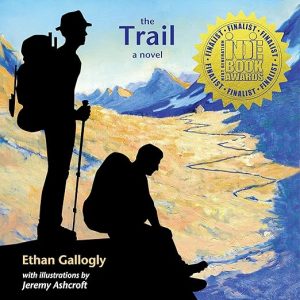
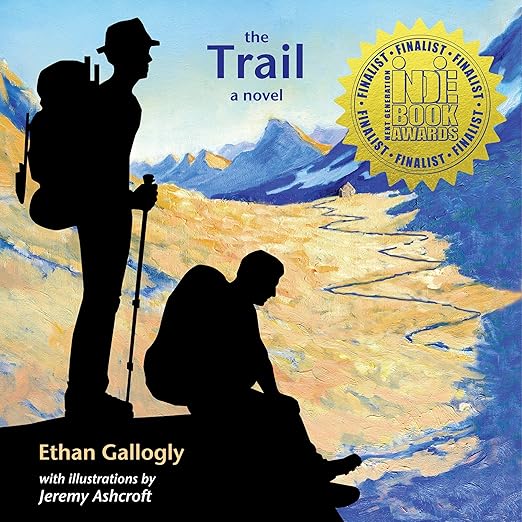
Gil hates camping, which is an unpromising place to begin a sixteen hour audiobook about walking the length of the Sierra Nevada. He has just lost his father and his job, and he agrees to accompany Syd, his father's old hiking partner, on a monthlong trek along the John Muir Trail. Syd knows the range better than anyone. Syd may also not survive the walk. Ethan Gallogly builds everything on those two facts and takes his time about all of it.
Glenn Alan Daley's five-star response, posted a month before this recording appeared, remains the most accurate description anybody has written of the book. Gil sets out with his late father's sick friend, guided by Syd's bubbling well of knowledge and his own self-focused but earnest narration, and the story fills up with the lore and trailcraft of high-country backpacking alongside the history and ecology of the range. That account also names the element the publisher undersells: an extended conversation winding from food and water all the way to Taoism and Zen.
Gallogly led Sierra Club trips before he wrote this, and the authority shows in the specifics rather than in the scenery. Water, resupply, the arithmetic of carrying a month of food: the practical layer is exact enough that people planning the route treat the novel as usable. Elizabeth Wenk, who wrote the best-selling guidebook to the trail, says everything in it rings true, and that endorsement carries further here than a literary one would.
Marketing reaches for A Walk in the Woods meeting Zen and the Art of Motorcycle Maintenance, which sounds like a pitch until you notice how much of the book is philosophy conducted while walking uphill. Kirkus called the writing on the natural world subtle and vivid. Both descriptions point at the same quality: the landscape passages are doing argumentative work rather than decorative work, which is much harder to pull off.
Why It Works in Audio
Tia L. Mills has read many thru-hiking books and puts this one near the top of them, describing a main character re-finding himself and learning how to connect while the book pours out the history and geography of the JMT. That double register, personal recovery running alongside regional education, is what the genre promises constantly and delivers in the same volume about once a decade.
Geography does real work. Yosemite Valley at one end, Mount Whitney at the other, the highest peak in the continental United States waiting at the finish, and the origins of the route woven through the narrative instead of parked in an appendix. If you have walked any part of the 211 miles the recognition will be constant. If you have not, you finish knowing how the thing came to exist and roughly what attempting it costs.
Forty-three maps and sketches by mountain illustrator Jeremy Ashcroft come with the audio edition as a PDF, showing the topography of each section along with the landmarks. That is an unusually generous companion for a novel rather than a guidebook, and it changes what the format can do, since you can follow the route as the walk progresses instead of guessing where anybody has got to.
Things to Know Before Starting The Trail
Length is the recurring complaint and it is a fair one. April Barnett's four-star response calls the book super long, a little too long, and then admits to finishing every page because it kept pulling. That is the honest shape of the objection: nobody says it is dull, more than one person says it runs past the point its story needs, and at sixteen hours the difference is not academic.
Rating numbers on this page contradict each other outright. Three ratings are all the counter admits to, yet five written bodies sit visible beneath it, and 4.5 is not a figure three whole-star votes can produce, since three votes land on 4.3 or on 4.7 and never in between. Those five bodies average 4.8 among themselves. Whatever the badge is counting, it is not the responses you can actually read.
Copy at the end of the description tells you that Jake Hunsbusher brings the recording to life with a fantastic reading. That is a publisher praising its own product rather than a listener verdict, and it deserves to be weighed accordingly. Worth noting as well that the oldest response in the pool predates this edition, so part of the goodwill here belongs to the printed book.
Who Will Get the Most From It
Charlie's five-star response works as a shelf label: wisdom, philosophy, education, adventure, travelogue, nature and entertaining characters. If four of those seven appeal to you, this will land. Armchair walkers, people actually planning the route, and anybody who reads nature writing for the argument rather than for the imagery are all inside the target.
Look elsewhere if you want event. The book is a walk and a conversation and stays that way from start to finish, with jeopardy that is medical and slow rather than dramatic. Look elsewhere too if a protagonist who is unprepared and occasionally self-absorbed will irritate you, because Gil begins there by design and the whole arc depends on him beginning there.
Books about long walks usually reach for transcendence somewhere near the halfway mark. This one keeps its attention on water, weather, altitude and the specific person walking beside you, and lets the larger thing accumulate out of those. It is longer than it needs to be. It is also the kind of too long that most listeners forgive somewhere in the last hour.
A Few Questions About The Trail
Is The Trail audiobook fiction or a memoir?
Fiction, built directly on the author's own years in the range. One five-star response describes it as a novel combined with real experience of the areas described, which is the right summary: invented characters moving through a landscape and a history that are documented rather than imagined.
Does the audiobook drag at sixteen hours?
Length is the one consistent complaint on the listing, and it comes from people who finished anyway and rated it highly. The historical digressions are where the extra time goes. If those interest you the length is the point; if not, it will feel like a detour.