- Read by: Cynthia Kimola's voice is ideally suited to the format: warm, unhurried, and deeply attuned to the rhythms of the natural world she is describing.
- At its heart: Coastal ecology, natural cycles and hibernation, the meditative power of wildlife observation
- Vibe: Tranquil, immersive, deeply grounding
- Short version: This Audible Original is a brilliantly conceived sleep aid and nature meditation that uses genuine ecological detail to guide the listener toward rest.
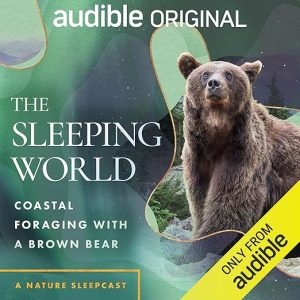
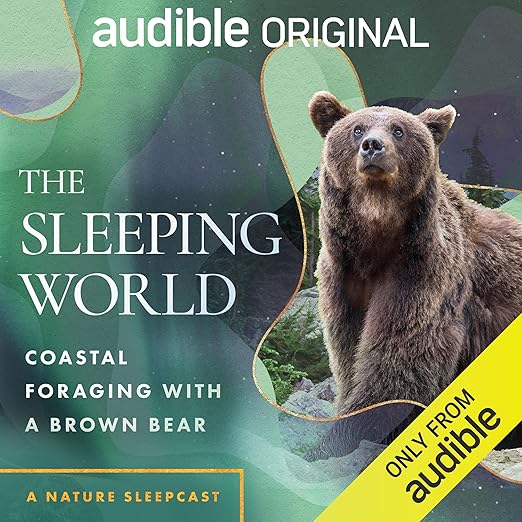
Brown bears and sleep share a structural kinship that the creators of this audiobook understood immediately. The Sleeping World: Coastal Foraging with a Brown Bear, produced by Mumble Media and narrated by Cynthia Kimola across fifty-seven minutes, uses a brown bear's annual cycle of intense activity followed by deep hibernation as the template for a listening experience that is simultaneously nature education, ambient soundscape, and guided meditation toward rest. It is one of the more intelligently designed sleep-audio productions in the format, built around the bear's biology rather than generic relaxation conventions.
This Audible Original, produced with Brown Bear Consultant Dr. Tom S. Smith and written by Cara Ehlenfeldt and Jake Young of Mumble Media, follows a mother bear and her cubs along the Alaska Peninsula. The journey moves through the ecological stages of a coastal brown bear's summer: hunting salmon at the falls, digging for clams along the coastal mudflats, using the regional rubbing tree that generations of bears have polished with their presence. Each stage is described with the specificity that distinguishes genuine nature writing from ambient backdrop. By the time the bear and her cubs settle into a thicket, Kimola's narration has done its work quietly and completely, and most listeners will have followed them into sleep.
The format here is genuinely innovative within its category. Most sleep-audio products are either pure soundscapes without narrative or guided meditations that have a therapeutic rather than ecological orientation. The Sleeping World combines both modes with the addition of actual natural history content drawn from real research and vetted by a brown bear specialist. Listeners who emerge from a session will have absorbed something real about coastal Alaska's ecosystem and the specific behavioral routines that brown bears follow through the warmer months in preparation for winter hibernation. The educational layer does not interfere with the sleep function; if anything, it enhances it by giving the mind something specific and calming to follow rather than leaving it to generate its own anxious content.
Kimola's narration is the crucial variable in the listening experience. The sound design and mix, handled by the full Mumble Media team, provides an immersive Dolby Atmos soundscape of coastal Alaska: water, wind, salmon, the ambient sounds of an ecosystem in its natural state. Kimola speaks over and within that soundscape with the confidence of someone who trusts the material to do its work without being pushed or underscored. The pacing slows gradually through the fifty-seven minutes in a way that mirrors the bear's own deceleration toward rest. It is a performance calibrated to the body's own rhythms rather than to the conventions of audiobook narration more broadly.
Spatial Audio Renders Salmon Runs and Coastal Wind
The Dolby Atmos production deserves specific attention. Available on Audible's platform, the spatial audio design creates a sense of being within the coastal environment rather than listening to a recording of it. The distinction is perceptible even on standard headphones, though the full effect is available to listeners with compatible equipment. The sound of salmon running, the particular quality of the wind off the Alaskan coast, and the ambient calls of the region's wildlife are rendered with a presence and depth that standard audio production cannot replicate. For listeners who use nature audio as a sleep aid, this represents a significant step up in production quality from most of what the category currently offers.
The ecological content is accurate and specific, not generically naturalistic. Dr. Tom S. Smith's involvement as brown bear consultant ensures that the natural history details, the caloric requirements bears must meet before hibernation, the social dynamics at salmon falls, the specific techniques different bears use to fish, are grounded in actual behavioral science. This is not background noise designed to feel natural; it is nature writing designed to be soothing without sacrificing accuracy, and the combination is rarer than it should be.
One Audiobook Session, Deliberately Kept Brief
At fifty-seven minutes, this audiobook is a single session rather than a lengthy commitment, which is entirely appropriate for its purpose. Listeners seeking extended nature audio for multi-hour sleep playlists will need to either loop it or pair it with other entries in the Mumble Media catalog. The duration is a feature for the listener who wants a single coherent arc from evening activity to rest, and a limitation for anyone wanting more extensive content within a single production. The choice to make it brief is a deliberate production decision rather than a constraint of the material, and it is the right decision for the format.
This particular listing carries no written listener reviews yet, but that absence does not indicate a lack of quality in the production, only that not enough listeners have left one yet to form any kind of pattern worth reading into. The format and the care of execution speak clearly enough. The fact-checking credit, the named Brown Bear Consultant, and the detailed production team listing all signal a project where accuracy and craft were taken seriously alongside the commercial brief. The Audible Original imprimatur suggests a production with professional support, and every audible element confirms it.
Nature-Grounded Calm for Insomnia and Older Kids
This audiobook is for anyone who wants to wind down with something grounded in the natural world rather than in therapeutic language or pure ambient noise. It will appeal to nature enthusiasts who find wildlife documentaries calming, to parents looking for soothing but genuinely educational bedtime audio for older children, and to insomnia sufferers who have found standard meditation apps too generic to hold their attention long enough to be useful. Those wanting high-energy or plot-driven audio have come to entirely the wrong place. Those willing to follow a mother bear and her cubs through the Alaska coast as darkness and rest approach will find fifty-seven minutes of quietly remarkable audio production, available in Dolby Atmos for those who want the full experience.
Before You Listen
Does the Dolby Atmos production of The Sleeping World audiobook require special equipment to appreciate?
The spatial audio adds depth that is noticeable on standard headphones and more pronounced on Dolby Atmos-compatible equipment. The production is rewarding regardless, but listeners with compatible devices will have a more immersive experience.
Is The Sleeping World audiobook appropriate for children as well as adults?
Yes. The content is appropriate for all ages, and the combination of accurate natural history and soothing narration makes it a strong option for older children who are ready for more substantive bedtime audio than pure lullabies or simple stories.