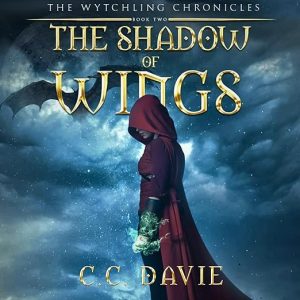
I came to The Shadow of Wings having not read the first Wytchling Chronicles installment, and I will be direct about that upfront: this is not the place to start. C. C. Davie has built a sufficiently complex world, the eight territories of Labrynth, the tension between humans and Wytchlings, the political geography of Asteryn and the looming threat of Attica, that arriving without context leaves you assembling the furniture while the narrative is already in motion. What I can evaluate clearly is whether the book succeeds on its own terms for its intended audience, and on that question the answer is yes.
The synopsis is deliberately minimal, and that restraint is probably wise given the series' architecture. What I can say is that this second volume picks up after the events of the first book with the central character Amylia in recovery, the alliance between territories under serious strain, and Queen Imogyn of Attica preparing for war while holding intelligence her opponents do not yet have. That setup is executed with confidence. Davie knows where she is going, and the plotting in the second half of the book delivers on the promises the first half makes.
What We Made of It
One reviewer put it plainly: this one has more feels, more sex, and less horrific trauma than the first one, and also a lot more action as far as plot progression. That is an honest description. Davie uses the second installment to deepen relationships that the first book established under duress, and the result is a book that spends its opening half in character work before the second half accelerates into military and political conflict. Some readers found the first half slow; others found it the more emotionally satisfying portion. The balance will depend on what you came for.
The character Andy drew particular affection from reviewers, with one naming him the favorite character in the series. The mythical creatures, Sylkies and Drukas among them, appear in ways that left readers wanting more, which is precisely the right instinct in a series that still has at least one more installment ahead. Davie has a gift for distinctive creature design that is one of the series' signature pleasures.
Why The Shadow of Wings Works as an Audiobook
Laura Horowitz is doing substantive work here. The cast is large, the emotional register shifts frequently between intimate character scenes and larger political confrontations, and she manages these transitions without losing the thread. Her ability to differentiate characters by vocal texture rather than by obvious performance choices is a mark of a narrator who understands that the listener needs consistent cues, not theatrical flourishes. The cliffhanger ending, a source of frustration for at least one reviewer who noted the next book was not yet available, lands with the right weight because Horowitz commits to it fully rather than softening it.
At nearly twelve hours, the audiobook gives Davie's world plenty of room. The density of the worldbuilding rewards that runtime; this is not a book that can be adequately processed at half attention.
What Might Not Land
The cliffhanger. Multiple reviewers flagged it, and it is real. Davie ends the book at a point that assumes you will be returning for the third volume, and if that volume is not yet available when you finish, the ending will sting. That is a structural choice rather than a flaw, but it is worth knowing before you commit twelve hours to a story whose resolution is deferred.
Also worth noting: this is LGBTQ+ fantasy, and the romantic and sexual content is explicit in places. The reviewer who noted more sex than the first book is accurate. If that framing is what you came for, you will be well-served. If you prefer your fantasy romance implied rather than depicted, this series is not calibrated for that preference.
Who Should Pick Up The Shadow of Wings
Readers of the first Wytchling Chronicles book who want to continue, this is the obvious audience, and they will not be disappointed. Fantasy readers drawn to LGBTQ+ romance integrated into serious worldbuilding rather than treated as a subplot will find this series worth starting from book one. Skip it if you have not read the first installment, or if open-ended cliffhangers leave you genuinely frustrated rather than compelled.