Quick Take
- Narration: Alan Cumming is exceptional, his Scottish voice gives Rilke’s moral ambivalence exactly the right texture, dry and intimate at once.
- Themes: queer identity and police indifference, Glasgow’s underworld, moral ambiguity
- Mood: Slow-burn noir, atmospheric and uncomfortable in ways that are intentional
- Verdict: A richly rendered sequel that rewards patience, atmosphere-heavy but anchored by Cumming’s performance and Welsh’s exact prose.
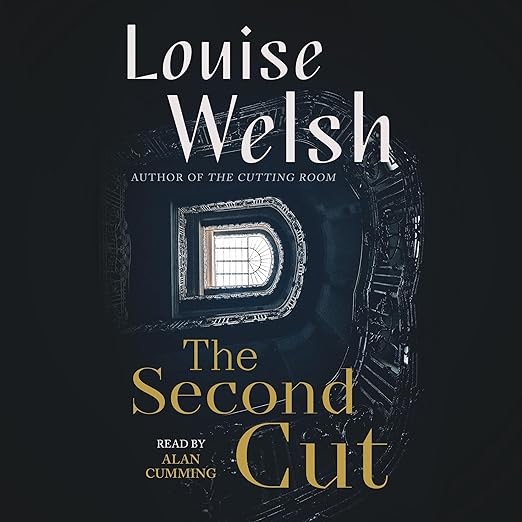
I finished The Second Cut on a wet Tuesday, which felt appropriate. Louise Welsh’s Glasgow is a city that needs overcast skies and the ambient noise of something going wrong nearby to feel complete. The Second Cut is the long-delayed sequel to Welsh’s debut, The Cutting Room, published in 2002, and at nearly ten hours, read by Alan Cumming, it is a listen that asks you to settle into its world rather than race through it.
Rilke, the auctioneer-protagonist, has been trying to stay respectable. He runs Bowery Auctions, keeps his head down, and when the book opens, he has managed to more or less keep trouble at a distance. Then Jojo, an old friend who likes Grindr hook-ups and recreational drugs, tips him off to a profitable house clearance. The next morning, Jojo washes up dead. The police, predictably, are not interested. And Rilke, for reasons that are partly conscience and partly something harder to name, decides that if he doesn’t find out what happened, no one will. The investigation that follows takes him through Glasgow’s auction markets, its nightlife, and the darker geography of a city that knows how to keep its secrets.
Why the Police Won’t Investigate
The Second Cut is, among other things, a book about who gets to matter when they’re dead. Welsh doesn’t make this argument in the way a contemporary social-issue novel might, she makes it through the mechanics of the plot. Jojo’s life, gay, on Grindr, using recreational drugs in Glasgow’s nightlife, places him in a category of victim that the police find easy to set aside. Welsh renders this without editorializing, which makes it more effective than a lecture would be. Rilke’s investigation is fueled partly by his grief for Jojo and partly by his anger at the ease with which a life is filed and forgotten by institutions designed to treat all lives equally.
Reviewer Fictionophile noted that the book is more edgy than the thrillers they’re accustomed to, and that despite the discomfort, the characters were so authentic and well-described that they remained immersed. That’s the balance Welsh is working: Glasgow’s dark side is rendered with enough specificity and moral complexity that it functions as setting rather than shock value. The LGBTQ community’s daily textures, both the ordinary pleasures and the darker edges, are rendered with insider knowledge rather than anthropological curiosity, which makes the world feel inhabited rather than observed from outside.
Rilke Walking the Moral Tightrope
The synopsis describes Rilke as walking a moral tightrope between good and bad, saint and sinner, and Welsh takes that seriously. He is not a detective. He has no authority, no training, and no obvious reason to keep going other than the stubborn sense that someone should. His investigation takes him into Glasgow’s auction circuits, its clubs, its less examined corners, and he encounters people who know what happened to Jojo and are, for various reasons, not eager to say so.
Reviewer Davida Chazan, returning to Welsh’s world after reading The Cutting Room years earlier, raised an interesting question about depth between the two books. The consensus from reviewers who know both is that The Cutting Room has a more singular, striking premise, while The Second Cut has more developed character work and a richer depiction of the city. Reviewer Miggy, writing carefully about pacing, noted an abundance of detail, sometimes just the daily workings of the auction business or everyday life, that almost made things seem to move slowly. That is an honest assessment of Welsh’s method: she is not a thriller writer in the velocity sense. She is a noir writer in the tradition that values atmosphere over plot mechanics, and The Second Cut asks for the patience that tradition requires.
What Alan Cumming Does to the Text
The casting of Alan Cumming as narrator is one of those decisions that makes the audiobook the definitive version of the book. Cumming is Scottish, as Welsh is, as Rilke is. His voice carries the particular dryness of Glasgow’s cadence, the flat affect that conceals rather than displays feeling, the humor that surfaces in the worst moments. He reads Rilke’s interior monologue with the sense of someone who has thought carefully about where the weight of each sentence falls, and he differentiates characters through subtle shifts in register rather than broad voice acting. The result is intimate and consistent rather than theatrically varied, which is the right choice for this material.
Reviewer Orest called the book a first-class mystery with great, human, courageous, and flawed characters, and Cumming’s narration is a significant part of why those characters feel so alive. At just under ten hours, this is a commitment, and Welsh’s pacing requires patience. For listeners who prioritize plot velocity, the book will feel slow. For listeners who read noir for its texture and moral atmosphere, The Second Cut is exactly that, a Tartan Noir entry that earns the genre’s best traditions through the quality of its attention rather than the speed of its revelations.
Who Should Come to This Book
Come to The Second Cut if you have read The Cutting Room, or if you are drawn to atmospheric crime fiction with queer protagonists and a genuine sense of place. Come if you want a narrator who understands the material in his bones. Come willing to sit with a book that builds slowly and doesn’t resolve everything neatly. If you need faster plotting and cleaner genre mechanics, Welsh is not your author for this moment, but if you are willing to let Glasgow’s damp and dark do its work on you, this audiobook rewards the listening in ways that more conventionally plotted thrillers simply don’t.
Frequently Asked Questions
Is it necessary to read The Cutting Room before listening to The Second Cut?
Multiple reviewers confirm that The Second Cut stands alone effectively, Rilke’s world and character are established within this book without requiring knowledge of the first. That said, returning readers find the emotional continuity of Rilke’s journey adds depth. If you can, read The Cutting Room first.
How graphic is the content, is this suitable for listeners who prefer lighter crime fiction?
The Second Cut deals with gay nightlife, drug use, violence, and the darker edges of urban life. It’s not graphic in a horror sense, but reviewer Fictionophile warned it’s more edgy than standard thrillers. Welsh’s treatment is literary rather than exploitative, but readers sensitive to these themes should be aware of the book’s texture.
Does Alan Cumming differentiate between characters, or does he essentially read in one voice throughout?
Cumming differentiates characters through subtle shifts in cadence and register rather than broad voice acting. He stays within a naturalistic range that suits Welsh’s prose. The result is intimate and consistent rather than theatrically varied, which is the right choice for this material.
Is The Second Cut available as a free audiobook on Audible?
Yes, this free audiobook is available to Audible members through their subscription. Check current availability on the Audible listing, as catalog access can change.