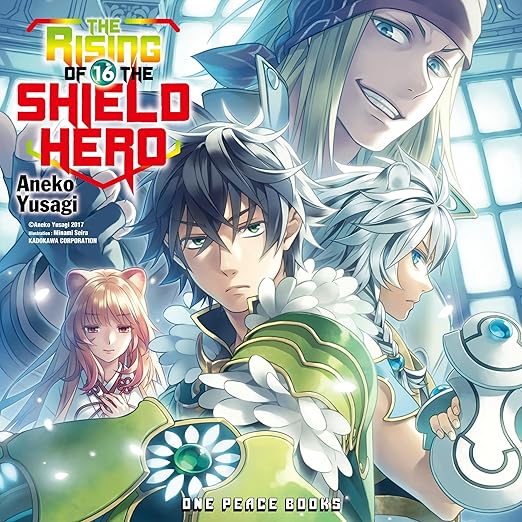
Volume sixteen of The Rising of the Shield Hero, narrated by Shea Taylor in this ten-hour-and-five-minute audiobook, opens directly into the aftermath of Atla's death and wastes no time on re-orientation. Yusagi's series has always trusted its readers to keep up, and this installment honors that trust by treating Atla's loss not as backstory to establish but as an ongoing wound that shapes every choice Naofumi makes from the opening scene forward, and the weight of that loss is present in every scene involving Naofumi before the story reaches Faubrey. Author Aneko Yusagi's light novel series has spent fifteen volumes building Naofumi into a specific kind of protagonist, one defined by defensive instinct, hard-won trust, and a rage he manages precisely because he has learned the cost of letting it run unchecked. Volume sixteen tests that management directly when Naofumi encounters Takt, the Whip Hero whose contempt and recklessness directly caused the Phoenix battle's most painful loss.
First, the Big Picture
What distinguishes this installment from the more straightforward action volumes earlier in the series is its willingness to let Naofumi fail in a specific and meaningful way. His attempt to fight Takt immediately does not go as the reader might hope. Takt seizes the shield, the weapon that defines Naofumi's identity and power, and the resulting injury sends Naofumi to a mysterious, unfamiliar world. That structural move, removing Naofumi from his allies and his familiar defensive capabilities at exactly the moment his anger is highest, forces the character into a reckoning that pure combat would have bypassed. The ally waiting for him there provides one of the volume's most resonant moments without being sentimental about it.
The return of an older character in a new alliance role is handled with the care that long-running series occasionally achieve when they are operating at their best. The character's reappearance does not feel forced or arbitrary. It emerges from the logic of the world Yusagi has been building across sixteen volumes, and the relationship it creates with Naofumi opens story possibilities that subsequent volumes will develop. Multiple reviewers note that Naofumi is maturing across this arc, and that growth is observable specifically in how he processes the decision the volume forces him to make. His response is not the response he would have given in volume one or even volume ten. The series is tracking genuine character development, not just escalating conflict.
Why The Rising of the Shield Hero Volume 16 Works as an Audiobook
Shea Taylor's narration across this series has developed a reliable consistency with Naofumi's particular combination of cynicism and commitment. At volume sixteen, the audiobook performance benefits from accumulated familiarity. Taylor knows this character, and the scenes where Naofumi is stripped of his defenses and forced to make the volume's central difficult decision carry the weight they need because the voice selling them has built that credibility over many hours. The secondary characters in the Faubrey political sequences are differentiated clearly enough that the shifting allegiances track without confusion.
The ten-hour runtime fits the volume's content well. Yusagi writes densely enough that the audiobook does not drag, and the pacing shifts appropriately between the political maneuvering at Faubrey, the confrontation with Takt, and the more introspective sequences following Naofumi's injury. For series listeners following in audio format, volume sixteen represents the series in a mode that rewards long-term investment. The emotional payoffs here depend directly on what came before, and Taylor's performance acknowledges that accumulated context without requiring the listener to consciously retrieve it.
What Might Not Land
The open plotlines at volume sixteen's close are numerous, which is both a feature and a caution. The series is building toward something significant across the Faubrey arc, and the new complications introduced here, political tensions at the inter-country level and an antagonist whose power set creates novel tactical problems, suggest the arc still has substantial distance to travel. One reviewer described the enemy introduced here as significantly worse than anyone Naofumi has encountered so far, and the narrative supports that assessment. Takt's disdain is not merely arrogant posturing. It has already had irreversible consequences, and the volume deals with the reality of that fact rather than routing around it.
The expanding cast places higher demands on listener attention than the earlier, more focused volumes. With multiple nations now in play and several named characters operating in different locations simultaneously, keeping track of allegiances and motivations requires engagement. The audiobook format places more cognitive load here than a print volume where readers can flip back to check a detail. Taylor's voice differentiation for secondary characters helps, but the scope has grown complex enough that new listeners should not start with this volume under any circumstances.
Who Should Pick Up The Rising of the Shield Hero Volume 16
This audiobook is exclusively for listeners who have been following the series. The emotional stakes depend entirely on investment built across fifteen previous volumes, and the plot assumes familiarity with the Faubrey political situation, the characters lost in the Phoenix battle, and Naofumi's specific history with betrayal and alliance. Established fans of the series listening in audio will find volume sixteen one of the stronger installments in the current arc, with Takt providing the kind of antagonist that generates genuine narrative tension rather than obstacle-course conflict. New listeners to isekai fantasy who want to understand what the series is doing should start with volume one, where Naofumi's story and the Shield Hero's burden begin.
- Read by: Shea Taylor maintains the control and consistency the long-running series requires. At volume sixteen, Taylor's familiarity with Naofumi's voice is evident, and the emotional register for the Atla aftermath is handled with appropriate weight.
- At its heart: Vengeance and its cost, political alliance, the burden of being the Shield Hero
- Vibe: Tense and emotionally raw
- Short version: Volume sixteen delivers the confrontation with Takt that the previous volume's events demanded, and does so without sacrificing character development for action spectacle.
Questions Listeners Ask
Can this audiobook be listened to without reading the previous volumes?
No. Volume sixteen is deeply embedded in the series arc and assumes familiarity with characters, relationships, and events going back many volumes. The emotional weight of the Takt confrontation depends entirely on knowing what happened to Atla in the previous installment.
How does Shea Taylor handle the emotional scenes following Naofumi's injury in this audiobook?
Taylor's performance in those sequences is one of the volume's strengths. Having voiced Naofumi across many volumes, Taylor brings genuine familiarity to the character's internal shifts, and the scenes in the mysterious world Naofumi enters benefit from that accumulated vocal history.