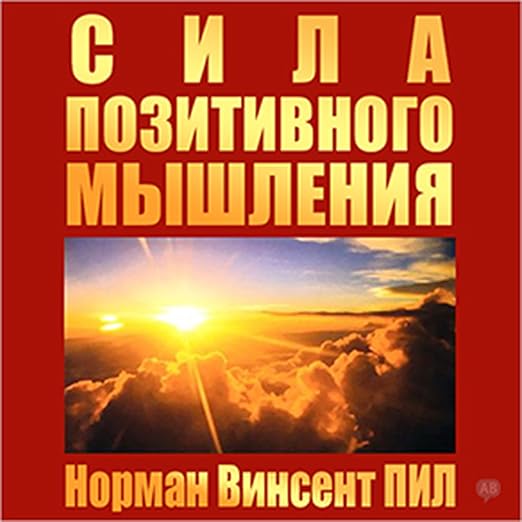
Dr. Norman Vincent Peale's The Power of Positive Thinking has been in continuous print since 1952 and has accumulated well over five million copies sold across dozens of editions and translations. The audiobook listed here, narrated by Alexey Muzhitskii at nine hours and twenty-two minutes, is the Russian-language edition. The synopsis notes this clearly at the bottom, and one existing reviewer documented a frustrated purchase from a listener who bought this version expecting the English audio. That experience is worth foregrounding before anything else, because the language of the production is the most important fact about this particular listing, and it determines whether the content is accessible at all.
Is The Power of Positive Thinking Worth Your Time?
Setting the language question aside for Russian-speaking listeners, Peale's underlying work is a document of a specific American Protestant self-help tradition. Published at the height of postwar optimism, it argues that Christian faith and psychological discipline are not separate operations but the same practice approached from two directions. Worry, in Peale's framework, is not a sign of weakness but a habit, and one that can be replaced through deliberate application of scriptural affirmation, prayer used as a form of cognitive reframing, and what he calls the picturization of desired outcomes. The techniques would be recognized by any modern reader of cognitive behavioral literature, which is both the book's persistent relevance and its primary limitation. The explicit Christian framing means the framework is fully coherent only for readers who share Peale's theological commitments. Secular readers can extract the behavioral practices, but the connective tissue of the argument depends on accepting that faith produces confidence because it is supernaturally warranted, not merely psychologically useful.
Peale's chapter structure, which moves from believing in yourself through building determination, breaking the worry habit, improving relationships, and assuming control over circumstances, is organized as a sequential course of practice. The book was written to be re-read, with each chapter containing affirmations and prescribed exercises rather than simply arguments. In audio format, that architecture translates reasonably well, since each chapter functions as a discrete unit that can be returned to independently. For Russian-language listeners approaching Peale through this production, the nine-hour runtime reflects the full unabridged text rather than a condensed summary, which gives the exercises and affirmations the space they require.
What Dr. Norman Vincent Peale Gets Right
For Russian-speaking listeners, this production offers Peale's classic in a fully narrated format. Muzhitskii's narration brings the text to audio with appropriate care for material whose register is simultaneously prescriptive and encouraging. The theological framework Peale built across chapters on overcoming inferiority feelings, breaking the worry habit, and developing personal and professional relationships is presented without condensation. The chapter structure, with its direct prescriptive titles and summary affirmations, translates well to an audio format because each section functions as a discrete unit of practice rather than requiring the preceding chapters to make sense. The nine-hour runtime allows the listener to work through Peale's full argument without the compressions that abridged editions introduce, which is important in a book where the cumulative force of the affirmations and examples is part of the design.
English-speaking listeners who have been directed to this listing in error should know that multiple English-language audiobook editions of Peale's work exist under other listings, narrated by different performers, and those are the versions that will serve them. The content of Peale's book has lost none of its cultural influence; the Norman Vincent Peale tradition fed directly into the wider positive psychology movement and remains a reference point for the prosperity gospel tradition in American Christianity. Those intellectual lineages are worth understanding regardless of one's theological position, but they are only accessible in a language you understand.
Where Dr. Norman Vincent Peale Loses Some Ground
The book's core argument has attracted sustained criticism from psychologists who argue that positive thinking applied without situational grounding can produce both disappointment and a tendency to attribute failure to insufficient belief rather than structural obstacles. Peale was aware of the critique and addresses it in the later chapters, insisting his system is a complement to practical effort rather than a replacement for it. That caveat is present in the text but can be easy to miss given the enthusiasm with which the affirmational techniques are presented in the earlier chapters. Readers drawn to this book from a secular self-help background should go in knowing that the framework is explicitly Christian and that the prescriptions are anchored in prayer and scripture as primary tools rather than as supplemental options. The 1952 context also means that Peale's examples and assumptions about professional and family life reflect mid-century American norms throughout, which contemporary readers will notice in the gender framing of several chapters.
Who Should Pick Up The Power of Positive Thinking
Russian-speaking listeners with an interest in Peale's classic American self-help tradition will find this a well-produced audiobook of one of the twentieth century's most widely read works in the genre. English-language listeners should stop here, confirm they have the correct edition, and locate one of the English-language versions before purchasing. Listeners looking for a faith-integrated approach to anxiety and self-confidence who read in Russian will find the content directly applicable and the nine-hour format convenient for extended listening in daily segments. Anyone coming to this book from a secular psychology background, in any language, should approach with awareness that the prescriptions are grounded in Christian theology and that the framework does not operate the same way without that foundation in place.